Oil Peaks and Crime: The Hidden Connection Explained - Peak Prosperity
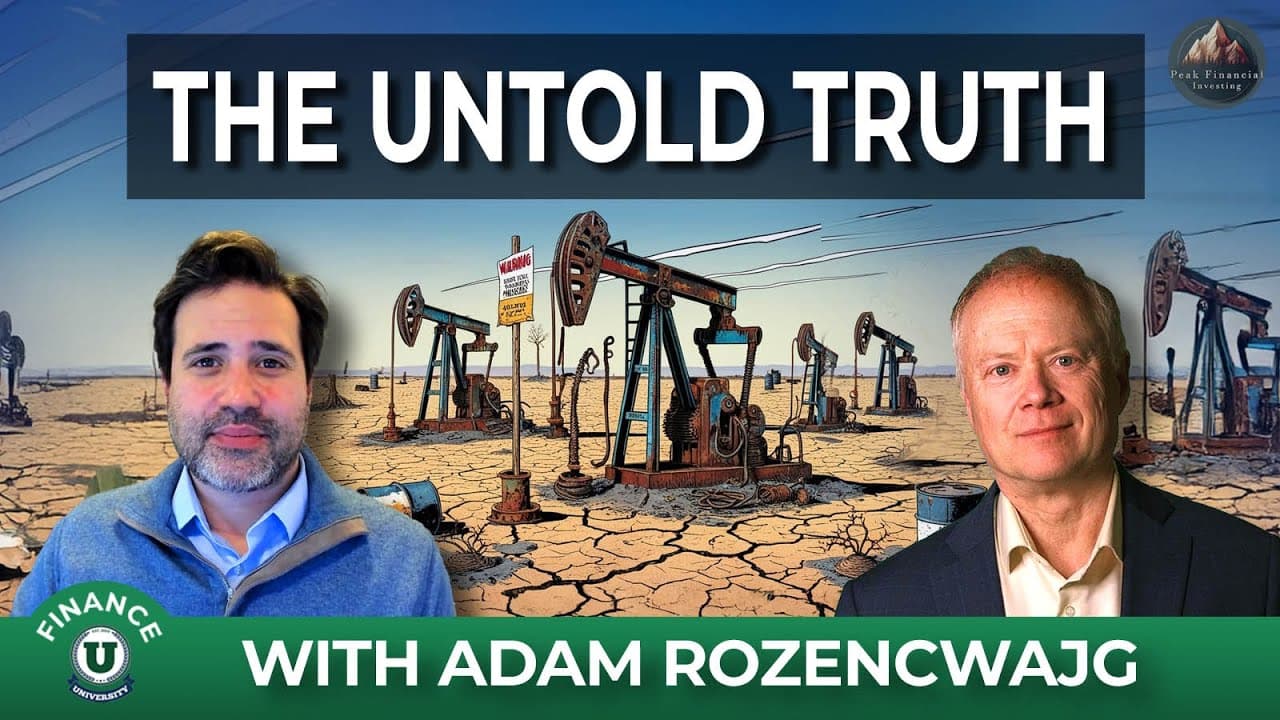
TL;DR
Discussion on shale oil dynamics, depletion paradox, and energy market implications.
Transcript
The Narrative is wow look at you know here we see that oil was rolling over in 1970 and then here it is now so therefore this is how the world works and we'll probably just have another Peak after that I think that's the narrative and I consider this a chart crime because this is the actual chart from art bur that we should be looki... Read More
Key Insights
- Conventional oil production peaked in 1970 and has never recovered, highlighting the challenges in oil extraction despite technological advancements.
- Shale oil fields tend to peak earlier in their life cycle compared to conventional oil fields, indicating a shorter productive lifespan.
- The energy market has been significantly impacted by the decline in shale oil and gas production, affecting global oil prices and economic stability.
- Investment in nuclear energy is discussed as a potential opportunity amid the challenges posed by declining oil production.
- The depletion paradox suggests that oil production peaks much earlier than reserves are exhausted, leading to misconceptions about oil availability.
- Historical context from the 1970s oil crisis is used to draw parallels with current energy market dynamics and policy responses.
- The administration's efforts to increase oil production face challenges due to the inherent limitations in shale oil extraction.
- The potential for rising oil prices due to energy scarcity poses economic challenges, requiring strategic investment and policy decisions.
Install to Summarize YouTube Videos and Get Transcripts
Explore YouTube Video Summarizer or Get YouTube Transcript Extractor
Questions & Answers
Q: What is the depletion paradox?
The depletion paradox refers to the phenomenon where oil production peaks much earlier than the reserves are exhausted. This means that while there is still a significant amount of oil left in the ground, production begins to decline, leading to misconceptions about the actual availability of oil.
Q: How do shale oil fields differ from conventional oil fields?
Shale oil fields peak earlier in their life cycle compared to conventional oil fields. While conventional fields may roll over after 50% of reserves are produced, shale fields often peak when only 35 to 38% of the resource has been extracted. This results in a shorter productive lifespan for shale oil fields.
Q: What are the implications of declining shale oil production?
Declining shale oil production has significant implications for the energy market, leading to potential increases in oil prices and economic instability. It challenges the notion that technological advancements alone can sustain oil output, highlighting the need for alternative energy investments and strategic policy decisions.
Q: Why is investment in nuclear energy discussed?
Investment in nuclear energy is discussed as a viable alternative amid the challenges posed by declining oil production. As oil becomes scarcer and prices rise, nuclear energy offers a stable and potentially more sustainable energy source, which could help mitigate economic challenges associated with energy scarcity.
Q: What historical context is used in the discussion?
The discussion uses the 1970s oil crisis as a historical context to draw parallels with current energy market dynamics. It highlights how oil prices surged during that period and the policy responses that were implemented, providing insights into potential strategies for addressing today's energy challenges.
Q: What challenges do current energy policies face?
Current energy policies face challenges due to the inherent limitations in shale oil extraction. Despite efforts to boost production, the shorter productive lifespan of shale fields and the depletion paradox complicate these strategies, requiring a reevaluation of energy policy and investment priorities.
Q: How does the discussion address oil price trends?
The discussion addresses oil price trends by highlighting the potential for significant price increases due to energy scarcity. It draws on historical data and current market dynamics to suggest that oil prices could rise substantially, posing economic challenges and necessitating strategic investment and policy decisions.
Q: What role does technological advancement play in oil extraction?
Technological advancement plays a role in oil extraction by enabling the development of shale oil fields and enhancing extraction techniques. However, the discussion emphasizes that technology alone cannot overcome the natural limitations of oil reserves, as evidenced by the continued decline in conventional and shale oil production.
Summary & Key Takeaways
-
The discussion highlights the peak of conventional oil production in 1970 and the subsequent challenges in maintaining oil output despite technological advancements. Shale oil fields, which peak earlier than conventional fields, have significantly impacted the energy market.
-
Investment opportunities in nuclear energy are explored as a response to declining oil production and the potential for rising oil prices. The depletion paradox is explained, emphasizing the misconception that oil reserves are plentiful even as production declines.
-
Historical parallels are drawn between the 1970s oil crisis and current energy market dynamics. The administration's efforts to boost oil production face challenges, and the potential for rising oil prices due to energy scarcity is discussed.
Read in Other Languages (beta)
Share This Summary 📚
Summarize YouTube Videos and Get Video Transcripts with 1-Click
Try YouTube Summary with ChatGPT & Claude or YouTube Transcript Generator
Explore More Summaries from Peak Prosperity 📚


Summarize YouTube Videos and Get Video Transcripts with 1-Click
Try YouTube Summary with ChatGPT & Claude or YouTube Transcript Generator