Conservation of Plants and Animals - Introduction | Don't Memorise
TL;DR
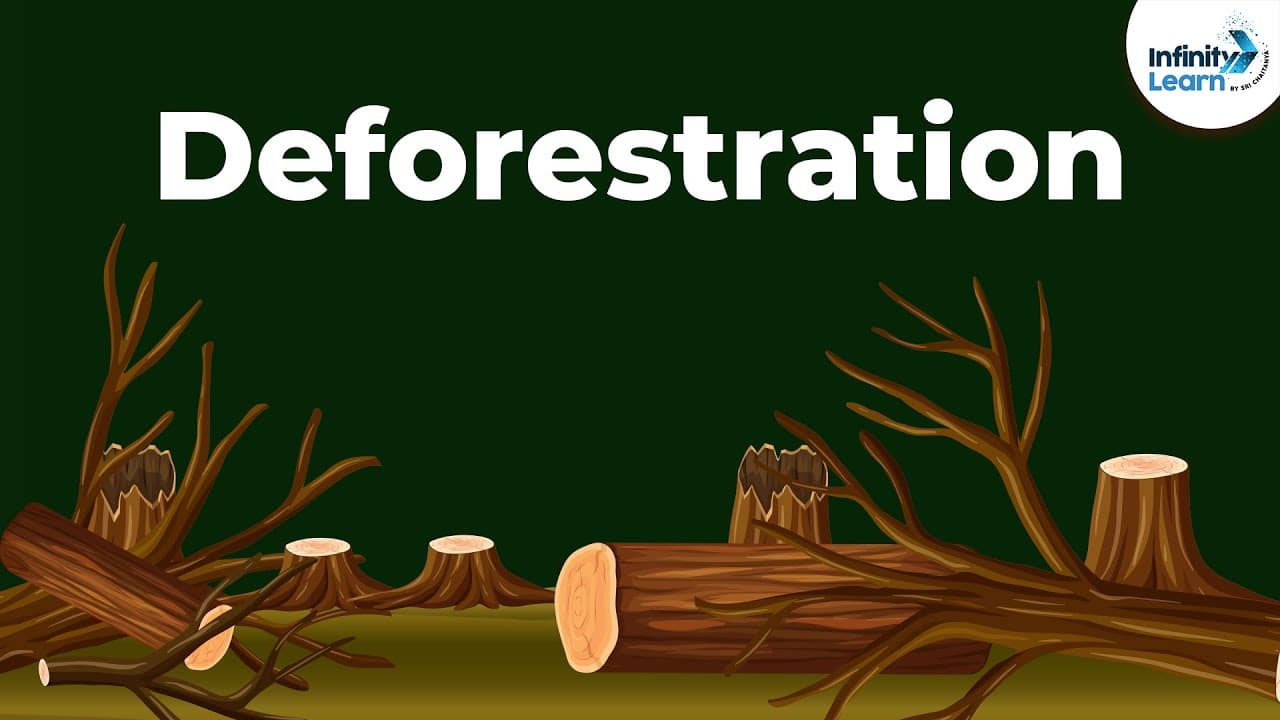
Deforestation, the clearing of forests for human benefit, has resulted in increased carbon dioxide levels, global warming, erratic climate changes, soil erosion, desertification, and pollution.
Transcript
have you heard your grandparents being nostalgic about the past they say things like earlier there used to be trees here or we would wake up to the sound of birds now can you tell me why this isn't a reality anymore for starters we could blame ourselves for wanting huge buildings and wide roads where has the natural cover of forests disappeared in ... Read More
Key Insights
- ⛽ Deforestation is caused by human activities for agriculture, infrastructure development, and fuel sources.
- 😮 Deforestation results in increased carbon dioxide levels, global warming, and rising temperatures.
- 🥺 The consequences of deforestation include disruptions in the water cycle, leading to floods and droughts.
- ❓ Deforestation also causes soil erosion, desertification, and pollution.
- 🌸 The loss of forests and plants disrupts the ecological balance and negatively impacts the environment and human well-being.
- 😅 Deforestation has resulted in the hottest decades in the last 400 years.
- 🫠 Melting glaciers and rising sea levels are consequences of deforestation.
Install to Summarize YouTube Videos and Get Transcripts
Explore YouTube Video Summarizer or Get YouTube Transcript Extractor
Questions & Answers
Q: Why is deforestation a reality today?
Deforestation is driven by human desires for development, including the need for agricultural land, infrastructure, and fuel sources, leading to the clearing of large areas of forests.
Q: What are the consequences of cutting down trees and plants?
Cutting down trees and plants reduces the level of oxygen and increases carbon dioxide in the atmosphere, leading to global warming, rising temperatures, and climate changes, such as floods and droughts.
Q: How does deforestation affect the water cycle?
Deforestation disrupts the water cycle by preventing water from percolating into the soil, increasing soil erosion and reducing underground water levels. This can result in melting glaciers, floods, and droughts.
Q: How does deforestation contribute to pollution?
Deforestation contributes to pollution by increasing the release of harmful gases, including carbon dioxide, leading to global warming, air pollution, and the deterioration of air quality.
Summary & Key Takeaways
-
Deforestation is the process of clearing forests for human benefit, such as agriculture, building factories/houses/roads, or obtaining wooden fuel.
-
Consequences of deforestation include increased carbon dioxide levels, leading to global warming and rising temperatures.
-
Deforestation also disrupts the water cycle, leading to melting glaciers, floods, droughts, and reduced underground water levels. It also causes soil erosion, desertification, and pollution.
Read in Other Languages (beta)
Share This Summary 📚
Summarize YouTube Videos and Get Video Transcripts with 1-Click
Try YouTube Summary with ChatGPT & Claude or YouTube Transcript Generator
Explore More Summaries from Infinity Learn NEET 📚


Summarize YouTube Videos and Get Video Transcripts with 1-Click
Try YouTube Summary with ChatGPT & Claude or YouTube Transcript Generator