How Can Confidence Tracking Improve Exam Scores?
TL;DR
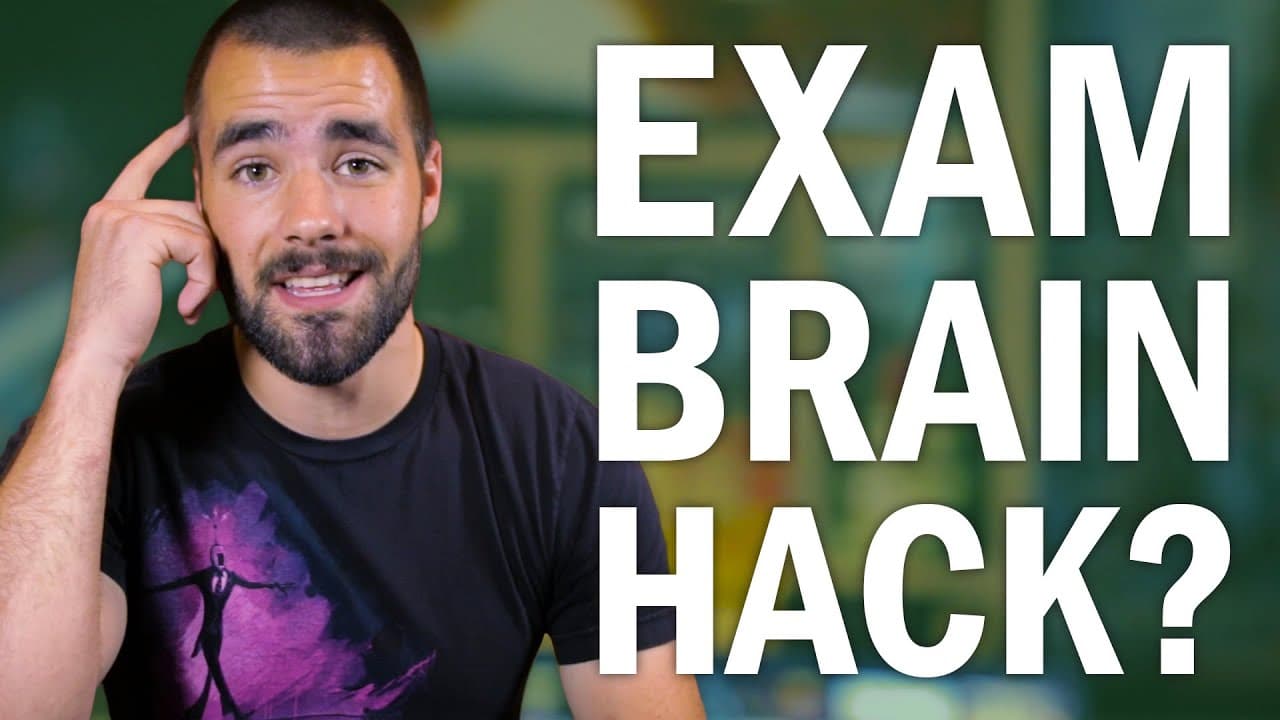
Using confidence tracking during exams can significantly improve your grades. By rating your confidence in each answer on a scale of 1 to 5, you utilize metacognitive abilities, allowing for better decision-making about whether to revise answers. This technique has been shown to provide a more accurate predictor of success compared to relying on gut feelings.
Transcript
Earlier this year, I made a video about whether or not you should change your answers during exams if you're unsure on them. Now the prevailing wisdom has always been to go with your gut but the research we looked at presented this as what they call the First-Instinct Fallacy and showed that more often than not changing an answer you'r... Read More
Key Insights
- 💋 Changing answers during exams is often the better choice, challenging the prevailing wisdom of sticking with one's initial instinct.
- 👻 Metacognition plays a crucial role in improving exam performance by allowing individuals to analyze their confidence in their knowledge.
- 🥺 Confidence tracking through assigning confidence scores to answers in the moment is a more accurate predictor of success and can lead to better grades.
- 🙈 The metacognitive abilities of monkeys parallel those of humans, indicating the universality of these cognitive processes.
- 🏣 Post-exam reflections are poor predictors of actual performance due to the unreliability of memories.
- 🔨 Confidence tracking provides a more sensitive tool for decision-making during exams.
- 💁 Beliefs formed about exams after they are over are often inaccurate predictors of performance.
Install to Summarize YouTube Videos and Get Transcripts
Explore YouTube Video Summarizer or Get YouTube Transcript Extractor
Questions & Answers
Q: Why has the prevailing wisdom of sticking with one's initial answer during exams been challenged?
The research on the First-Instinct Fallacy found that more often than not, changing an uncertain answer results in better outcomes. Confidence tracking allows students to make more informed decisions based on their metacognitive abilities.
Q: What is metacognition and how does it relate to exam performance?
Metacognition is the act of thinking about one's own thinking. It allows individuals to analyze their own beliefs and decisions, including their confidence in their knowledge. By utilizing metacognitive abilities through confidence tracking, students can make better revisions to their answers.
Q: How did the researchers study the metacognitive abilities of monkeys?
The researchers conducted a study where monkeys were given questions of varying levels of difficulty and had to indicate whether they knew the answer or not. The monkeys were able to accurately judge their confidence and indicate when they didn't know the answer, similar to how humans can analyze their own thinking.
Q: Why is confidence tracking during exams more accurate than post-exam reflections?
Post-exam reflections often result in poor predictions of actual performance. Memories become unreliable over time, leading to decay in metacognitive capabilities. Confidence tracking in the moment provides a more accurate tool for judging whether to make revisions.
Summary & Key Takeaways
-
Research has shown that changing answers during exams is often the better choice, contradicting the belief of sticking with one's initial instinct.
-
Metacognition, the ability to analyze one's own beliefs and decisions, plays a crucial role in improving exam performance.
-
A study conducted on both monkeys and humans revealed that confidence tracking in the moment, through assigning confidence scores to answers, is a more accurate predictor of success and can lead to better grades.
Read in Other Languages (beta)
Share This Summary 📚
Summarize YouTube Videos and Get Video Transcripts with 1-Click
Try YouTube Summary with ChatGPT & Claude or YouTube Transcript Generator
Explore More Summaries from Thomas Frank 📚




Summarize YouTube Videos and Get Video Transcripts with 1-Click
Try YouTube Summary with ChatGPT & Claude or YouTube Transcript Generator