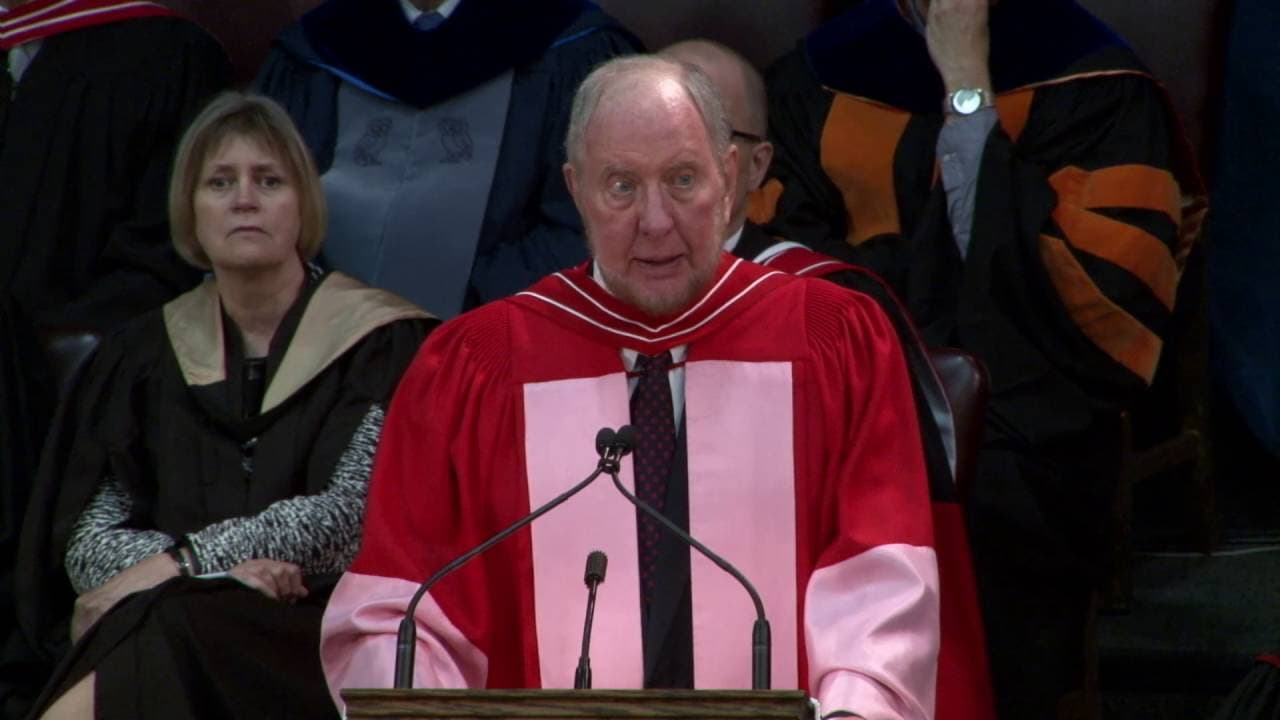
Robert D. Putnam, Convocation 2016 Honorary Degree recipient
TL;DR
Urging graduates to consider societal shift from "we" to "I", emphasizing responsibility and leadership in community.
Transcript
Chancellor Wilson president Gertler distinguished members of the platform party honored guests and most important the graduating class of 2016 and your family and friends I'm delighted to be with you today and that for three reasons first of all I'm deeply grateful to this university one of the jewels of global higher education for honoring me in t... Read More
Key Insights
- 🎵 Reflects on the societal transition from a "we" to an "I" society, noting the implications.
- 💠 Emphasizes the importance of community, leadership, and civic engagement in shaping a better future.
- 🍔 Urges graduates to consider their role in maintaining a balance between individual success and communal welfare.
- 🥹 Highlights the significance of gratitude, reflection, and proactive contribution to society.
- 🐕🦺 Stresses the need for graduates to embrace JFK's challenge of service and duty towards a communal goal.
- ❓ Encourages graduates to consider how their actions and choices impact future generations and broader societal well-being.
- 🇨🇦 Acknowledges Canada's societal differences and challenges graduates to uphold a more communal attitude.
Install to Summarize YouTube Videos and Get Transcripts
Explore YouTube Video Summarizer or Get YouTube Transcript Extractor
Questions & Answers
Q: What societal shift does the speaker highlight in their speech?
The speaker reflects on how American society has transitioned from a communal "we" focus to an individualistic "I" mindset over the years.
Q: How does the speaker emphasize the role of graduates in societal change?
The speaker urges graduates to consider their obligations to their community and the broader Canadian society, encouraging them to embrace a more communal outlook.
Q: What historical moment does the speaker reference as impactful in their life?
The speaker recalls hearing John F. Kennedy's famous "Ask not what your country can do for you" speech in 1961, which instilled in them a sense of duty towards communal welfare.
Q: What advice does the speaker offer to graduates for shaping a better society?
The speaker advises graduates to not just talk about change but to actively contribute to building a more connected and compassionate society through their actions.
Summary & Key Takeaways
-
The speaker shares personal anecdotes and societal observations, highlighting a shift towards individualism.
-
Emphasizes the importance of community, leadership, and societal obligations.
-
Urges graduates to consider their role in shaping a more communal future.
Read in Other Languages (beta)
Share This Summary 📚
Summarize YouTube Videos and Get Video Transcripts with 1-Click
Try YouTube Summary with ChatGPT & Claude or YouTube Transcript Generator
Explore More Summaries from University of Toronto 📚


Summarize YouTube Videos and Get Video Transcripts with 1-Click
Try YouTube Summary with ChatGPT & Claude or YouTube Transcript Generator