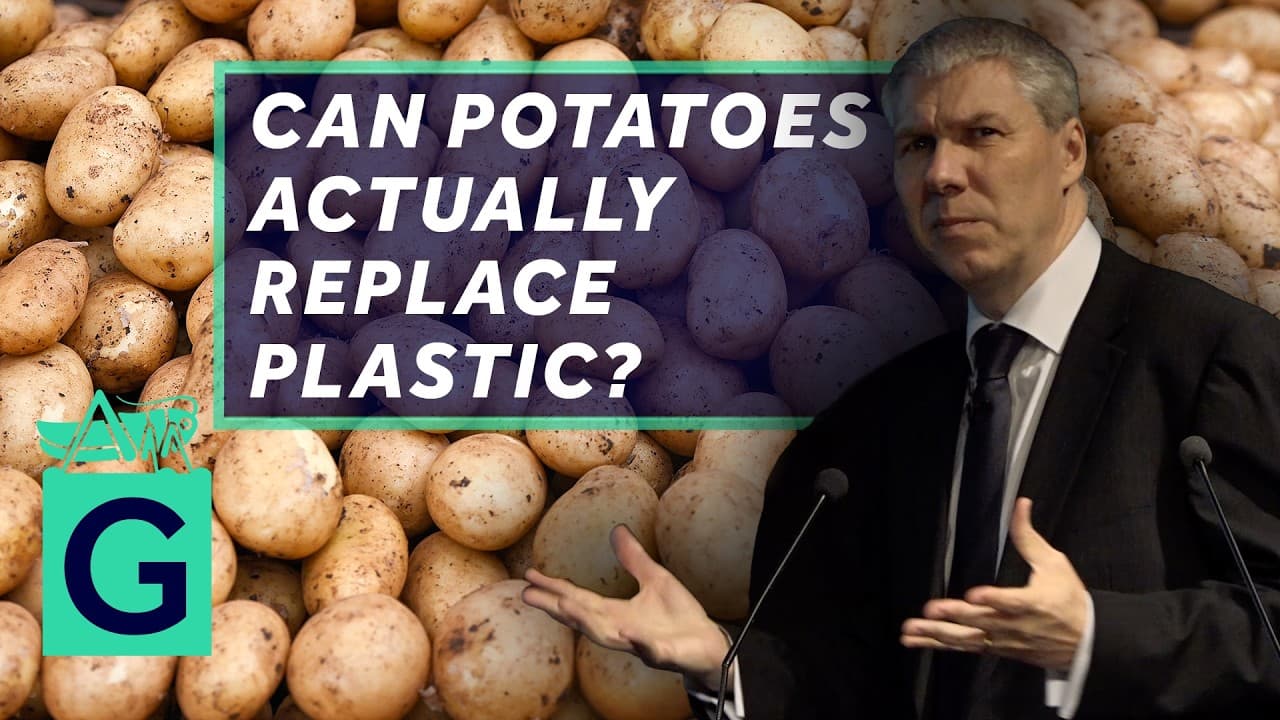
Plastics from Potatoes, Rubber from Rice
TL;DR
Plastics have become an essential part of our society, but there is a need for better recycling and alternative materials to mitigate environmental concerns.
Transcript
what I'm gonna do today is to try and dispel some of the myths around plastics and I'm gonna give you a little bit of an introduction to some alternative plastics now the problem we've got nowadays is that people want a black-and-white answer so many of you are sitting there so they're saying right I want you to tell me that my plastic bag that I'm... Read More
Key Insights
- ❓ Plastics have become an integral part of our society, and their production has increased significantly over the years.
- 🥺 The recycling of plastics is limited, leading to widespread plastic pollution in landfills and oceans.
- 🌥️ Alternative materials like starch and cellulose can be used to make biodegradable plastics, but they are currently not economically viable on a large scale.
- 🎨 The packaging industry needs to focus on smarter packaging designs to reduce waste and environmental impact.
- 🗑️ It is crucial for consumers to be aware of their plastic consumption and support recycling and proper waste management initiatives.
Install to Summarize YouTube Videos and Get Transcripts
Explore YouTube Video Summarizer or Get YouTube Transcript Extractor
Questions & Answers
Q: What is the difference between polymers and plastic?
Polymers are large molecules made up of small molecules called monomers, while plastic is a polymer that contains additional additives and gunk to give it specific properties.
Q: What are the major challenges associated with recycling plastics?
One major challenge is the diverse origins of plastic materials, making it difficult to recycle different types of plastics together. Moreover, the cost of recycling certain types of plastics, such as polyethylene terephthalate (PET), is economically viable, compared to other plastics.
Q: How much plastic waste is produced globally, and what are the consequences?
Currently, the world produces around 335 million tonnes of plastic annually. This massive amount of plastic waste is a concern because it takes hundreds of years to biodegrade, leading to plastic pollution in oceans and landfills.
Q: Can alternative materials, such as starch or cellulose, replace traditional plastics?
While alternative materials like starch or cellulose can be used to make biodegradable and compostable plastics, they are often more expensive and cannot meet the large-scale demand for plastics. Traditional polymers like polyethylene and polypropylene are still essential due to their cost-effectiveness and versatility.
Summary & Key Takeaways
-
Plastics are polymers made up of small molecules and have become an integral part of our daily lives.
-
Different polymers, such as polyethylene and polypropylene, are widely used and make up the majority of plastics used globally.
-
Recycling of plastics is limited to a few types, and the majority of plastic waste ends up in landfills or the environment, causing environmental concerns.
Read in Other Languages (beta)
Share This Summary 📚
Summarize YouTube Videos and Get Video Transcripts with 1-Click
Try YouTube Summary with ChatGPT & Claude or YouTube Transcript Generator
Explore More Summaries from Gresham College 📚

Summarize YouTube Videos and Get Video Transcripts with 1-Click
Try YouTube Summary with ChatGPT & Claude or YouTube Transcript Generator