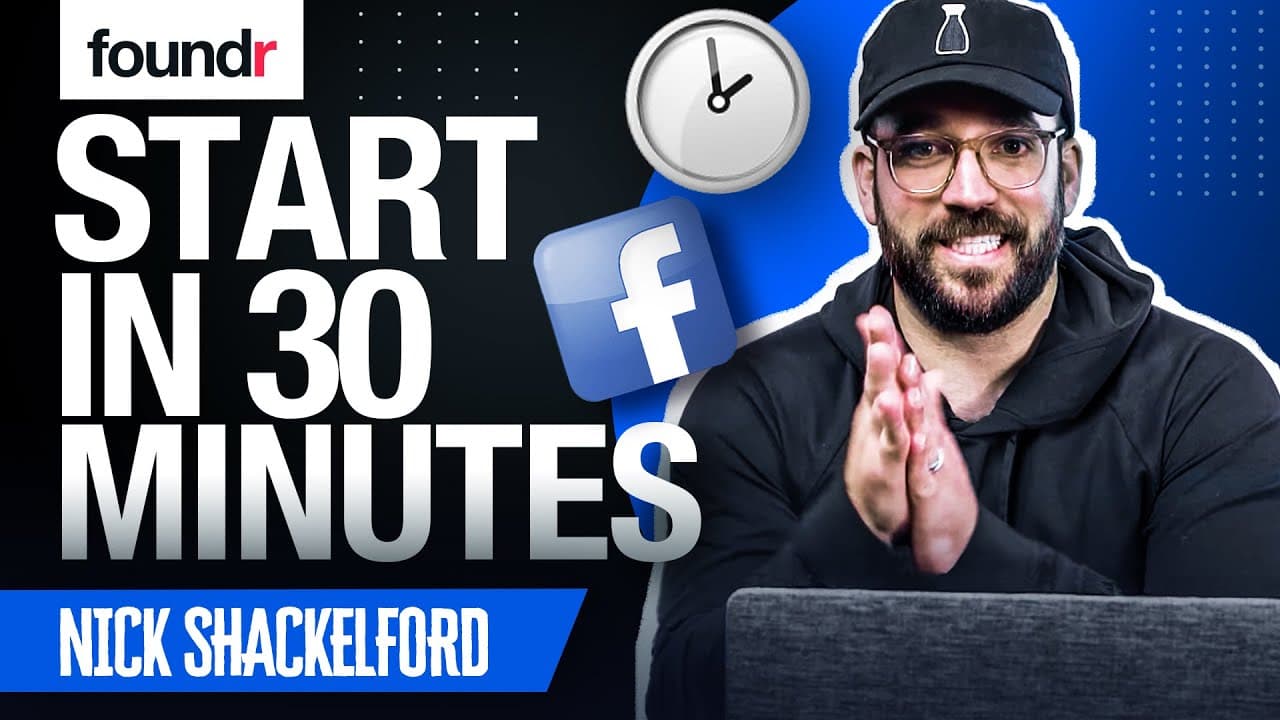
Watch me Build a Campaign in 30 Minutes (Facebook Ads for Beginners 2021)
TL;DR
Learn to create a Facebook ad campaign in 30 minutes.
Transcript
what's up guys my name is nick shakapur and i've spent over 100 million dollars on facebook ads and today i'm going to show you how to build your first facebook full funnel ad campaign in under 30 minutes here we go make sure everything is already set up before you came to launch a campaign you have to be a little bit more organized meaning get you... Read More
Key Insights
- Preparation is key to launching a successful Facebook ad campaign; have your ad copy and creatives ready before starting.
- Focus on conversions when setting up your campaign, as the primary goal is to drive purchases and increase revenue.
- Use a broad audience for initial tests to let the creative drive engagement, allowing for easier scalability.
- Implement a Campaign Budget Optimization (CBO) strategy to ensure budget allocation across multiple ad sets and creatives.
- Set your daily budget based on your average order value (AOV) to ensure adequate data collection for future decision-making.
- Exclude past purchasers from your target audience to focus on acquiring new customers and avoid redundant spending.
- Utilize automatic placements for your ads unless specific creative assets are tailored for particular platforms.
- Differentiate between prospecting, re-engagement, and remarketing to effectively target audiences at various stages of the funnel.
Install to Summarize YouTube Videos and Get Transcripts
Explore YouTube Video Summarizer or Get YouTube Transcript Extractor
Questions & Answers
Q: What is the first step before launching a Facebook ad campaign?
Before launching a Facebook ad campaign, it's crucial to have all your assets prepared. This includes having your ad copy and creatives ready and organized. Proper preparation ensures a smoother campaign setup process and can significantly impact the effectiveness of your ads.
Q: Why is it important to focus on conversions in a Facebook ad campaign?
Focusing on conversions is important because the primary goal of most ad campaigns is to drive purchases and increase revenue. By optimizing for conversions, you ensure that your ads are targeting users who are more likely to complete a purchase, thus maximizing the return on your advertising spend.
Q: How should you approach audience targeting for initial tests?
For initial tests, it's recommended to use a broad audience. This approach allows the creative to do the heavy lifting by engaging users across various segments. A broad audience helps identify which creatives resonate best, providing insights into scalability and further optimization opportunities.
Q: What is Campaign Budget Optimization (CBO) and why is it used?
Campaign Budget Optimization (CBO) is a strategy that automates the distribution of your budget across multiple ad sets and creatives. It ensures that your budget is allocated efficiently, maximizing the potential for conversions and allowing for better management of resources across the campaign.
Q: How do you determine the daily budget for a Facebook ad campaign?
The daily budget for a Facebook ad campaign should be based on your average order value (AOV). This rule of thumb helps ensure that you collect enough data to make informed decisions about your campaign's performance and future adjustments. The budget should be sufficient to support the number of creatives and ad sets being tested.
Q: Why should past purchasers be excluded from your target audience?
Excluding past purchasers from your target audience helps focus your ad spend on acquiring new customers. This strategy prevents redundant spending on users who have already converted, allowing you to allocate your budget more effectively towards expanding your customer base and driving new sales.
Q: When should you use automatic placements for your ads?
Automatic placements should be used unless you have specific creative assets tailored for particular platforms. This approach allows Facebook to optimize your ad delivery across its network, ensuring that your ads are shown where they are most likely to perform well, based on the available data.
Q: What is the difference between prospecting, re-engagement, and remarketing?
Prospecting targets cold audiences who have not interacted with your brand. Re-engagement focuses on users who have interacted with your brand on social media but haven't taken action on your website. Remarketing targets users who have taken actions on your site, such as adding to cart, but haven't completed a purchase. Each stage serves to guide users further down the sales funnel.
Summary & Key Takeaways
-
Nick Shakapour shares insights on building a Facebook ad campaign, emphasizing the importance of preparation and organization. He advises having ad copy and creatives ready before launching. The tutorial covers setting up a full funnel campaign focused on conversions to drive purchases and revenue.
-
The video explains the significance of using a broad audience for initial tests to allow the creative to drive engagement. By doing so, marketers can identify successful creatives that work across different audience segments, facilitating easier scalability and optimization of ad spend.
-
Nick recommends using Campaign Budget Optimization (CBO) to manage budget allocation across multiple ad sets and creatives. He also highlights the importance of setting daily budgets based on average order value (AOV) to gather sufficient data for informed decision-making.
Read in Other Languages (beta)
Share This Summary 📚
Summarize YouTube Videos and Get Video Transcripts with 1-Click
Try YouTube Summary with ChatGPT & Claude or YouTube Transcript Generator
Explore More Summaries from Foundr 📚


Summarize YouTube Videos and Get Video Transcripts with 1-Click
Try YouTube Summary with ChatGPT & Claude or YouTube Transcript Generator