Why Do Sinkholes Keep Catching Us By Surprise?
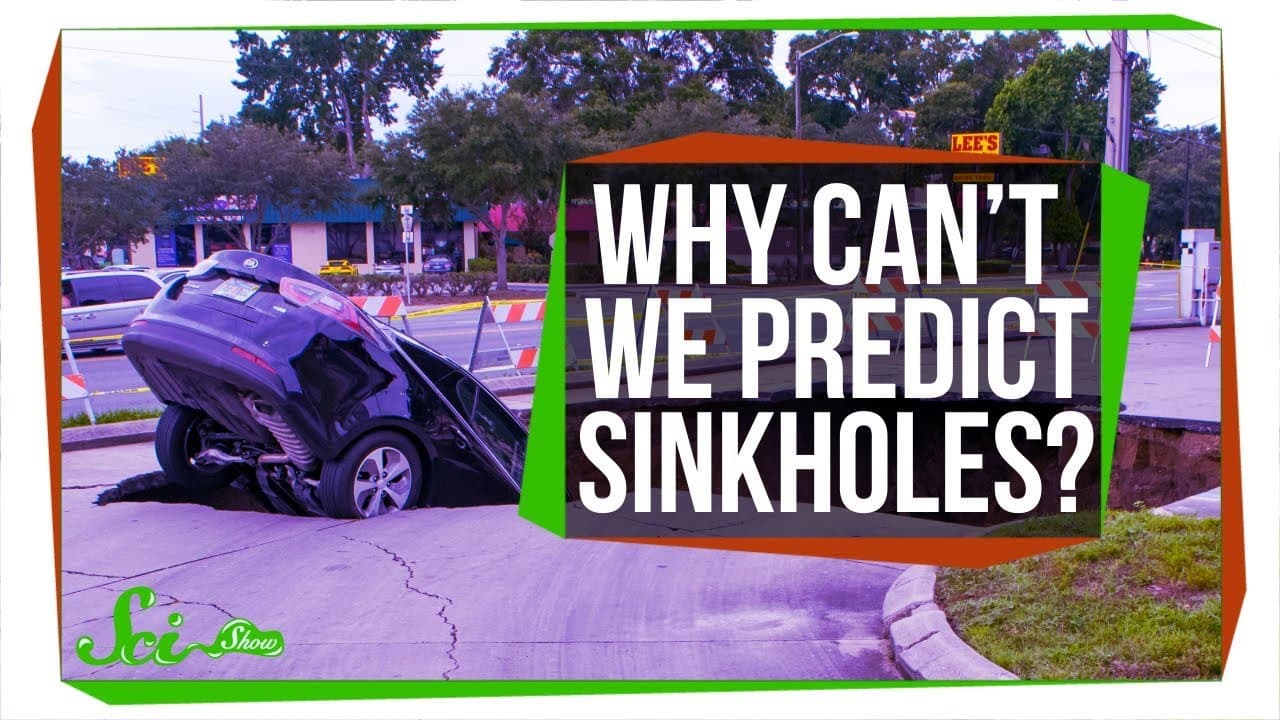
TL;DR
Sinkholes are challenging to forecast, as they can occur suddenly and without warning, posing significant risks to both property and human safety.
Transcript
This episode of SciShow is brought to you by SkillShare. [ intro ] On February 12, 2014, the Corvette Museum in Kentucky was greeted by a big, unwelcome surprise. A large sinkhole opened up under the museum and swallowed eight collector cars. Luckily, no humans were injured. With technology allowing us to more accurately predict natural disasters, ... Read More
Key Insights
- 💄 Sinkholes can occur through various processes, making their prediction and prevention challenging.
- 🍁 Maps and remote sensing techniques can help identify sinkhole-prone areas, but individual sinkholes remain unpredictable.
- 🥺 Slow erosion processes leading to sinkhole formation make continuous monitoring necessary but expensive.
- 💁 Human activities, such as groundwater diversion, can contribute to sinkhole formation.
- 🤘 Early signs of sinkhole formation include cracks in structures and changes in the landscape.
- 💦 Proper water management can help prevent sinkhole formation.
- 💁 Visualizing data and effectively communicating information are crucial in understanding and addressing the issue of sinkholes.
Install to Summarize YouTube Videos and Get Transcripts
Explore YouTube Video Summarizer or Get YouTube Transcript Extractor
Questions & Answers
Q: How are sinkholes formed?
Sinkholes can result from dissolution, cover subsidence, or cover collapse processes, with each process involving the erosion or collapse of underlying rock or soil layers.
Q: Can sinkholes be accurately predicted?
While there are maps and remote sensing techniques to identify sinkhole-prone regions, predicting individual sinkholes remains challenging due to the slow erosion process and the inability to determine the exact timing of collapse.
Q: What are some signs that a sinkhole may be forming?
Unusual cracks in walls, tilting trees, and changes in the ground's appearance are potential indicators that a sinkhole may be forming in an area.
Q: Can human activities contribute to sinkhole formation?
Yes, human activities such as diverting groundwater can exacerbate sinkhole formation by creating imbalances in water levels, leading to excessive erosion and collapse of underground structures.
Summary & Key Takeaways
-
A sinkhole is a depression in the ground caused by the collapse of underlying rock or soil layers.
-
Sinkholes can form through three main processes: dissolution, cover subsidence, and cover collapse.
-
While scientists have developed maps and remote sensing techniques to identify sinkhole-prone areas, accurately predicting individual sinkholes remains difficult.
Read in Other Languages (beta)
Share This Summary 📚
Summarize YouTube Videos and Get Video Transcripts with 1-Click
Try YouTube Summary with ChatGPT & Claude or YouTube Transcript Generator
Explore More Summaries from SciShow 📚


Summarize YouTube Videos and Get Video Transcripts with 1-Click
Try YouTube Summary with ChatGPT & Claude or YouTube Transcript Generator