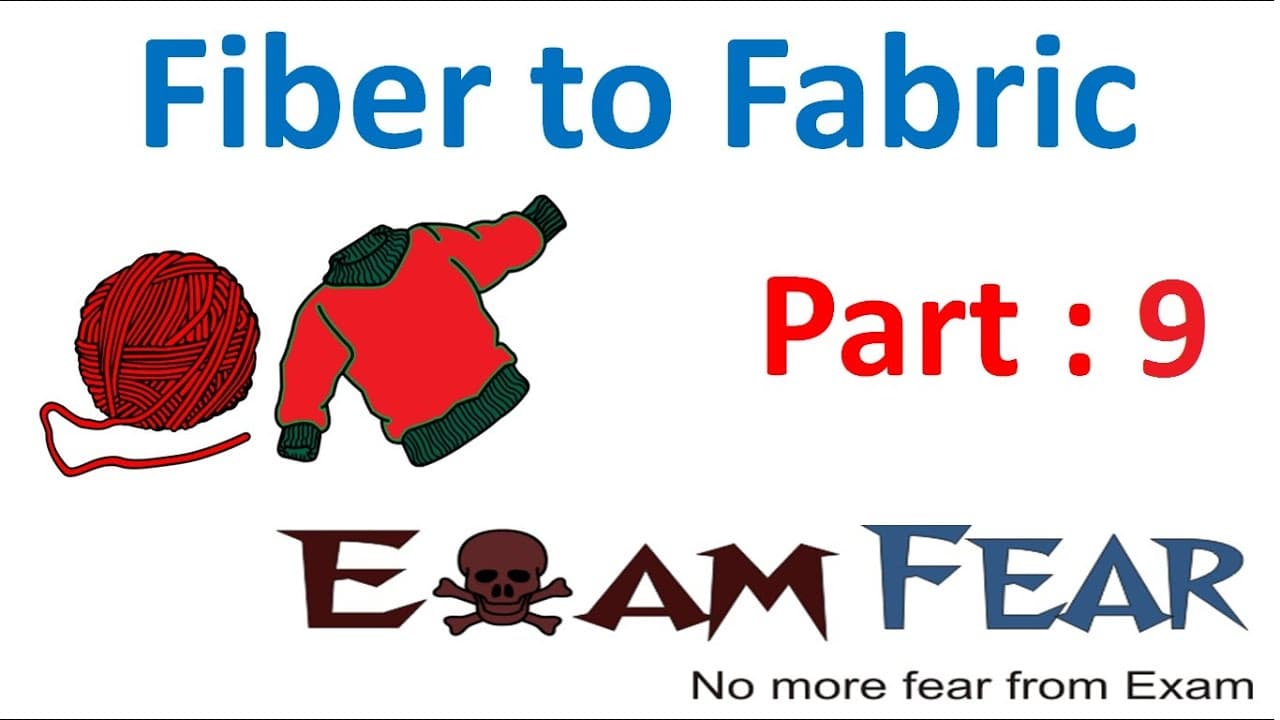
Chemistry Fiber to Fabric Part 9 (Questions) Class 6 VI
TL;DR
This video explains the process of making yarn from fibers and obtaining fabric, covering topics such as natural and synthetic fibers, classification, and the spinning process.
Transcript
hello friends this video on fiber and fabric part 9 is brought to you by example comm no more fear from example so with this we have reached towards the end of this lesson so we have discussed about some of the common natural plant fibers like cotton jute and the coil we also saw that how the fibers are converted into fabrics how we obtain fabric f... Read More
Key Insights
- 🥳 Cotton and jute fibers are obtained from different parts of the plant, cotton from fruits and jute from stems.
- 💅 Natural fibers include wool obtained from animals like sheep, while synthetic fibers like nylon and polyester are man-made.
- 🧶 Spinning is the process of twisting and stretching fibers to make yarn, which is used to create fabric.
- 🪱 Silk fiber is obtained from silk worms, not plants.
- 🥥 Coir, the outer covering of a coconut, is used to make items such as mattresses and brushes.
- 😒 The process of making yarn involves the use of spinning wheels or spindles to twist and stretch fibers.
- 💄 Understanding the different types of fabric can enhance appreciation for the fabric-making process.
Install to Summarize YouTube Videos and Get Transcripts
Explore YouTube Video Summarizer or Get YouTube Transcript Extractor
Questions & Answers
Q: What is the difference between natural and synthetic fibers?
Natural fibers exist in nature, obtained from plants or animals, while synthetic fibers are man-made.
Q: Is spinning the process of making fibers?
No, spinning is the process of making yarn from fibers by twisting and stretching them.
Q: What is the outer covering of a coconut called?
The outer covering of a coconut is called coir.
Q: Is silk fiber obtained from a plant?
No, silk fiber is obtained from silk worms, which are animals.
Summary & Key Takeaways
-
The video discusses common natural plant fibers such as cotton, jute, and coir, and explains how fibers are converted into fabrics.
-
It provides a classification of fibers as natural or synthetic, with examples such as wool, nylon, and polyester.
-
The video covers key concepts like the spinning process, where fibers are twisted and stretched to create yarn.
Read in Other Languages (beta)
Share This Summary 📚
Summarize YouTube Videos and Get Video Transcripts with 1-Click
Try YouTube Summary with ChatGPT & Claude or YouTube Transcript Generator
Explore More Summaries from LearnoHub - Class 11, 12 📚

Summarize YouTube Videos and Get Video Transcripts with 1-Click
Try YouTube Summary with ChatGPT & Claude or YouTube Transcript Generator