How to Overcome Japan's Silver Democracy
TL;DR
Japan faces challenges with an aging leadership and low birth rates, creating a society resistant to change. Young people are encouraged to step out of conformity, start new movements, and embrace discomfort to drive societal progress. The concept of basic income and its potential benefits are also explored as a means to foster innovation and reduce poverty.
Transcript
I can see why some young people in Japan have the feeling that you know Japan has no future right if it doesn't want to change right with a very low birth rate with the elderly people who are in charge right it's a gerontocracy it's Society ruled by the oil or if someone taught me this concept of her but is it silver democracy that is not good that... Read More
Key Insights
- Japan's current societal structure is described as a 'silver democracy,' dominated by the elderly, which hinders progress.
- Young people in Japan are urged to break free from societal conformity and initiate change by starting new companies or movements.
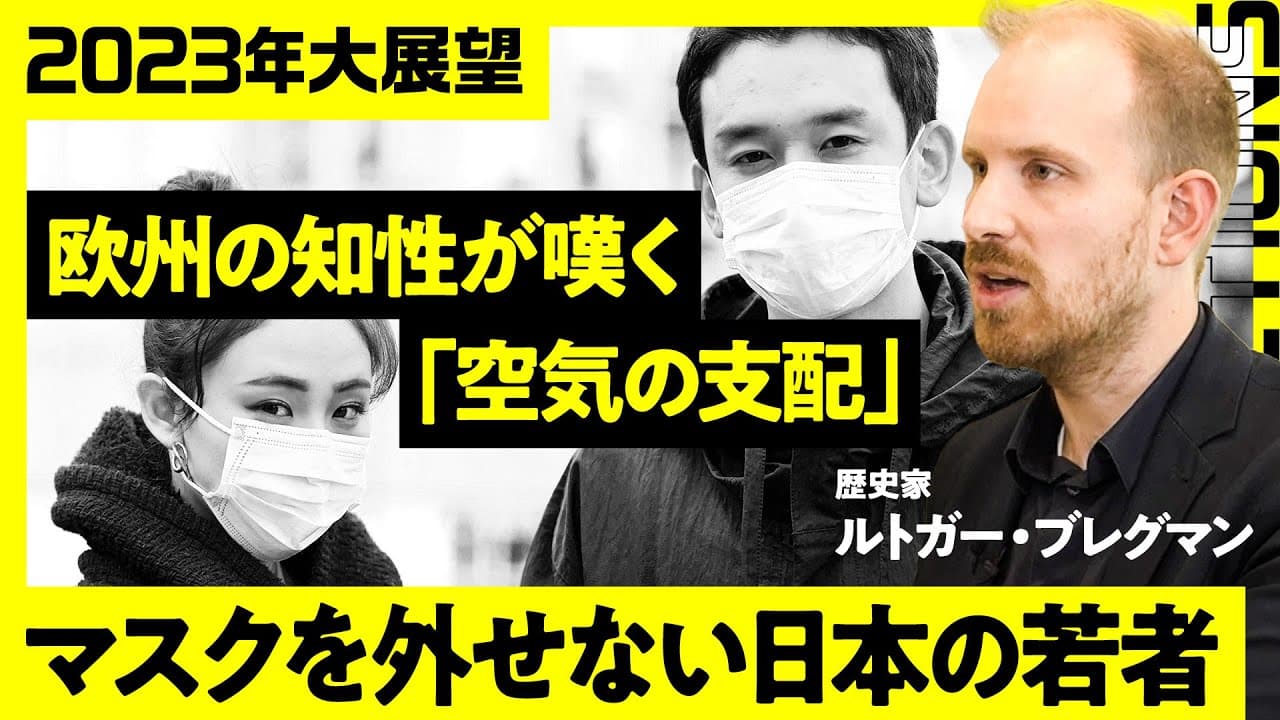
- Wearing masks in Japan is seen as a symbol of social conformity, which can stifle innovation and change.
- Basic income is proposed as a viable solution to eradicate poverty and empower individuals to pursue meaningful work.
- Historical examples show that significant societal changes often come from those willing to be uncomfortable and challenge the status quo.
- The Norwegian prison system demonstrates success by treating prisoners with dignity, resulting in low recidivism rates.
- Progress requires pragmatism and sometimes adopting strategies that may seem counterintuitive to achieve meaningful results.
- Constructive journalism is highlighted as a means to provide hope and focus on solutions rather than just reporting problems.
Install to Summarize YouTube Videos and Get Transcripts
Explore YouTube Video Summarizer or Get YouTube Transcript Extractor
Questions & Answers
Q: What is 'silver democracy' in Japan?
'Silver democracy' refers to a societal structure where the elderly dominate leadership positions, resulting in a resistance to change and progress. This term highlights the challenges faced by younger generations in Japan, who struggle to initiate societal changes due to the entrenched power of the older population. The concept suggests a need for a shift towards more inclusive and dynamic leadership.
Q: How can young people in Japan drive societal change?
Young people in Japan can drive societal change by stepping out of conformity and embracing discomfort. They are encouraged to start new companies, movements, or initiatives that challenge the status quo. By doing so, they can create new paths for progress and innovation, breaking free from the limitations imposed by a 'silver democracy' and fostering a more dynamic society.
Q: What role does basic income play in societal change?
Basic income plays a significant role in societal change by providing individuals with a financial safety net that allows them to pursue meaningful work and innovation. It aims to eradicate poverty by offering an unconditional monthly grant to cover basic needs, empowering people to follow their intrinsic motivations and contribute positively to society. Historical experiments have shown its potential benefits in improving education, health, and economic productivity.
Q: Why is wearing masks in Japan seen as a symbol of social conformity?
Wearing masks in Japan is seen as a symbol of social conformity because it reflects the tendency to follow societal norms without questioning their effectiveness. Despite scientific evidence suggesting limited benefits of wearing masks outdoors, the practice continues, highlighting the cultural pressure to conform. This conformity can stifle creativity and innovation, which are essential for societal progress and change.
Q: What lessons can be learned from Norway's prison system?
Norway's prison system teaches that treating prisoners with dignity and providing opportunities for rehabilitation can lead to positive outcomes. The system allows prisoners to socialize, study, and engage in creative activities, resulting in the lowest recidivism rates globally. This approach challenges the traditional punitive model and demonstrates the effectiveness of assuming the best in individuals to foster better citizens and reduce crime.
Q: How does constructive journalism differ from traditional news reporting?
Constructive journalism differs from traditional news reporting by focusing on solutions and highlighting positive changes rather than just problems. It aims to provide hope by showcasing people and initiatives addressing societal challenges, rather than perpetuating cynicism and pessimism. Constructive journalism emphasizes the importance of democracy and encourages journalists to take a stand on critical issues, promoting informed and engaged citizenship.
Q: What is the potential impact of basic income on poverty?
Basic income has the potential to significantly reduce poverty by providing an unconditional monthly grant that covers basic living expenses. This financial support allows individuals to pursue education, start businesses, or engage in meaningful work without the constant stress of financial insecurity. Historical experiments have shown that basic income can lead to improved health, education, and economic productivity, making it a viable solution for eradicating poverty.
Q: Why is pragmatism important in achieving societal change?
Pragmatism is crucial in achieving societal change because it involves adopting effective strategies that may not align with ideological purity but yield tangible results. Historical examples, such as the abolitionist movement, demonstrate that pragmatic approaches, like using unexpected arguments, can lead to significant progress. Pragmatism allows for flexibility and adaptability in addressing complex issues, ensuring that good intentions translate into meaningful outcomes.
Summary & Key Takeaways
-
Japan's societal structure, dominated by an aging population, is resistant to change, creating a sense of hopelessness among young people. Encouraging them to break from conformity and start new ventures is crucial for progress. The video discusses the potential of basic income to empower individuals and foster innovation, drawing parallels with historical movements for societal change.
-
The video explores the concept of 'silver democracy' in Japan, where the elderly hold power, leading to a stagnant society. It suggests that young people should embrace discomfort and challenge societal norms to drive change. Basic income is presented as a solution to reduce poverty and encourage meaningful work, drawing on historical examples of successful societal shifts.
-
Rutger Bregman discusses Japan's need for societal change, emphasizing the importance of young people stepping out of conformity. He highlights basic income as a potential solution to empower individuals and reduce poverty. The video also examines Norway's prison system as a model for treating individuals with dignity and achieving positive outcomes.
Read in Other Languages (beta)
Share This Summary 📚
Summarize YouTube Videos and Get Video Transcripts with 1-Click
Try YouTube Summary with ChatGPT & Claude or YouTube Transcript Generator
Explore More Summaries from PIVOT 公式チャンネル 📚





Summarize YouTube Videos and Get Video Transcripts with 1-Click
Try YouTube Summary with ChatGPT & Claude or YouTube Transcript Generator