Schedule changes for space station traffic on This Week @NASA
TL;DR
NASA adjusts International Space Station schedule, seeks new launch services for small satellites, discovers bright spots on Ceres, identifies sea salt on Europa, warns of collapsing Antarctica ice shelf, and reports a nine-year hurricane drought in the US.
Transcript
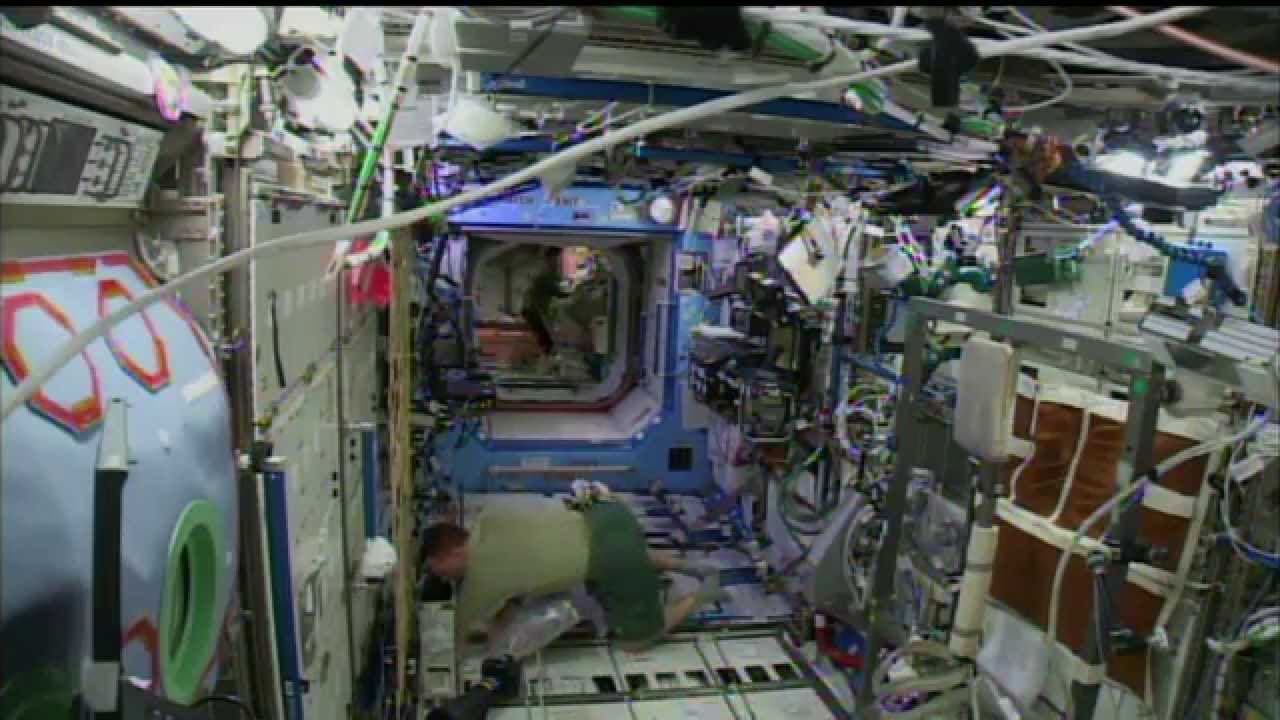
“Here’s some of the stories trending This Week at NASA!” NASA and its international partners are making changes to the International Space Station’s schedule of arriving and departing spacecraft, following the Russian Federal Space Agency's preliminary findings on its recent loss of the Progress 59 cargo craft. Exact dates will be announced in the ... Read More
Key Insights
- 🌸 NASA is adjusting International Space Station schedules based on investigations into the loss of the Progress 59 cargo craft.
- 💗 There is a growing need for dedicated launch services for small satellites and experiments.
- 🥶 NASA's Dawn spacecraft reveals that the bright spots on Ceres are composed of smaller spots and may be reflective material, possibly ice.
- 🌊 Laboratory experiments suggest the presence of sea salt on Europa's surface, indicating interaction with a subsurface ocean.
- 🤢 Antarctica's Larsen B Ice Shelf is rapidly weakening and expected to completely disintegrate in the next decade, accelerating global sea level rise.
- 🇺🇸 A record nine-year drought of major hurricanes making landfall in the United States has been observed.
- ❓ The cause of the hurricane drought is uncertain, but researchers suggest it may be a rare occurrence.
Install to Summarize YouTube Videos and Get Transcripts
Explore YouTube Video Summarizer or Get YouTube Transcript Extractor
Questions & Answers
Q: Why is NASA adjusting the schedule of arriving and departing spacecraft to the International Space Station?
NASA is making schedule adjustments based on the preliminary findings of the Russian Federal Space Agency's investigation into the loss of the Progress 59 cargo craft. Exact dates will be announced later.
Q: What is NASA's Launch Services Program seeking through the draft Request for Proposal?
NASA's Launch Services Program is seeking new commercial Venture Class Launch Services (VCLS) to send small satellites and experiments to space using smaller rockets, as there is a growing need for dedicated launch capability for these payloads.
Q: What do the close-up images of Ceres captured by NASA's Dawn spacecraft reveal?
The images show that the brightest spots within a crater on Ceres are composed of many smaller spots. These spots are believed to be caused by the reflection of sunlight by highly reflective material, possibly ice.
Q: What does the presence of sea salts on Europa's surface suggest?
NASA laboratory experiments indicate that the dark material coating some geological features on Europa is likely sea salt from a subsurface ocean. This implies that the ocean interacts with its rocky seafloor, a crucial factor in determining whether Europa could support life.
Summary & Key Takeaways
-
NASA announces schedule adjustments for the International Space Station, with some astronauts returning to Earth in June instead of May.
-
NASA's Launch Services Program seeks new commercial Venture Class Launch Services to send small satellites to space.
-
NASA's Dawn spacecraft captures close-up images of Ceres, revealing that the bright spots are composed of smaller spots.
-
NASA laboratory experiments suggest Europa's dark material is sea salt from a subsurface ocean.
-
Antarctica's Larsen B Ice Shelf is quickly weakening and likely to disintegrate before the end of the decade.
-
A NASA study reveals a nine-year drought of major hurricanes making landfall in the United States.
Read in Other Languages (beta)
Share This Summary 📚
Summarize YouTube Videos and Get Video Transcripts with 1-Click
Try YouTube Summary with ChatGPT & Claude or YouTube Transcript Generator
Explore More Summaries from NASA 📚
Summarize YouTube Videos and Get Video Transcripts with 1-Click
Try YouTube Summary with ChatGPT & Claude or YouTube Transcript Generator