How genius are made: Niklas Luhmann's zettelkasten and how to be creative and productive in thinking
TL;DR
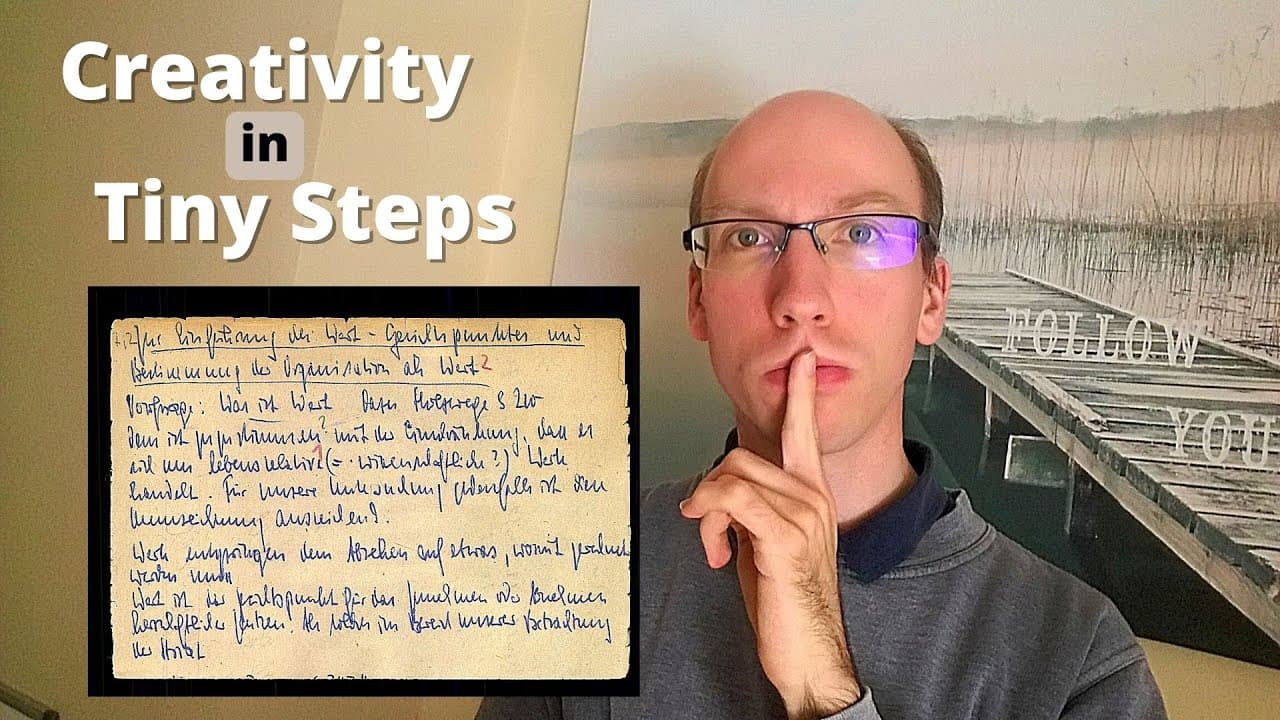
Niklas Luhmann, a German sociologist, used a thinking technique known as the zettelkasten method to develop his ideas. This method involves taking sparse and condensed notes while reading, organizing and linking the notes in a zettelkasten, and continuously transforming and expanding on the ideas.
Transcript
Hi guys and welcome to my channel. Whether Einstein, Darwin or Mozart; most great thinkers were both genius and highly productive. Darwin published 118 publications, some of them thick books. Einstein 248 publication. Mozart 600 compositions. But this is not a sign of their super-human capabilities. Both the ingenious ideas and the productivity hav... Read More
Key Insights
- 🤔 Luhmann's productivity and creativity were not solely based on innate genius, but on his thinking method.
- 👻 The zettelkasten method involved continuous transformation and expansion of ideas, allowing for the development of new thoughts and connections.
- 🤔 Input through reading, conversations, and observation is necessary for productive and creative thinking.
- 🤔 Regular engagement with a note-taking system or thinking tool is crucial for keeping track of and developing ideas.
Install to Summarize YouTube Videos and Get Transcripts
Explore YouTube Video Summarizer or Get YouTube Transcript Extractor
Questions & Answers
Q: Who was Niklas Luhmann and why is he well-known in Germany?
Niklas Luhmann was a German sociologist, well-known in Germany and continental Europe for his 50 books and approximately 400 papers. He aimed to develop a grand theory of everything in sociology.
Q: What was the zettelkasten method used by Luhmann?
The zettelkasten method involved taking sparse and condensed notes while reading, organizing them in a zettelkasten (index card box), and linking the notes to one another. Luhmann used this method to continuously develop his thoughts and ideas.
Q: How did Luhmann use hub notes in his zettelkasten method?
Luhmann created hub notes, which were zettels about a certain topic with subtopics. For each subtopic, he would write down the ID of three to four zettels that provided a good introduction. This allowed for quick traversal and exploration of the zettelkasten.
Q: What were the four distinct phases of Luhmann's thinking method?
The four phases were note-taking, transferring notes to zettels, working with the zettelkasten (reading, inserting new zettels, and creating hub notes), and answering questions using the zettelkasten as a resource.
Key Insights:
- Luhmann's productivity and creativity were not solely based on innate genius, but on his thinking method.
- The zettelkasten method involved continuous transformation and expansion of ideas, allowing for the development of new thoughts and connections.
- Input through reading, conversations, and observation is necessary for productive and creative thinking.
- Regular engagement with a note-taking system or thinking tool is crucial for keeping track of and developing ideas.
- The zettelkasten method can be adapted to various tools like notebooks or wikis.
Summary & Key Takeaways
-
Niklas Luhmann was a highly productive and creative German sociologist, with 50 books and approximately 400 papers published.
-
Luhmann's thinking technique, known as the zettelkasten method, involved taking sparse and condensed notes while reading, organizing them in a zettelkasten, and continuously transforming and expanding on the ideas.
-
The zettelkasten method was not solely reliant on the index card system, but also involved other activities such as reading, creating hub notes, and answering questions.
Read in Other Languages (beta)
Share This Summary 📚
Summarize YouTube Videos and Get Video Transcripts with 1-Click
Try YouTube Summary with ChatGPT & Claude or YouTube Transcript Generator
Explore More Summaries from Brain-Friendly Thinking 📚
Summarize YouTube Videos and Get Video Transcripts with 1-Click
Try YouTube Summary with ChatGPT & Claude or YouTube Transcript Generator