Hollywood writers strike - BBC News Review
TL;DR
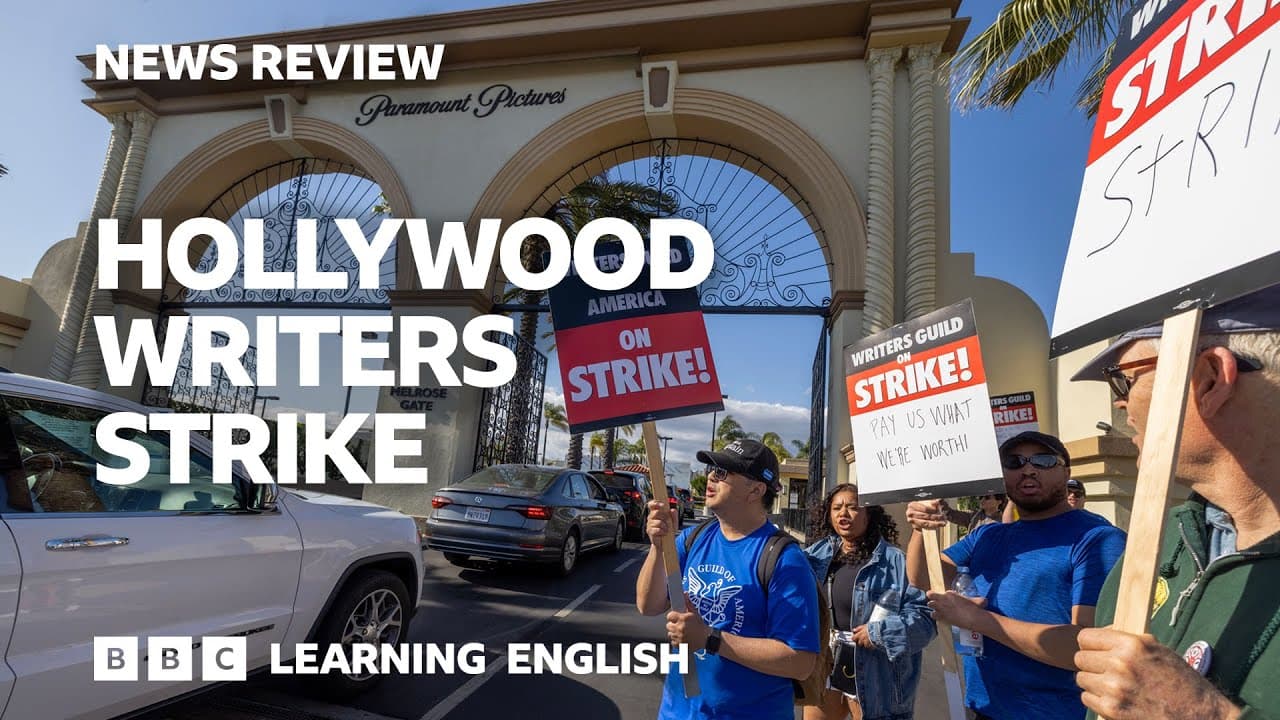
Hollywood writers strike over pay and AI concerns.
Transcript
The Hollywood writers' strike. Could your favourite shows stop? This is News Review from BBC Learning English. I'm Neil. And I'm Beth. Make sure you watch to the end to learn vocabulary to talk about this story. Don't forget to subscribe to our channel, like this video and try the quiz on our website. Now, the story. US TV networks can't show some ... Read More
Key Insights
- The Hollywood writers' strike is primarily focused on pay and working conditions, exacerbated by the rise of streaming services affecting traditional revenue models.
- Writers are concerned about the gig economy, which involves short-term work with less job security compared to traditional employment.
- The strike highlights fears of AI potentially writing scripts, which could further undermine writers' job security and creative control.
- The term 'gig economy' refers to a labor market characterized by short-term contracts or freelance work as opposed to permanent jobs.
- The strike has sparked significant disruption in the film industry, marking the first such action in 15 years and causing chaos among productions.
- TV networks are resorting to reruns, or repeats of previously aired programs, due to the halt in new script production caused by the strike.
- The metaphor of 'sparks' is used to describe how the strike has ignited widespread industry challenges and tensions.
- The strike's impact is felt across US TV networks, which are unable to air new episodes of popular programs, affecting audience engagement and network revenues.
Install to Summarize YouTube Videos and Get Transcripts
Explore YouTube Video Summarizer or Get YouTube Transcript Extractor
Questions & Answers
Q: What are the main reasons for the Hollywood writers' strike?
The main reasons for the Hollywood writers' strike include demands for better pay and working conditions, which have been negatively impacted by the rise of streaming services. Writers are also concerned about the potential for artificial intelligence to write scripts, which could further threaten their job security and creative control.
Q: How does the gig economy relate to the writers' strike?
The gig economy, characterized by short-term, insecure jobs, is a significant concern for striking writers. They criticize this labor market trend as it contributes to the deterioration of working conditions, lacking the job security and benefits associated with traditional employment. This issue is central to the writers' demands during the strike.
Q: What impact has the strike had on US TV networks?
The strike has significantly impacted US TV networks by halting the production of new scripts, forcing them to air reruns of previously shown programs. This disruption affects audience engagement and network revenues, as networks are unable to provide fresh content to viewers during the strike.
Q: Why is there concern about AI in scriptwriting?
There is concern about AI in scriptwriting because it poses a threat to writers' job security and creative roles. If AI can be used to generate scripts, it could replace human writers, leading to fewer job opportunities and diminishing creative input from professional writers in the entertainment industry.
Q: What does the term 'sparks' signify in the context of the strike?
In the context of the strike, 'sparks' signifies the initiation of widespread industry challenges and tensions. The term is metaphorically used to describe how the strike has ignited significant disruptions and chaos within the film and television industry, affecting production schedules and industry dynamics.
Q: What are reruns, and why are they relevant to the strike?
Reruns are previously aired TV programs that are shown again. They are relevant to the strike because, with the halt in new script production, TV networks have resorted to broadcasting reruns to fill programming slots. This serves as a temporary solution but highlights the disruption caused by the strike in providing new content.
Q: How does the strike compare to previous industry actions?
This strike is notable as it is the first Hollywood writers' strike in 15 years, marking a significant industry action. It underscores ongoing and evolving challenges within the entertainment sector, particularly in response to technological advancements and changing economic models, such as the rise of streaming services.
Q: What vocabulary terms are highlighted in the news review?
The news review highlights vocabulary terms such as 'gig economy,' referring to a labor market of short-term work; 'sparks,' meaning causes or initiates; and 'reruns,' which are old programs shown again. These terms are used to explain the dynamics and impact of the Hollywood writers' strike on the industry.
Summary & Key Takeaways
-
The Hollywood writers' strike centers on demands for better pay and working conditions, as streaming services have disrupted traditional revenue models. Writers also express concerns about the potential for AI to replace human scriptwriters, further threatening job security in the industry.
-
The term 'gig economy' describes a labor market with short-term, insecure jobs, which writers criticize as detrimental to their working conditions. This has become a focal point of the strike, highlighting broader issues in employment trends within the entertainment industry.
-
The strike has caused significant disruption, with TV networks forced to air reruns due to halted script production. This action, the first in 15 years, has sparked chaos in the industry, affecting both the creation of new content and the airing of popular programs.
Read in Other Languages (beta)
Share This Summary 📚
Summarize YouTube Videos and Get Video Transcripts with 1-Click
Try YouTube Summary with ChatGPT & Claude or YouTube Transcript Generator
Explore More Summaries from BBC Learning English 📚
Summarize YouTube Videos and Get Video Transcripts with 1-Click
Try YouTube Summary with ChatGPT & Claude or YouTube Transcript Generator