Some Of You Can See The Invisible
TL;DR
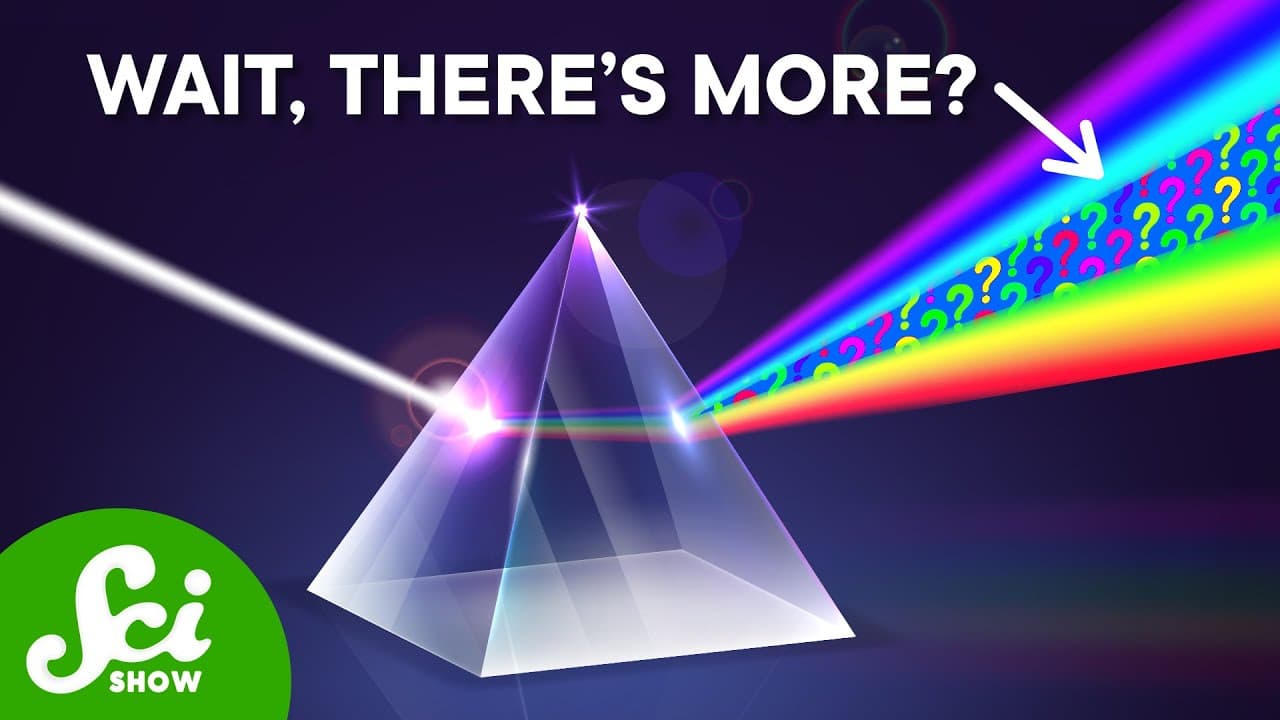
Some people can see colors that are invisible to the rest of us due to gene mutations or conditions, such as aphakia or tetrachromacy.
Transcript
Thanks to Brilliant for supporting this SciShow video! As a SciShow viewer, you can keep building your STEM skills with a 30-day free trial and 20% off an annual premium subscription at Brilliant.org/SciShow. Believe it or not, there are people who can see what's invisible to most of us. I'm not talking about some sci-fi superpower like X-ray visio... Read More
Key Insights
- 🙂 The human eye can only see a range of wavelengths within the visible light spectrum, but some people can perceive light outside this range, such as UV and infrared light.
- 😃 Aphakic individuals, who lack a lens in their eye, can see UV light as bluish-violet.
- 🙂 Processing two pulses of infrared light at once allows some people to see it as visible green light.
- 😃 Tetrachromats, individuals with four types of cones in their eyes, can perceive a wider range of colors than the average person.
Install to Summarize YouTube Videos and Get Transcripts
Explore YouTube Video Summarizer or Get YouTube Transcript Extractor
Questions & Answers
Q: How does seeing regular visible light work?
Light bounces off objects and enters the eye, passing through the cornea, pupil, and lens. Photoreceptors on the retina then convert light into electrical signals, which are sent to the brain for processing.
Q: What is aphakia, and how does it affect vision?
Aphakia is a condition where a person is missing a lens in one or both eyes. UV light can pass through the eye and trigger photoreceptors on the retina. While it allows the individual to see UV light, it also results in blurry vision because the lens is responsible for focusing light.
Q: How do some people see infrared light?
Scientists have discovered that when infrared light pulses quickly, the photoreceptors in the eye process two pulses at once, doubling the amount of energy that hits the receptor. This tricks the receptor into perceiving the light as visible green light.
Q: What is tetrachromacy?
Tetrachromacy is a condition where individuals have four types of cones in their eyes, allowing them to perceive millions of colors that are indistinguishable to most people. This occurs due to a mutation on one of the X chromosomes, resulting in a new pigment molecule sensitive to a different color of light.
Summary & Key Takeaways
-
The average person sees millions of colors within the visible light spectrum, but there are wavelengths of light outside our range of vision.
-
Some people with aphakia, a condition where they lack a lens in one or both eyes, can see ultraviolet (UV) light as whitish-blue or -violet.
-
Scientists have discovered that certain individuals can detect infrared light by processing two pulses of infrared light at once, tricking the photoreceptors in the eye.
Read in Other Languages (beta)
Share This Summary 📚
Summarize YouTube Videos and Get Video Transcripts with 1-Click
Try YouTube Summary with ChatGPT & Claude or YouTube Transcript Generator
Explore More Summaries from SciShow 📚


Summarize YouTube Videos and Get Video Transcripts with 1-Click
Try YouTube Summary with ChatGPT & Claude or YouTube Transcript Generator