What Are ETFs and How Do They Work? Investing Basics: ETFs
TL;DR
ETFs are investment funds that trade like stocks while pooling investors’ money into baskets of stocks, bonds, or other securities. They can provide diversification, trade throughout the day, and generate returns through rising prices or dividends, but prices can fall and fees can reduce profits. Read on to understand NAV, liquidity, diversification, dividend yield, and expense ratios.
Transcript
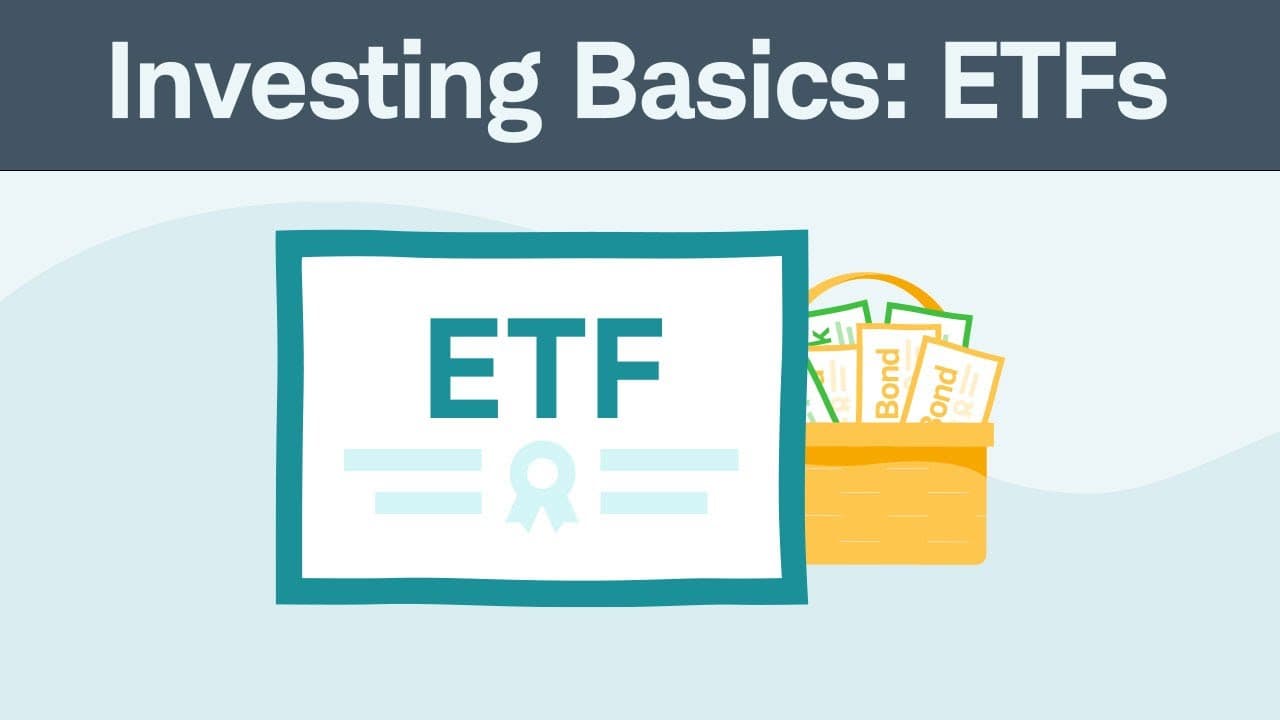
An exchange-traded fund, or ETF, is an investment fund that trades like a stock. ETFs, like other types of funds, pool together money from investors into a basket of different investments, including stocks, bonds, and other securities. By spreading the fund's money into different securities, ETFs can generally provide investors with diversification... Read More
Key Insights
- 🤑 ETFs are investment funds that trade like stocks and offer diversification by pooling money into different securities.
- 🫰 There are various types of ETFs, each with its own objective, such as replicating market indices or focusing on specific sectors.
- 💐 Investors can potentially profit from an ETF through price appreciation and dividends, but there are risks involved.
- 🥳 ETFs can be bought and sold throughout the day on stock exchanges, but liquidity issues may arise for less widely traded ETFs.
- 🥳 Evaluating expense ratios, standardized performance, and dividend yield is crucial when analyzing ETFs.
Install to Summarize YouTube Videos and Get Transcripts
Explore YouTube Video Summarizer or Get YouTube Transcript Extractor
Questions & Answers
Q: What is an ETF?
An exchange-traded fund, or ETF, is an investment fund that trades like a stock. It pools investors’ money into a basket that may contain stocks, bonds, or other securities.
Q: How do ETFs provide diversification?
ETFs spread money across different securities, which can help investors manage risk. The actual level of diversification depends on what the ETF tracks, since a sector ETF is less diversified than one replicating a broad market index.
Q: How are ETF shares bought and sold?
ETF shares are bought and sold on a stock exchange like individual stocks and may incur commissions. Most ETFs can be traded throughout the day, although less widely traded funds may present difficulties when filling orders.
Q: What is the difference between an ETF’s market price and NAV?
An ETF’s market price is the price at which its shares trade, while net asset value, or NAV, is the combined value of its holdings. The two values may differ because of how ETFs trade and track their component investments, though the discrepancies are typically minor.
Q: What types of investments can ETFs hold or track?
ETFs can invest in assets such as stocks, corporate bonds, commodities, and currencies, including domestic and international investments. Some replicate broad indexes like the Dow Jones Industrial Average® or S&P 500®, while others track sectors such as information technology or pharmaceuticals.
Q: How can investors potentially profit from an ETF?
ETF investors can potentially earn returns through a rising underlying asset price and dividends. In the transcript’s hypothetical example, buying at $40 and selling a year later at $50 produces a $10 per share profit, while selling after a price decline creates a loss.
Q: What is an ETF’s dividend yield?
Dividend yield indicates how much a fund pays out compared with the current market price of a share. It can help identify dividend income, but it is not the only measure of ETF performance, so standardized performance should also be considered.
Q: What is an ETF expense ratio?
An expense ratio is a fee that an ETF charges annually to cover its management costs. A high expense ratio can eat into an investor’s profits.
Summary & Key Takeaways
-
Definition: An ETF is an investment fund that trades like a stock and pools investors’ money into a basket of securities.
-
Definition: Diversification comes from spreading fund money across different securities, which can help manage risk.
-
Compare: A sector-tracking ETF offers less diversification than an ETF designed to replicate a broad market index.
-
Definition: NAV is the total combined value of an ETF’s holdings and may differ slightly from its market price.
-
Tool: ETFs may track the Dow Jones Industrial Average®, S&P 500®, information technology, pharmaceuticals, or other markets.
-
Number: A hypothetical ETF bought at $40 and sold a year later at $50 produces a $10 per share profit.
-
Definition: Dividend yield compares a fund’s payout with the current market price of a share.
-
Definition: Standardized performance provides another way to evaluate an ETF beyond dividend yield.
-
Definition: The expense ratio is an annual fee covering fund management costs, and high ratios can reduce profits.
-
Compare: Most ETFs trade throughout the day, but less widely traded ETFs may make orders difficult to fill.
-
Who: Investors seeking exposure to a basket of investments can purchase one ETF instead of buying each investment separately.
-
Tool: ETFs can provide access to corporate bonds, domestic and international stocks, commodities, currencies, and other investments.
Read in Other Languages (beta)
Share This Summary 📚
Summarize YouTube Videos and Get Video Transcripts with 1-Click
Try YouTube Summary with ChatGPT & Claude or YouTube Transcript Generator
Explore More Summaries from Charles Schwab 📚





Summarize YouTube Videos and Get Video Transcripts with 1-Click
Try YouTube Summary with ChatGPT & Claude or YouTube Transcript Generator