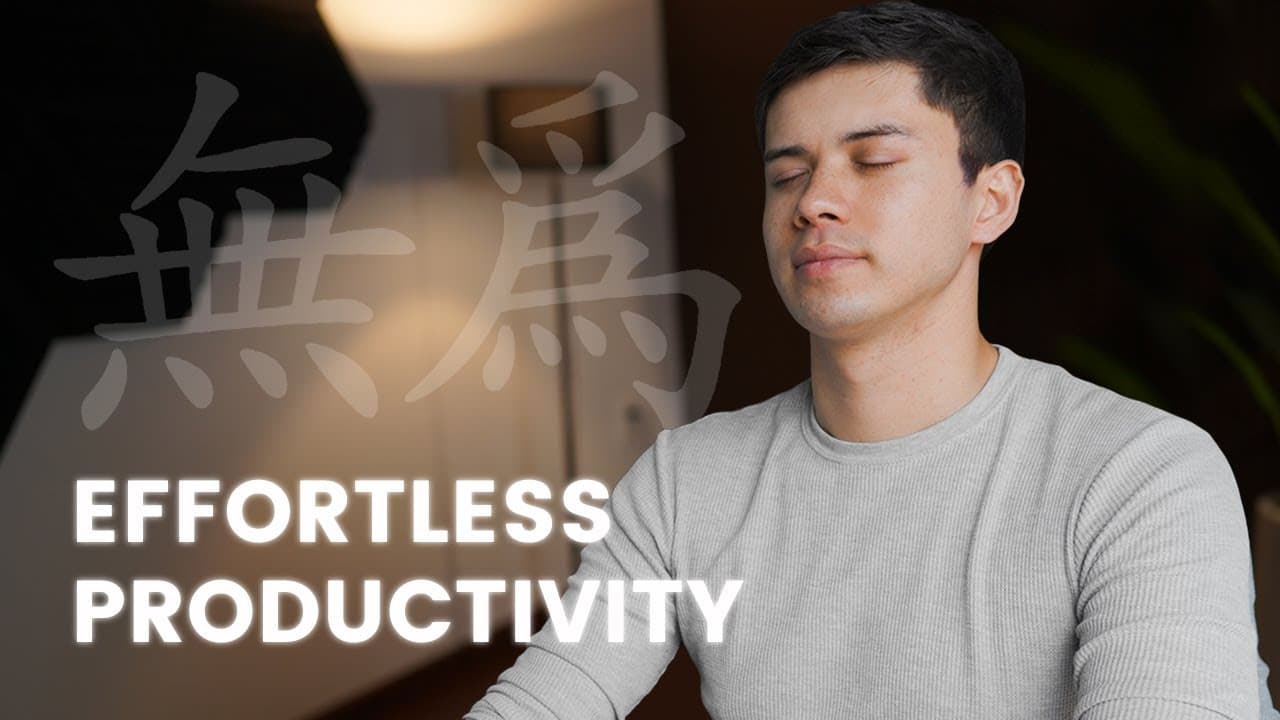
The Art of Effortless Productivity: Wu Wei (Taoism)
TL;DR
Adopting Wu Wei enhances productivity by embracing effortless action.
Transcript
these are the motivational videos I was uploading on this channel from 2016 to 2020. average is for the week don't ever give up Comfort is everybody's worst nightmare but then I realized what am I doing I don't actually believe averages for the week I don't actually believe you should never give up in fact I actually think you should give up regula... Read More
Key Insights
- The speaker transitioned from motivational videos to exploring deeper productivity concepts, realizing that constant hustle isn't sustainable.
- Wu Wei, a Taoist principle, emphasizes effortless action, suggesting that productivity should not be forced but flow naturally.
- The speaker's work schedule includes focused four-hour chunks, allowing for deep work without distractions, enhancing productivity.
- Rest and self-care are essential; if tired, taking breaks or naps is encouraged to maintain energy and effectiveness.
- Strategic quitting is advocated; giving up on tasks not aligned with one's goals can lead to better focus and outcomes.
- The speaker highlights the importance of habits and routines, such as going to a coffee shop, to train the mind and body for productivity.
- The law of reversed effort suggests that trying too hard can lead to failure; instead, balance and ease should be prioritized.
- Effortless productivity is an antidote to hustle culture, focusing on energy management over time management for sustainable success.
Install to Summarize YouTube Videos and Get Transcripts
Explore YouTube Video Summarizer or Get YouTube Transcript Extractor
Questions & Answers
Q: What is Wu Wei and how does it relate to productivity?
Wu Wei is a Taoist principle that translates to 'effortless action.' It suggests that productivity should not be forced but should flow naturally. By aligning actions with this principle, individuals can achieve more by doing less, focusing on energy management and natural flow rather than sheer effort.
Q: How does the speaker implement Wu Wei in their daily routine?
The speaker adopts Wu Wei by structuring their day into focused four-hour work chunks, allowing for deep work without distractions. They also prioritize rest and self-care, taking breaks or naps when tired, and engaging in routines that train their mind and body for productivity, such as visiting a coffee shop each morning.
Q: Why does the speaker advocate for strategic quitting?
The speaker believes that strategic quitting is essential for focusing on tasks that truly matter. By giving up on tasks that don't align with one's goals, individuals can conserve energy and direct their efforts towards more meaningful and productive activities, leading to better outcomes and personal satisfaction.
Q: What is the law of reversed effort, and how does it apply to productivity?
The law of reversed effort states that the harder one tries to achieve something, the more likely they are to fail. In terms of productivity, this means that overexertion and forcing tasks can lead to burnout and inefficiency. Instead, a balanced and easeful approach is encouraged for sustainable success.
Q: How does the speaker view hustle culture, and what alternative do they propose?
The speaker criticizes hustle culture for promoting constant work and burnout. Instead, they propose Wu Wei as an alternative, focusing on energy management and natural flow. By adopting effortless productivity, individuals can achieve more without the negative effects of excessive hustle and stress.
Q: What routines does the speaker recommend for enhancing productivity?
The speaker recommends establishing routines that train the mind and body for productivity, such as visiting a coffee shop for focused work sessions. They also emphasize the importance of maintaining good sleep, nutrition, and exercise habits to support overall well-being and effective work performance.
Q: How does the speaker handle days when they feel unproductive?
On days when the speaker feels unproductive, they focus on easier, more enjoyable tasks that still contribute to their overall goals. This approach allows them to maintain a level of productivity without forcing themselves to engage in demanding tasks that could lead to burnout.
Q: What is the speaker's perspective on failure and learning?
The speaker views failure as an opportunity for learning and growth. They advocate for failing fast and learning from mistakes, which aligns with the Wu Wei principle of going with the flow and adapting to challenges without forcing outcomes. This mindset fosters resilience and continuous improvement.
Summary & Key Takeaways
-
The video discusses the concept of Wu Wei, a Taoist principle advocating for effortless action in achieving productivity. The speaker emphasizes the importance of not forcing productivity but allowing it to flow naturally through structured routines and habits.
-
By implementing Wu Wei, the speaker has found a more balanced approach to work, focusing on deep work sessions and allowing for rest when needed. This method has led to increased productivity without the burnout associated with constant hustle.
-
Strategic quitting and the law of reversed effort are highlighted as key components of Wu Wei. These concepts encourage giving up on non-essential tasks and avoiding the pitfalls of overexertion, ultimately leading to more effective and sustainable productivity.
Read in Other Languages (beta)
Share This Summary 📚
Summarize YouTube Videos and Get Video Transcripts with 1-Click
Try YouTube Summary with ChatGPT & Claude or YouTube Transcript Generator
Explore More Summaries from Mike Dee 📚



Summarize YouTube Videos and Get Video Transcripts with 1-Click
Try YouTube Summary with ChatGPT & Claude or YouTube Transcript Generator