Minimal Pairs in Vietnamese Pronunciation: E & Ê | Learn Vietnamese with TVO
TL;DR
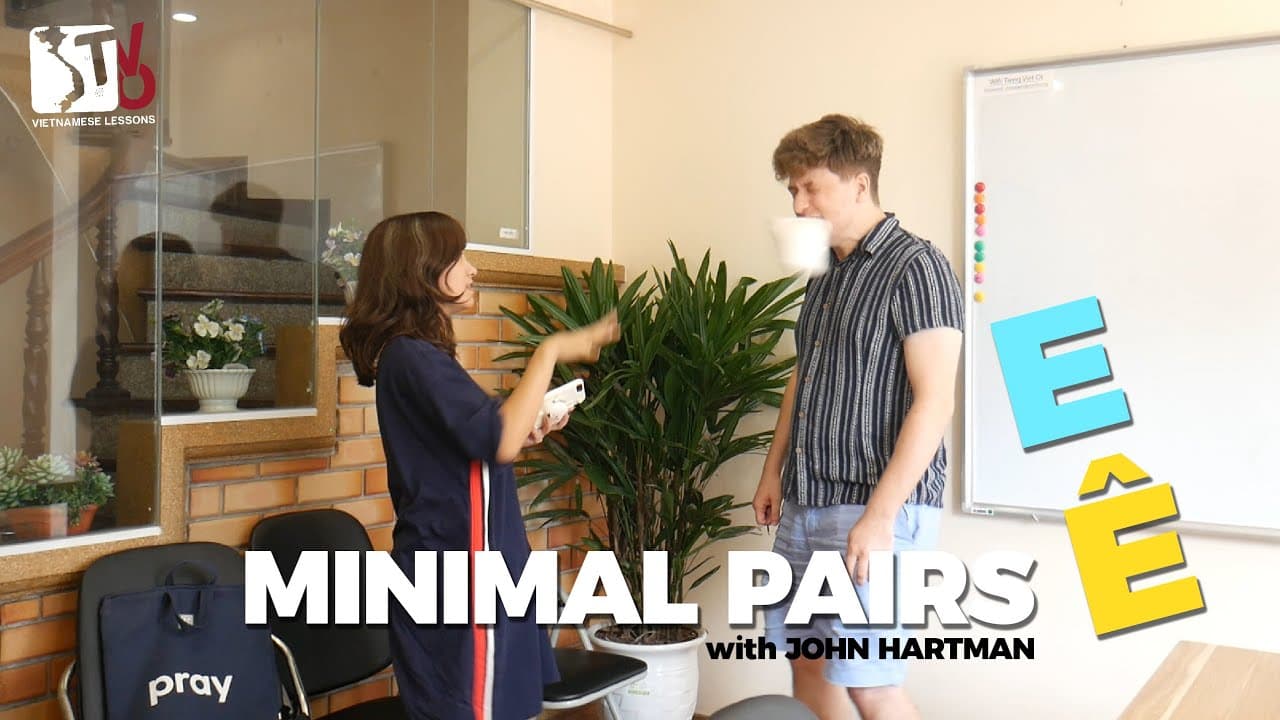
Understanding Vietnamese vowels E and Ê through nasality, not mouth shape.
Transcript
uh this is going to be our first video in a series teaching pronunciation through minimal pairs which you know sets of two words which are very similar and only different at one particular point and it's an essential way of teaching sounds like the different sounds in the language so for the first video we're going to be learning about e and a whic... Read More
Key Insights
- The video introduces a series on Vietnamese pronunciation focusing on minimal pairs, starting with the vowels E and Ê.
- Common teaching methods emphasize mouth shape, but the video argues that nasality is the key distinction between E and Ê.
- The sound E (without the hat) is more nasal, while Ê (with the hat) is produced from the throat.
- Holding your nose while pronouncing these vowels can help determine if you are using the correct nasality.
- Mouth shape plays a minor role; a wider mouth for E and a narrower one for Ê may be typical but not crucial.
- Alternative pronunciation using a regional accent can help learners if they struggle with nasality.
- The video encourages practice with example words to distinguish between the nasal and throaty sounds.
- Tieng Viet Oi offers both online and offline Vietnamese lessons to help learners master pronunciation and other language skills.
Install to Summarize YouTube Videos and Get Transcripts
Explore YouTube Video Summarizer or Get YouTube Transcript Extractor
Questions & Answers
Q: What is the main focus of the video?
The main focus of the video is to teach the pronunciation of Vietnamese vowels E and Ê by emphasizing the importance of nasality over traditional methods that focus on mouth shape. It introduces minimal pairs as a method to distinguish between these two sounds effectively.
Q: How does the video suggest distinguishing between E and Ê?
The video suggests distinguishing between E and Ê by focusing on nasality. E is more nasal, while Ê is produced from the throat. Holding your nose while pronouncing these vowels can help determine if the correct nasality is being used, as E will feel different when the nose is pinched.
Q: What common teaching method does the video challenge?
The video challenges the common teaching method that emphasizes mouth shape as the primary way to distinguish between E and Ê. It argues that this approach involves unnecessary steps and can lead to confusion, whereas focusing on nasality provides a clearer distinction.
Q: What role does mouth shape play in pronouncing E and Ê?
Mouth shape plays a minor role in pronouncing E and Ê. While it is typical for Vietnamese speakers to use a wider mouth for E and a narrower one for Ê, this is not crucial for correct pronunciation. The key is to focus on the nasality of each sound.
Q: What practical exercise does the video recommend?
The video recommends a practical exercise of holding your nose while pronouncing the vowels to check for nasality. For E, the nasal sound should be noticeable when the nose is pinched, while for Ê, there should be no difference, indicating correct pronunciation.
Q: What alternative pronunciation method is suggested?
The video suggests using a regional accent as an alternative pronunciation method if learners struggle with nasality. This involves turning the nasal E into a diphthong, similar to a countryside accent, which can help learners be understood, though it may attract attention.
Q: What resources does Tieng Viet Oi offer?
Tieng Viet Oi offers both online and offline Vietnamese lessons aimed at providing practical and communication-based learning experiences. They encourage learners to sign up for these classes to gain a deeper understanding of Vietnamese pronunciation and other language skills.
Q: How does the video conclude?
The video concludes by encouraging viewers to like, comment, and subscribe to their content. It emphasizes the importance of signing up for Tieng Viet Oi's classes as a comprehensive way to learn Vietnamese, suggesting that it is the only conceivable way to master the language effectively.
Summary & Key Takeaways
-
The video focuses on teaching the pronunciation of Vietnamese vowels E and Ê using minimal pairs. It challenges the traditional emphasis on mouth shape, suggesting that nasality is the primary distinction between these sounds.
-
Learners are advised to practice nasality by holding their nose while speaking to feel the difference. The video provides practical exercises and examples to help distinguish between the nasal E and the throaty Ê.
-
Tieng Viet Oi offers additional resources for learning Vietnamese, including online and offline classes. The video concludes by encouraging viewers to engage with their content and consider joining their lessons for a deeper understanding of the language.
Read in Other Languages (beta)
Share This Summary 📚
Summarize YouTube Videos and Get Video Transcripts with 1-Click
Try YouTube Summary with ChatGPT & Claude or YouTube Transcript Generator
Explore More Summaries from Tieng Viet Oi - Vietnamese Lessons 📚

Summarize YouTube Videos and Get Video Transcripts with 1-Click
Try YouTube Summary with ChatGPT & Claude or YouTube Transcript Generator