Scientific Adventures at the Shell Energy Lab!
TL;DR
A scientist discusses his experience giving a speech on science education and participating in energy demonstrations at the Shell Energy Lab in Rotterdam.
Transcript
so I just got back from an amazing trip I was visiting Rotterdam in the Netherlands where I was invited to give a speech about science education at an awesome conference hosted by shell I talked about how we need to make science education fun and to make some of my points I played rock and roll piano up on stage I think people really enjoy it I had... Read More
Key Insights
- 🎓 Science education can be made more engaging and enjoyable by incorporating elements like music and interactive demonstrations.
- ❎ Static electricity occurs when electrons move between objects, creating positive and negative charges.
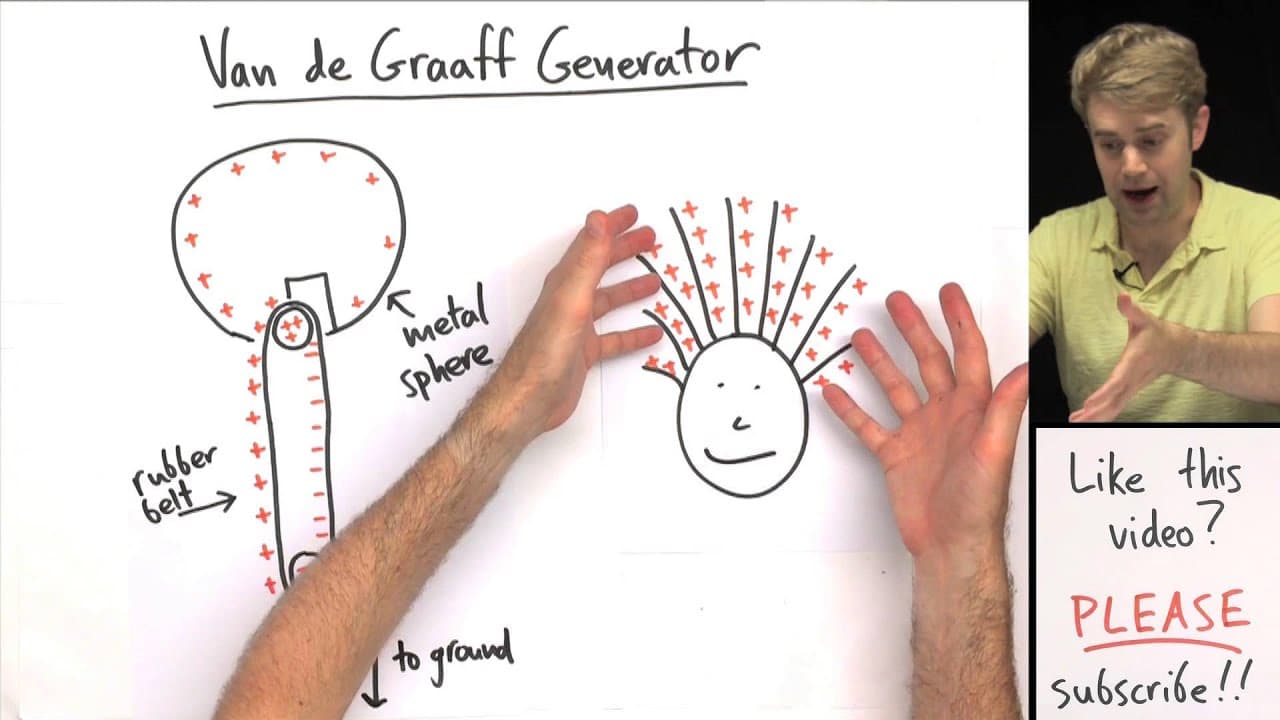
- 🏚️ The Van der Graaf generator is a device that uses rollers and a belt to create static electricity by transferring electrons and generating positively charged objects.
Install to Summarize YouTube Videos and Get Transcripts
Explore YouTube Video Summarizer or Get YouTube Transcript Extractor
Questions & Answers
Q: What was the main focus of the speaker's speech at the conference?
The speaker focused on the importance of making science education fun, using rock and roll piano as a metaphor to engage the audience and convey their message effectively.
Q: How does static electricity work and what was the demonstration shown?
Static electricity occurs when electrons move from one object to another, creating positive charge in one object and negative charge in another. The demonstration showed how hair stands on end due to the movement of electrons from the hair to a metal ball, resulting in a positive charge.
Q: How does a Van der Graaf generator work in creating static electricity?
The Van der Graaf generator uses rollers and a rubber belt to create static electricity. Electrons move from the top roller to the belt, making it negatively charged. When the belt reaches the lower roller, negative charge accumulates on it. The excess negative charge is discharged to the ground, leaving a positively charged belt. The roller up top gives electrons to the belt, creating a positively charged roller and a positively charged metal sphere, which can transfer positive charge to other objects like hair.
Q: How does a direct current generator work?
A direct current generator involves a coil of wire placed between the poles of a magnet. When the wire moves in the magnetic field, it forces electrons to move along the wire, creating electricity. By spinning the coil of wire using a handle, the movement of electrons can be increased, generating higher voltage and allowing the small cars to go faster.
Summary & Key Takeaways
-
The speaker visited Rotterdam to give a speech about science education at a conference hosted by Shell and also had the opportunity to perform rock and roll piano on stage.
-
After the speech, the speaker explored the Energy Lab where they conducted various cool energy-related demonstrations and interacted with young participants.
-
The demonstrations included a static electricity demonstration and an explanation of a Van der Graaf generator, as well as a direct current generator for racing small cars.
Read in Other Languages (beta)
Share This Summary 📚
Summarize YouTube Videos and Get Video Transcripts with 1-Click
Try YouTube Summary with ChatGPT & Claude or YouTube Transcript Generator
Explore More Summaries from Tyler DeWitt 📚

Summarize YouTube Videos and Get Video Transcripts with 1-Click
Try YouTube Summary with ChatGPT & Claude or YouTube Transcript Generator