Montesquieu
TL;DR
Montesquieu explored the transformative impact of commerce on society.
Transcript
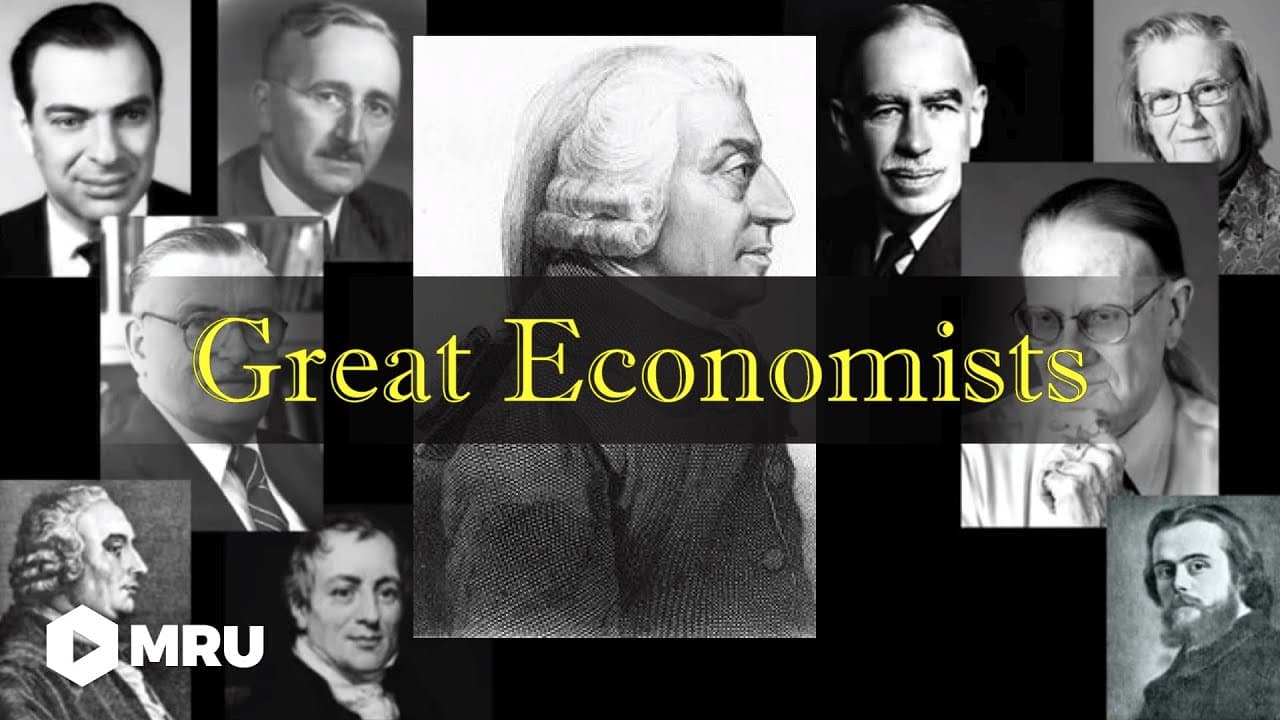
Now let's talk about the French writer and political theorist Montesquieu. Montesquieu was born in 1689, and his most famous work, and the most relevant work here, Spirit of the Laws, was published in 1748. This is a difficult book to get a handle on. It's a sprawling masterpiece, very long, about political theory and mankind's place in the cosmo... Read More
Key Insights
- Montesquieu's 'Spirit of the Laws' is a sprawling masterpiece that delves into political theory, economics, and social mores, influencing American Founding Fathers.
- Montesquieu's 'doux commerce' thesis suggests that trade softens cultural mores, encourages world peace, and transforms social interactions.
- Although Montesquieu saw commerce as beneficial, he also recognized its negative impact on hospitality and human virtues.
- He understood the benefits of free trade and critiqued mercantilist views, seeing money as an abstract measure of value rather than wealth.
- Montesquieu explored the role of climate and geography in economic growth, a topic still relevant in modern development economics.
- He believed the history of civilization had become intertwined with the history of commerce, highlighting his comprehensive worldview.
- For those new to Montesquieu, 'The Persian Letters' and secondary sources like Henry Clark's works are recommended starting points.
- Montesquieu's ideas on commerce and society remain profound, making him one of the most significant thinkers of the 18th century.
Install to Summarize YouTube Videos and Get Transcripts
Explore YouTube Video Summarizer or Get YouTube Transcript Extractor
Questions & Answers
Q: What is Montesquieu's 'doux commerce' thesis?
Montesquieu's 'doux commerce' thesis posits that trade softens cultural mores and political interactions, promoting global peace and transforming human relationships. He believed that commerce could lead to more tolerant societies, although he also recognized its potential to make people less hospitable and more coarse.
Q: How did Montesquieu influence the American Founding Fathers?
Montesquieu influenced the American Founding Fathers through his theory of political checks and balances, as outlined in 'Spirit of the Laws.' His ideas on the separation of powers were integral to the development of the U.S. Constitution, shaping the framework of American governance and ensuring a system of checks and balances.
Q: What were Montesquieu's views on money and wealth?
Montesquieu viewed money not as wealth itself but as an abstract sign or measure of value. He critiqued the mercantilist perspective, which equated money with wealth, and instead emphasized the importance of free trade and the broader economic and social benefits it could bring.
Q: How did Montesquieu connect climate and geography to economic growth?
Montesquieu explored the influence of climate and geography on economic growth in 'Spirit of the Laws.' He believed these factors played a crucial role in shaping economic development, a concept that remains relevant in modern development economics, where environmental conditions are considered critical determinants of economic progress.
Q: What is the significance of Montesquieu's 'Spirit of the Laws'?
Montesquieu's 'Spirit of the Laws' is significant for its comprehensive exploration of political theory, economics, and social mores. It influenced the American Founding Fathers and introduced ideas like the separation of powers. The work remains a foundational text in understanding the interplay between law, society, and governance.
Q: Why might someone start with 'The Persian Letters' when studying Montesquieu?
Someone might start with 'The Persian Letters' when studying Montesquieu because it is shorter and more accessible than 'Spirit of the Laws.' 'The Persian Letters' provides insights into his thoughts in a more engaging and less intimidating format, making it a suitable introduction for those new to his work.
Q: What secondary sources are recommended for studying Montesquieu's economic ideas?
Recommended secondary sources for studying Montesquieu's economic ideas include Henry Clark's collection 'Commerce, Culture, and Liberty,' which excerpts relevant passages on commerce, and Albert Hirschman's works, such as 'The Passions and the Interests' and 'Rival Interpretations of Market Society,' which provide context and analysis of Montesquieu's economic theories.
Q: How does Montesquieu's work remain relevant today?
Montesquieu's work remains relevant today for its insights into the relationship between commerce, society, and governance. His ideas on political checks and balances continue to influence modern democratic systems, while his exploration of trade's impact on cultural mores and economic growth provides valuable perspectives for contemporary discussions in economics and social sciences.
Summary & Key Takeaways
-
Montesquieu's 'Spirit of the Laws' is a complex work that has influenced political theory and the American Founding Fathers. His 'doux commerce' thesis highlights the transformative power of trade on cultural mores and global peace, though he also noted its potential to erode human virtues.
-
Montesquieu critiqued mercantilism and understood free trade's benefits, viewing money as an abstract value measure. He explored how climate and geography affect economic growth, a topic still discussed in development economics, and saw civilization's history as tied to commerce.
-
To explore Montesquieu's ideas, beginners might start with 'The Persian Letters' or secondary sources like Henry Clark's collection. Montesquieu's insights into commerce and society remain influential, marking him as a profound thinker of the 18th century.
Read in Other Languages (beta)
Share This Summary 📚
Summarize YouTube Videos and Get Video Transcripts with 1-Click
Try YouTube Summary with ChatGPT & Claude or YouTube Transcript Generator
Explore More Summaries from Marginal Revolution University 📚

Summarize YouTube Videos and Get Video Transcripts with 1-Click
Try YouTube Summary with ChatGPT & Claude or YouTube Transcript Generator