Margaret Atwood on the Rise of Real World Authoritarians | Offline With Jon Favreau
TL;DR
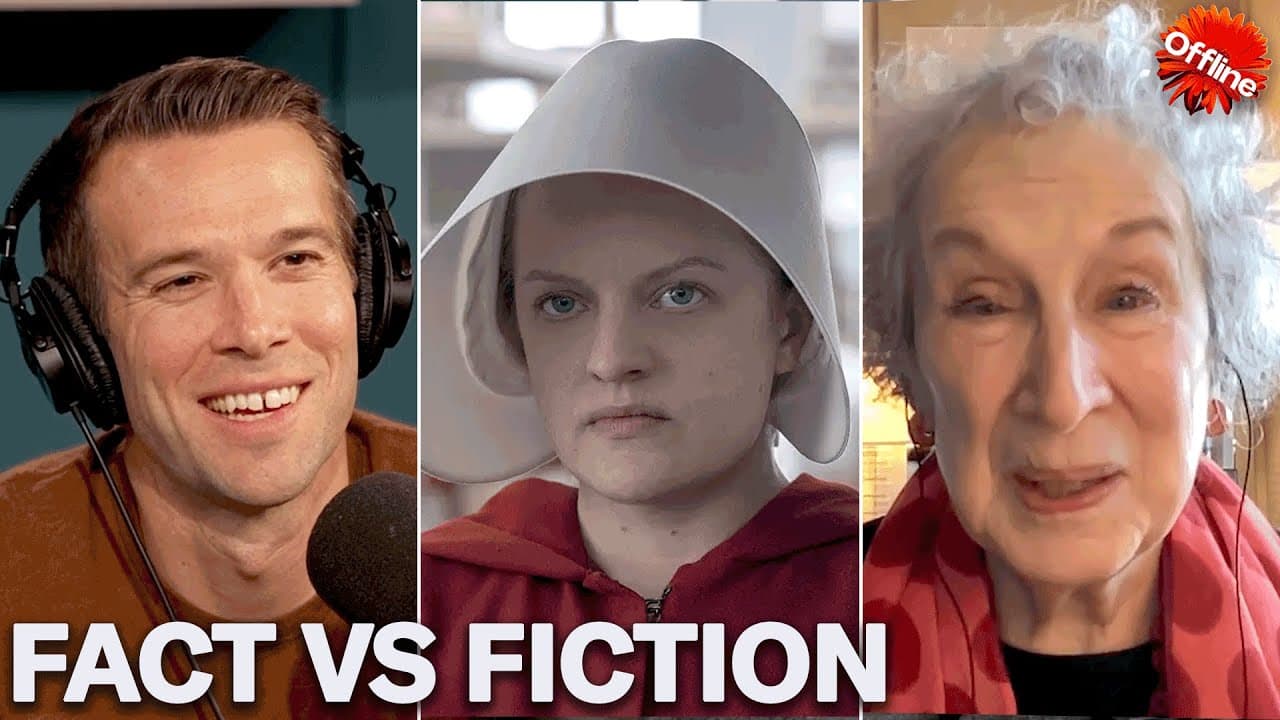
Margaret Atwood, renowned author, discusses the state of democracy, the erosion of privacy, and the challenges faced by writers in the digital age.
Transcript
everybody thinks that there's no privacy and that everything's public but that's not actually true it's only true if you go on the internet so if you can keep off your phone for one second then you can have some moments of privacy I'm trying I'm trying you're trying I'm John Favreau welcome to offline my guest today is legendary Canadian author and... Read More
Key Insights
- 🤕 Democracy is not without its challenges and threats, with book bans and intrusive laws highlighting the need for vigilance and active resistance.
- 🛝 Unstable conditions, such as climate change, can create fertile ground for extremist movements and attempts to replace governments.
- 😨 Fear and self-interest play significant roles in supporting totalitarian regimes, while collaboration and opportunism can perpetuate oppressive systems.
- 💁 Religion, in its various forms, continues to appeal to human beings, offering solace, purpose, and a sense of something beyond themselves.
- 🖐️ Morally ambiguous characters and storytelling play a vital role in capturing the complexities and nuances of the human condition.
- 💦 The internet has changed the way writers disseminate their work, with social media and online platforms becoming essential tools for promotion.
- ❓ Personal privacy has been eroded throughout history, with the internet only amplifying existing concerns.
Install to Summarize YouTube Videos and Get Transcripts
Explore YouTube Video Summarizer or Get YouTube Transcript Extractor
Questions & Answers
Q: How is democracy faring in the current climate of authoritarianism?
Atwood expresses hope, highlighting instances of democracy fighting back, such as Ukraine's resilience and electoral victories against authoritarian leaders. However, she also acknowledges concerning developments like book bans and intrusive laws that can threaten democracy.
Q: What conditions give rise to extremist movements and autocratic regimes?
Atwood explains that unstable conditions, such as floods, droughts, and food shortages, can lead to unrest and fuel the desire to overthrow governments in the hopes of finding better alternatives.
Q: What are the motivations behind people supporting totalitarian regimes?
Fear and self-preservation play significant roles in supporting totalitarian regimes. People may support these regimes to avoid being persecuted or to gain personal advantages and privileges. Collaboration with oppressive systems can provide financial stability and benefits for some individuals.
Q: How have Atwood's experiences behind the Iron Curtain shaped her thinking?
Atwood's experiences exposed her to the reality of living under repressive regimes where trust was rare, spying was prevalent, and people feared speaking out against the government. It informs her understanding of how individuals navigate oppressive systems and the consequences they face for resistance.
Q: Why does the internet erode the notion of the individual?
Atwood argues that the perception of the internet eroding privacy is not entirely accurate. Privacy is compromised only when individuals actively engage with the internet. However, the erosion of privacy has been a long-standing issue even before the internet, with surveillance and snooping occurring throughout history.
Q: How has the craft of writing been changed by the internet?
Atwood highlights the significant changes in the dissemination of information through social media and online platforms. Writers now have to navigate the challenges of promoting their work in a digital age, where social media presence and engagement have become vital.
Q: What advice does Atwood have for young people?
Atwood believes that advice should not be given unless it is specifically requested. Young people should have the freedom to navigate their own paths and learn from their own experiences. However, she mentions that practical advice, such as navigating parenthood, can be helpful when sought.
Q: Can you provide any insights into your forthcoming memoir?
Atwood refrains from sharing any details about her memoir, acknowledging that it has caused her trouble in the past. She remains excited to share it with readers in due time.
Key Insights:
- Democracy is not without its challenges and threats, with book bans and intrusive laws highlighting the need for vigilance and active resistance.
- Unstable conditions, such as climate change, can create fertile ground for extremist movements and attempts to replace governments.
- Fear and self-interest play significant roles in supporting totalitarian regimes, while collaboration and opportunism can perpetuate oppressive systems.
- Religion, in its various forms, continues to appeal to human beings, offering solace, purpose, and a sense of something beyond themselves.
- Morally ambiguous characters and storytelling play a vital role in capturing the complexities and nuances of the human condition.
- The internet has changed the way writers disseminate their work, with social media and online platforms becoming essential tools for promotion.
- Personal privacy has been eroded throughout history, with the internet only amplifying existing concerns.
- Atwood's memoir remains a secret project, building anticipation for its eventual release.
Summary & Key Takeaways
-
Margaret Atwood discusses the current state of democracy, expressing hope and acknowledging the efforts being made to fight back against authoritarianism and book bans.
-
She highlights the role of unstable conditions, such as climate change, in giving rise to extremist movements seeking to replace governments.
-
Atwood reflects on her experiences behind the Iron Curtain, emphasizing the importance of what we don't see or hear as well as the fear and exodus that shape support for totalitarian regimes.
-
The author explores the enduring appeal of religion and the need for more inclusive and less harmful forms of belief systems.
-
Atwood emphasizes the significance of morally ambiguous characters in literature and the power of storytelling in capturing the complexities of the human condition.
-
She addresses the challenges posed by the internet, including the collapse of privacy and its impact on individuality.
-
Atwood provides insights into her forthcoming memoir, remaining tight-lipped about the details.
Read in Other Languages (beta)
Share This Summary 📚
Summarize YouTube Videos and Get Video Transcripts with 1-Click
Try YouTube Summary with ChatGPT & Claude or YouTube Transcript Generator
Explore More Summaries from Pod Save America 📚




Summarize YouTube Videos and Get Video Transcripts with 1-Click
Try YouTube Summary with ChatGPT & Claude or YouTube Transcript Generator