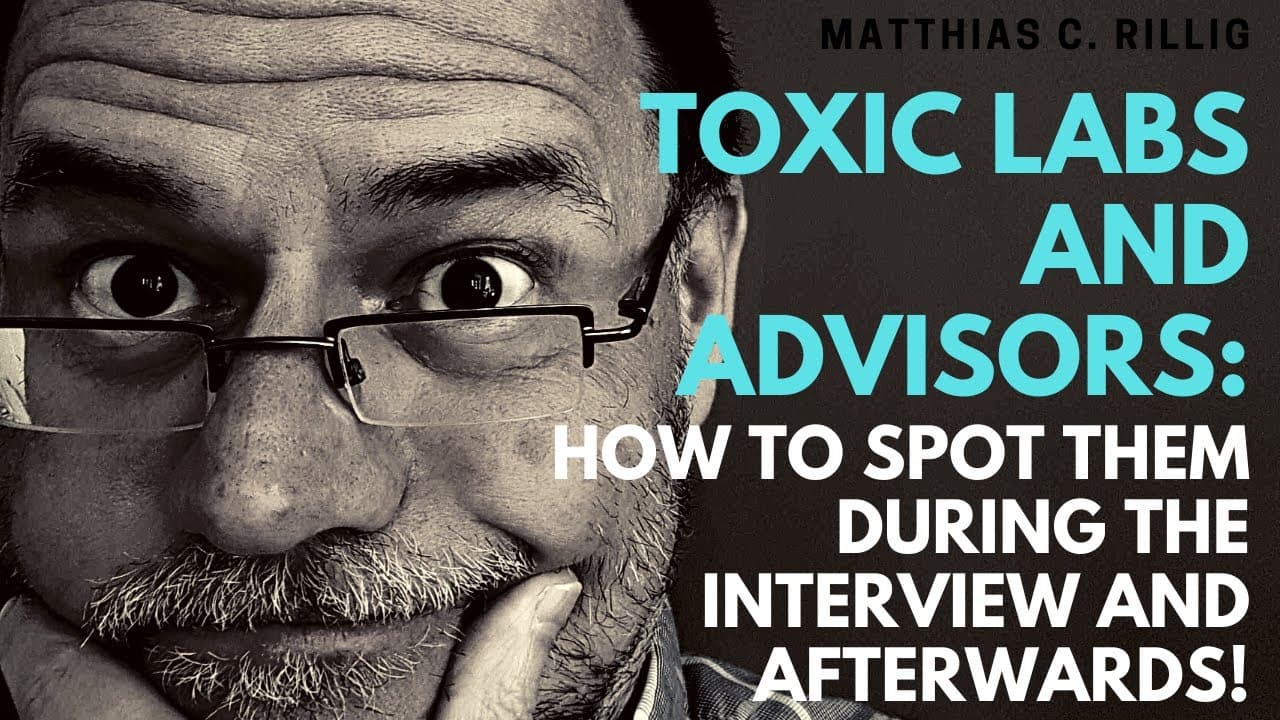
Toxic labs: how to spot them during the interview or afterwards. #phdlife #academia #toxicworkplace
TL;DR
Learn how to identify a toxic lab and a bad PI during the interview and follow-up meetings to make an informed decision.
Transcript
hey there friends I'm talking about toxic labs and in this video I want to make sure that you recognize a toxic lab and a bad actor Pi before you get yourself in a situation of working in a place like that so what can you do to spot a toxic lab the first point where you can find out if a lab is toxic is of course during the interview even though ve... Read More
Key Insights
- 📪 The interview is an important opportunity to observe red flags, but it may not provide a conclusive view of the lab and PI.
- 💁 Follow-up meetings offer crucial chances to gather more information about lab dynamics, routines, and the PI's mentoring style.
- 🥼 Conducting a visit or internship in the lab allows for a firsthand experience and a better understanding of the lab environment.
- 🥼 Seeking feedback from colleagues, former lab members, and neighboring labs can provide valuable insights into the lab's reputation.
Install to Summarize YouTube Videos and Get Transcripts
Explore YouTube Video Summarizer or Get YouTube Transcript Extractor
Questions & Answers
Q: How can you identify red flags for a toxic lab during the interview?
Look for signs of self-centeredness, dismissiveness of questions, and rude behavior, such as cutting off your answers or awkward interactions among the review panel.
Q: What should you ask during follow-up meetings to gather more information?
Ask to meet with lab members separately, inquire about lab routines, conflict resolution, lab community, and the PI's commitment to career development and time management.
Q: What methods can you use to gather information outside of the lab?
Ask colleagues or your current PI about the reputation of the potential host lab. Additionally, reach out to former lab members and people from neighboring labs for unbiased insights.
Q: How can you conduct your own research on the potential lab?
Visit the lab's webpage and analyze their publications, looking for collaborative papers and relationships with other groups. Look for resources or documents related to mentorship and lab culture.
Summary & Key Takeaways
-
During the interview, red flags indicating a toxic lab include an interviewer who is self-centered, dismissive of questions, or displays rude behavior.
-
In follow-up meetings, ask to meet separately with lab members, inquire about lab routines and conflict resolution, and assess the lab community.
-
Conduct a visit or internship in the lab, ask colleagues and former lab members, and do your own research on lab publications and mentorship resources.
Read in Other Languages (beta)
Share This Summary 📚
Summarize YouTube Videos and Get Video Transcripts with 1-Click
Try YouTube Summary with ChatGPT & Claude or YouTube Transcript Generator
Explore More Summaries from Life in academia 📚



Summarize YouTube Videos and Get Video Transcripts with 1-Click
Try YouTube Summary with ChatGPT & Claude or YouTube Transcript Generator