Why I Became An Orthodox Christian | Full Series
TL;DR
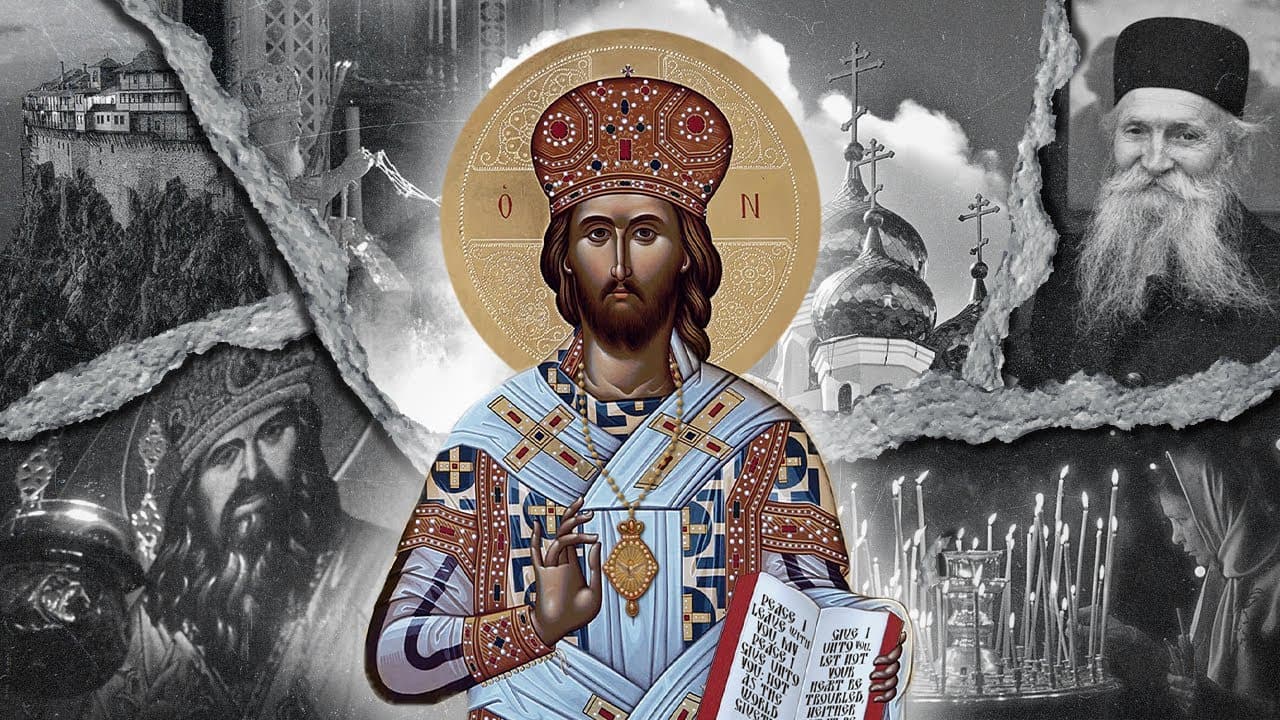
A personal journey from Baptist to Orthodox Christianity, exploring theological differences.
Transcript
why am I an Orthodox Christian how after being born and raised as a Baptist did I find myself in such a different kind of church what exactly did I find so compelling throughout this discussion I will be explaining from my point of view why I believe the Orthodox Church to be the true historic church which was founded by Jesus Christ himself and pr... Read More
Key Insights
- The speaker transitioned from a Baptist upbringing to Orthodox Christianity, driven by theological disagreements with Protestantism and Catholicism.
- Orthodox Christianity is viewed by the speaker as the true historic church, maintaining traditions since the time of the Apostles without Reformation.
- Key Protestant doctrines such as Sola Fide and Sola Scriptura are rejected by the speaker in favor of Orthodox teachings on faith and tradition.
- The speaker criticizes the Catholic Church for innovations like the Filioque, Papal Infallibility, and the Immaculate Conception, which are seen as deviations from original teachings.
- The Orthodox Church's ecclesiology emphasizes a visible, tangible church with Apostolic succession, contrasting with the Protestant view of an invisible church.
- Sacraments in Orthodoxy are seen as real, tangible means of receiving God's grace, differing from the symbolic view held in Protestantism.
- Veneration of Mary and the Saints in Orthodoxy is explained as respect and honor, not worship, with theological significance in terms of Christ's nature.
- The speaker finds peace and theological coherence in Orthodoxy, appreciating its stability, continuity, and the emphasis on theosis and asceticism.
Install to Summarize YouTube Videos and Get Transcripts
Explore YouTube Video Summarizer or Get YouTube Transcript Extractor
Questions & Answers
Q: What led the speaker to question their Baptist beliefs?
The speaker began questioning their Baptist beliefs during high school and college when exposed to alternative worldviews, debates on creationism versus evolution, and interactions with people of other faiths. This led to a period of deconstruction and reconstruction, ultimately convincing them that Christianity was true but not necessarily Baptist theology.
Q: Why does the speaker reject the Protestant doctrine of Sola Fide?
The speaker rejects Sola Fide, the doctrine of salvation by faith alone, as an oversimplification that ignores other important factors in salvation. They argue that this doctrine renders much of the New Testament incoherent, as it requires both faith and works for salvation, as supported by various biblical passages and Orthodox teachings.
Q: What are the theological issues the speaker finds with the Catholic Church?
The speaker finds several theological issues with the Catholic Church, including the Filioque, Papal Infallibility, and the Immaculate Conception. They view these as innovations and deviations from original teachings, fundamentally changing the dynamics of the Trinity and the role of Mary, and granting the Pope excessive authority.
Q: How does the speaker view the Orthodox Church's ecclesiology?
The speaker views the Orthodox Church's ecclesiology as emphasizing a visible, tangible church with Apostolic succession, contrasting with the Protestant view of an invisible church. They believe that the Orthodox Church has maintained the teachings and traditions of the Apostles without change or alteration, providing stability and continuity.
Q: What is the significance of sacraments in Orthodox Christianity for the speaker?
For the speaker, sacraments in Orthodox Christianity are seen as real, tangible means of receiving God's grace, contrasting with the symbolic view held in Protestantism. They believe that sacraments like baptism and communion are essential for salvation and participation in God's grace, as supported by biblical passages and Orthodox teachings.
Q: Why does the speaker venerate Mary and the Saints in Orthodoxy?
The speaker venerates Mary and the Saints in Orthodoxy as a form of respect and honor, not worship. They explain that veneration is due to their venerable and honorable lives, and it honors God by acknowledging how He has transformed His Saints. Mary is particularly revered as the theotokos, affirming Christ's dual nature as both God and man.
Q: What does the speaker appreciate about Orthodox worship?
The speaker appreciates Orthodox worship for its stability, continuity, and theological coherence. They find that the Divine Liturgy provides a snapshot of heavenly worship and the kingdom to come, with rich theology, written prayers, and iconography that teach and draw the faithful into the life of the church and those who have gone before.
Q: How does the speaker view the role of suffering in Orthodoxy?
In Orthodoxy, the speaker views suffering as redemptive, a means of participating in Christ's suffering and a way for God to bring believers to repentance. They believe that suffering shows the need to rely on God, with the understanding that nothing touches believers without touching God first, ultimately revealing His love for them.
Summary & Key Takeaways
-
The speaker describes their journey from a Baptist upbringing to embracing Orthodox Christianity, driven by theological disagreements with Protestant doctrines and Catholic innovations. Key Protestant doctrines like Sola Fide and Sola Scriptura are rejected in favor of Orthodox teachings on faith and tradition.
-
Orthodox Christianity is portrayed as the true historic church, maintaining traditions since the time of the Apostles without Reformation. The speaker criticizes the Catholic Church for innovations like the Filioque, Papal Infallibility, and the Immaculate Conception, viewing them as deviations from original teachings.
-
The speaker appreciates the stability, continuity, and theological coherence of Orthodoxy, particularly its emphasis on theosis and asceticism. They find peace in Orthodoxy's teachings on sacraments, ecclesiology, and the veneration of Mary and the Saints, contrasting with their previous Protestant beliefs.
Read in Other Languages (beta)
Share This Summary 📚
Summarize YouTube Videos and Get Video Transcripts with 1-Click
Try YouTube Summary with ChatGPT & Claude or YouTube Transcript Generator
Explore More Summaries from UNTO AGES 📚
Summarize YouTube Videos and Get Video Transcripts with 1-Click
Try YouTube Summary with ChatGPT & Claude or YouTube Transcript Generator