Fashion Illustration Tutorial: Fur & Shearling
TL;DR
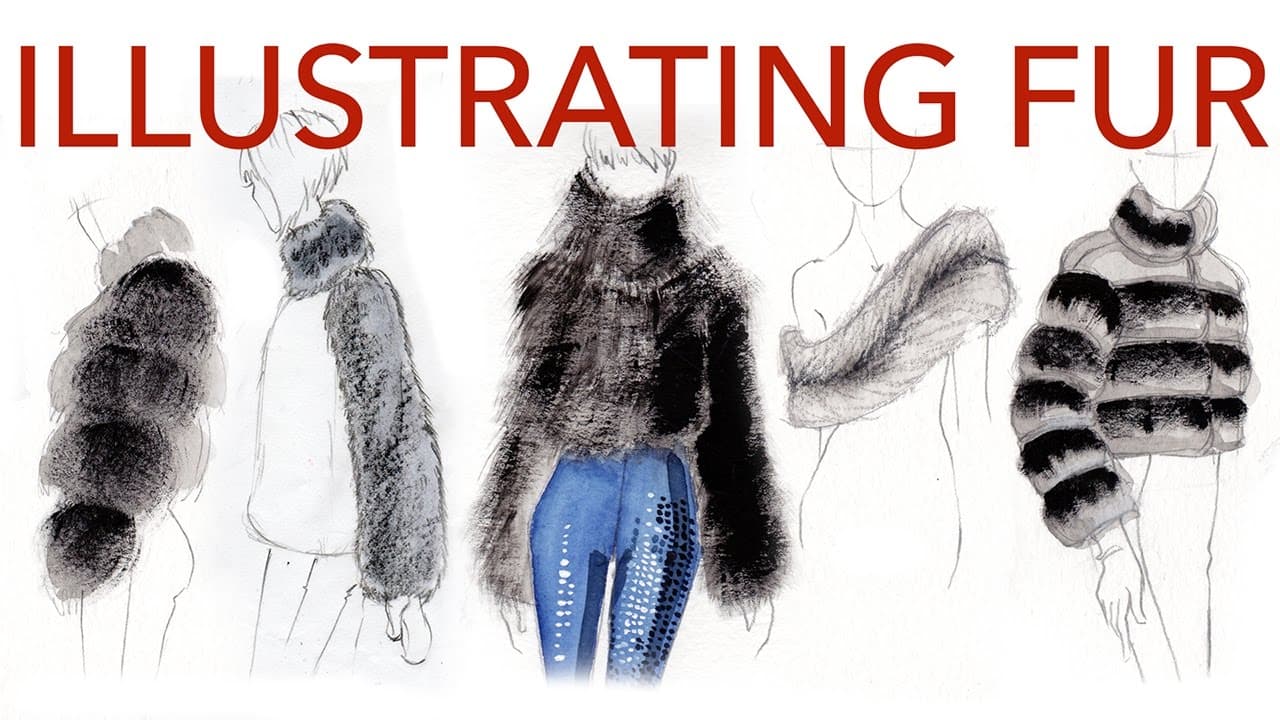
Learn how to effectively render fur in illustrations by considering shape, density, direction, texture, and creating a broken line silhouette.
Transcript
hey guys today we're gonna talk about fur we're gonna talk about fur we're gonna paint for we're gonna mark Sanford do all kinds of hurt hey this is a subscriber requested video I loved it when I was first getting started I was like okay so what do I teach first Whitley which listeners should i tackle first what video should i produce but now at th... Read More
Key Insights
- 👤 Drawing fur requires considering thickness, density, direction, texture, and silhouette.
- 😃 Fur should be rendered in big, fluffy shapes to emphasize its thickness.
- ⚡ The density of fur is highest in the middle and spreads out towards the edges, creating a light halo effect.
- ❓ Shadows and highlights should reflect the texture and direction of the fur.
- 🫥 Using a broken line silhouette can enhance the texture of the fur.
- 📰 Cold press watercolor paper with a rough texture is ideal for rendering fur.
- 👻 Brush tips are preferred for rendering fur, as they allow for tapered strokes.
Install to Summarize YouTube Videos and Get Transcripts
Explore YouTube Video Summarizer or Get YouTube Transcript Extractor
Questions & Answers
Q: How should fur be drawn to emphasize thickness?
To emphasize thickness, draw big shapes and avoid skinny, scrunchy lines. Fur is bulky, so only one or two folds should be visible.
Q: How can the density of fur be depicted?
Fur is denser in the middle and spreads out towards the edges. Use techniques like wet-on-wet or dry brush to create a light halo effect around the edges.
Q: Should fur be rendered in a specific direction?
Yes, fur should be rendered in the direction it grows. Consider the direction of hair follicles and mimic that in your illustrations for a realistic look.
Q: How should shadows and highlights be rendered on fur?
Shadows and highlights should reflect the texture and direction of the fur. Use techniques like dry wash or charcoal pencil, following the texture of the individual fur strands.
Summary & Key Takeaways
-
When drawing fur, emphasize the thickness by drawing big shapes and avoid skinny, scrunchy lines.
-
Fur is denser in the middle and spreads out towards the edges, creating a light halo effect.
-
Render fur in the direction it grows and consider the texture of individual fur strands.
-
Shadows and highlights should reflect the texture of the fur and the direction it grows.
-
Use a broken line silhouette to depict the texture of the fur.
Read in Other Languages (beta)
Share This Summary 📚
Summarize YouTube Videos and Get Video Transcripts with 1-Click
Try YouTube Summary with ChatGPT & Claude or YouTube Transcript Generator
Explore More Summaries from Zoe Hong 📚



Summarize YouTube Videos and Get Video Transcripts with 1-Click
Try YouTube Summary with ChatGPT & Claude or YouTube Transcript Generator