WONDERS OF ICELAND | The country that looks like another planet
TL;DR
Explore Iceland's unique geology, wildlife, and history.
Transcript
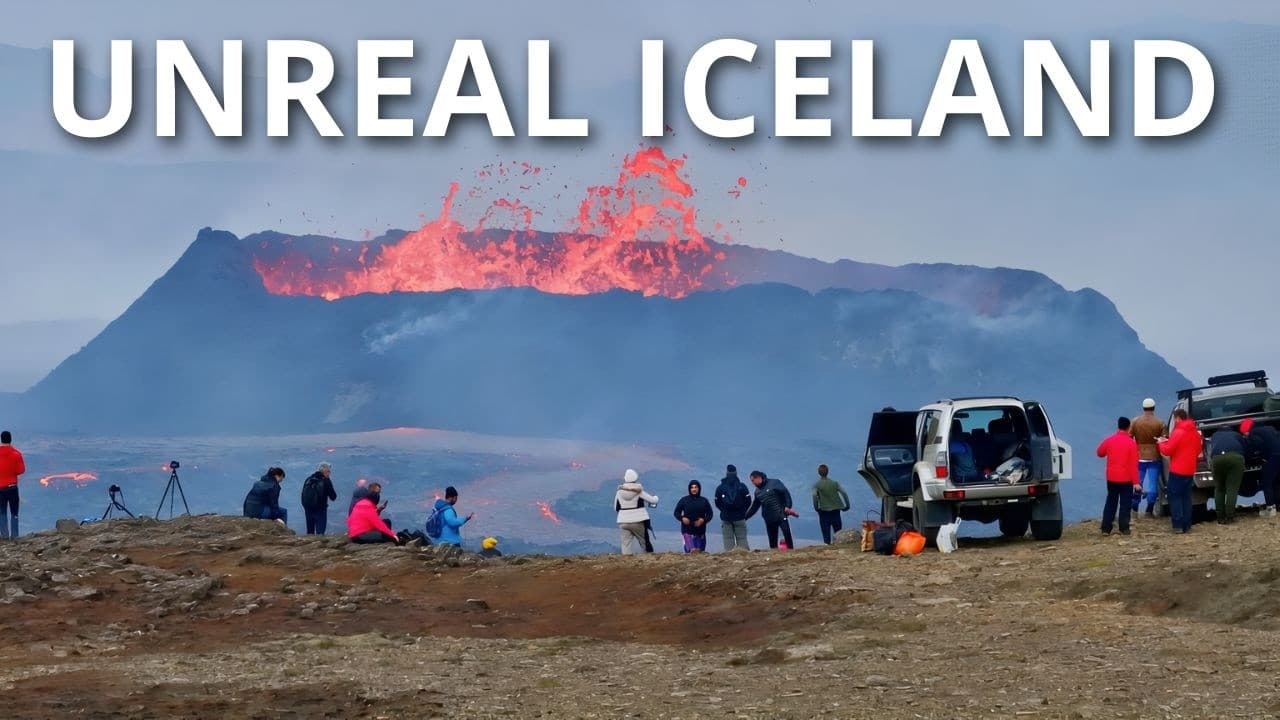
Iceland, where fire and ice coexist. Despite being a small country, it's filled with astonishing natural wonders. Here, nature reigns over man. The intense volcanic activity has crafted a unique terrain. Landscapes seem from distant planets. In this documentary, we'll explore Iceland's most amazing places. A journey to th... Read More
Key Insights
- Iceland's geology is shaped by volcanic activity, with landscapes resembling distant planets, including the Fagradalsfjall volcanic system and Thingvellir National Park, where tectonic plates diverge.
- Vatnajokull is Europe's largest glacier, covering 8% of Iceland, featuring crevasses and meltwater rivers creating intricate patterns in the landscape.
- The Jokulsarlon Glacier Lagoon, formed by the retreat of the Breidamerkurjökull glacier, is home to numerous icebergs and a prime spot for seal observation.
- Iceland's geothermal areas, like the Geysir Geothermal Area, feature hot springs, mud pits, and geysers, with Strokkur erupting every few minutes.
- The Northern Lights are visible in Iceland due to its proximity to the Arctic Circle, with bright green and sometimes red hues caused by solar particles interacting with atmospheric gases.
- Iceland's ice caves, formed within glaciers like Vatnajökull, offer stunning translucent ice formations and streams flowing through cracks and fissures.
- The Westman Islands, including Heimaey, are geologically young, created by volcanic activity, and serve as a habitat for puffins.
- Reykjavik, the capital, is known for its clean environment, geothermal energy, and landmarks like Hallgrímskirkja church, inspired by lava columns.
Install to Summarize YouTube Videos and Get Transcripts
Explore YouTube Video Summarizer or Get YouTube Transcript Extractor
Questions & Answers
Q: What makes Iceland's geology unique?
Iceland's geology is unique due to its location on the Mid-Atlantic Ridge, where the Eurasian and North American tectonic plates diverge. This results in intense volcanic activity, creating landscapes that resemble distant planets. Key features include volcanic systems like Fagradalsfjall and Thingvellir National Park, where tectonic movements can be observed on land.
Q: How does Vatnajokull glacier influence Iceland's landscape?
Vatnajokull, the largest glacier in Europe, covers about 8% of Iceland's territory. It influences the landscape by spreading over mountains and valleys, with glacier tongues reaching the ocean. The glacier's meltwater creates intricate patterns and contributes to the formation of rivers and streams, shaping the terrain and providing a habitat for various species.
Q: What are the key features of the Jokulsarlon Glacier Lagoon?
The Jokulsarlon Glacier Lagoon is a relatively young body of water formed by the retreat of the Breidamerkurjökull glacier, part of Vatnajokull. It contains numerous icebergs of varying shapes, sizes, and colors, including intense blue hues from compressed ice. The lagoon is also a prime spot for observing seals, especially in winter, due to the absence of predators.
Q: What is significant about Iceland's geothermal areas?
Iceland's geothermal areas, such as the Geysir Geothermal Area, are significant for their hot springs, mud pits, and geysers. The geothermal activity is due to hot magma being close to the surface, heating the rocks and water. Strokkur, a geyser in the area, erupts every few minutes, showcasing the dynamic nature of Iceland's geothermal landscapes.
Q: How are the Northern Lights visible in Iceland?
The Northern Lights, or Aurora Borealis, are visible in Iceland due to its proximity to the Arctic Circle. They occur when solar wind particles, such as electrons and protons, collide with Earth's atmosphere. The weaker magnetic field at the poles allows these particles to enter, causing atoms to emit light. The most common color is bright green, produced by oxygen molecules.
Q: What are Iceland's ice caves, and how do they form?
Iceland's ice caves are natural formations within glaciers like Vatnajökull and Langjökull. They form from water flowing through the glacier or geothermal heat melting the ice. This creates tunnels with beautifully sculpted ice walls. The caves exhibit intense blue hues due to the dense ice, and in warmer months, water flows through cracks, forming streams inside the caves.
Q: What is the significance of the Westman Islands?
The Westman Islands, including Heimaey, are significant for their geological youth, created by underwater volcanic activity. They serve as a habitat for puffins, with Bjarnarey being a historical hunting ground. Heimaey, the largest and only inhabited island, has a small community focused on fishing and tourism. The islands' volcanic history is evident in features like Elephant Rock.
Q: What makes Reykjavik a notable capital city?
Reykjavik, the capital of Iceland, is notable for being one of the cleanest, greenest, and safest cities globally. It benefits from underlying volcanic activity, allowing for geothermal energy generation. The city experiences illuminated nights in summer and limited daylight in winter. Landmarks like Hallgrímskirkja church, inspired by lava columns, highlight Reykjavik's unique architectural style.
Summary & Key Takeaways
-
Iceland is a land of contrasts, where fire and ice coexist. This documentary explores the country's unique geological features, including volcanoes like Fagradalsfjall and glaciers such as Vatnajokull. The landscapes often seem otherworldly, with tectonic activity shaping the terrain.
-
The documentary showcases Iceland's geothermal wonders, such as the Geysir area and the Northern Lights. These natural phenomena are a result of the country's location on the Mid-Atlantic Ridge and its proximity to the Arctic Circle, making it a hotspot for geothermal activity.
-
Wildlife in Iceland includes puffins on the Westman Islands and the Icelandic horse, a breed that has remained pure due to geographic isolation. Reykjavik, the capital, is highlighted for its clean environment and use of geothermal energy, reflecting Iceland's commitment to sustainability.
Read in Other Languages (beta)
Share This Summary 📚
Summarize YouTube Videos and Get Video Transcripts with 1-Click
Try YouTube Summary with ChatGPT & Claude or YouTube Transcript Generator
Explore More Summaries from Lifeder En 📚
Summarize YouTube Videos and Get Video Transcripts with 1-Click
Try YouTube Summary with ChatGPT & Claude or YouTube Transcript Generator