What Is the Likelihood of a Taiwan Invasion by 2027?
TL;DR
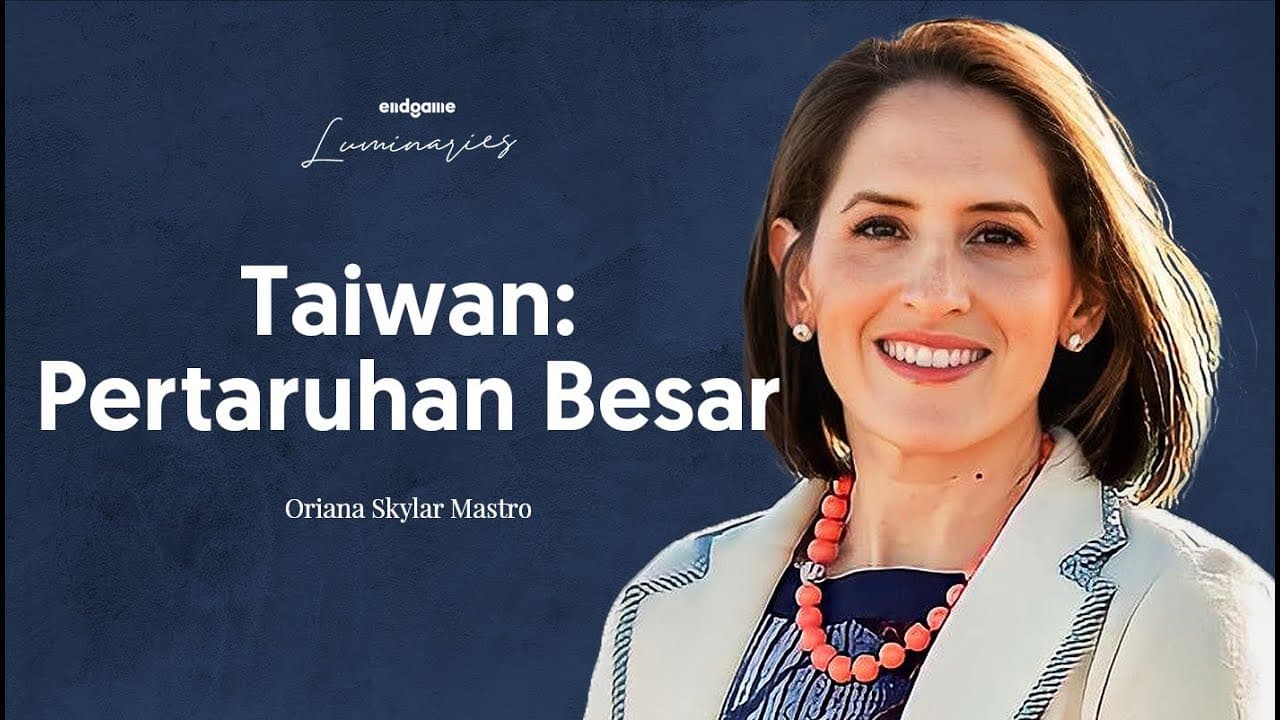
Oriana Skylar Mastro predicts a probable Taiwan conflict by 2027 due to China's military advancements and ambition for regional dominance. Effective deterrence measures from the U.S. and its allies, including strategic military posture and economic sanctions, are essential to prevent this scenario from unfolding.
Transcript
One thing I think some people overseas don't understand is how much the United States actually believes its narratives about sort of protecting those that can't protect themselves. But the United States has learned historical lessons that when we stay out of things, things become a huge mess. I understand why China is willing to sacrifice blood and... Read More
Key Insights
- The United States holds a strong belief in protecting those unable to defend themselves, driven by historical lessons of non-intervention leading to chaos.
- China's motivation for Taiwan is deeply rooted in its narrative of resisting foreign aggression and maintaining party legitimacy.
- Asymmetric arms control talks could involve the U.S. trading nuclear capabilities for China's reduction in conventional arms, a novel approach to arms negotiations.
- Oriana Skylar Mastro's career shifted from arts to geopolitics after exposure to international cultures and languages, leading to a focus on China and military strategy.
- China's military reforms under Xi Jinping have strengthened its capabilities, potentially enabling a Taiwan invasion by 2027 if deterrence measures are not bolstered.
- The South China Sea remains a strategic focal point with China seeking control over the region, impacting the sovereignty of Southeast Asian nations.
- Economic ties between China and the U.S. could serve as a deterrent to conflict, but the willingness of countries to impose costs on China remains uncertain.
- Southeast Asia's non-alignment favors China's strategy of gaining influence without direct confrontation, posing challenges for U.S. efforts to counterbalance China's rise.
Install to Summarize YouTube Videos and Get Transcripts
Explore YouTube Video Summarizer or Get YouTube Transcript Extractor
Questions & Answers
Q: What drives the United States' involvement in international conflicts?
The United States is driven by a belief in protecting those who cannot protect themselves, a narrative deeply embedded in its foreign policy. Historical lessons have shown that non-intervention can lead to chaos, reinforcing the U.S.'s role as a global protector to prevent a descent into anarchy and uphold freedom.
Q: Why is Taiwan significant to China?
Taiwan holds significant importance to China as it represents a symbol of resisting foreign exploitation and aggression. The Communist Party's legitimacy is tied to standing up against such threats, making Taiwan a crucial part of China's national narrative and its goal of reunification.
Q: What is Oriana Skylar Mastro's view on asymmetric arms control with China?
Oriana Skylar Mastro suggests a novel approach to arms control, proposing that the U.S. trade some of its nuclear capabilities for China's reduction in conventional arms. This asymmetric negotiation could enhance regional security by addressing the conventional military imbalance without escalating nuclear arsenals.
Q: How did Oriana Skylar Mastro transition from arts to geopolitics?
Oriana Skylar Mastro's career shifted from a focus on arts, specifically piano and drama, to geopolitics during her undergraduate studies. Her interest in international cultures and languages, particularly after studying in Italy and learning Chinese, led her to explore international security, ultimately shaping her career in geopolitical strategy.
Q: What are the implications of China's military reforms under Xi Jinping?
Under Xi Jinping, China's military reforms have significantly strengthened its capabilities, particularly for a potential Taiwan invasion. These reforms, aimed at creating a more professional and capable military, could enable China to conduct an amphibious landing on Taiwan by 2027, highlighting the urgency for effective deterrence measures from the U.S. and its allies.
Q: What is the strategic importance of the South China Sea?
The South China Sea is a strategic focal point for China, as controlling it would grant significant geopolitical and economic advantages. China's goal is to establish dominance over the region, impacting the sovereignty and security of Southeast Asian nations, and challenging the U.S.'s influence in the Indo-Pacific.
Q: How could economic ties deter a conflict between China and the U.S.?
Economic interdependence between China and the U.S., with substantial trade volumes, could serve as a deterrent to conflict by imposing mutual costs. However, the willingness of countries to enforce economic sanctions or disrupt trade in response to aggression remains uncertain, affecting the deterrence potential of these economic ties.
Q: What challenges does Southeast Asia face in balancing U.S. and China relations?
Southeast Asia's strategy of non-alignment favors China's influence, as neutrality aligns with China's goal of gaining regional dominance without direct confrontation. This poses challenges for the U.S., which seeks to counterbalance China's rise and maintain influence in the Indo-Pacific, requiring strategic engagement and support for Southeast Asian sovereignty.
Summary & Key Takeaways
-
Oriana Skylar Mastro discusses the potential for a Taiwan conflict by 2027, emphasizing China's military advancements and the need for effective deterrence strategies from the U.S. and its allies.
-
The conversation explores China's motivations for Taiwan, rooted in historical narratives and party legitimacy, and highlights the strategic importance of the South China Sea for regional control.
-
Economic interdependence between China and the U.S. offers a potential deterrent to conflict, but the lack of decisive action from global leaders to impose costs on China remains a concern.
Read in Other Languages (beta)
Share This Summary 📚
Summarize YouTube Videos and Get Video Transcripts with 1-Click
Try YouTube Summary with ChatGPT & Claude or YouTube Transcript Generator
Explore More Summaries from Gita Wirjawan 📚



Summarize YouTube Videos and Get Video Transcripts with 1-Click
Try YouTube Summary with ChatGPT & Claude or YouTube Transcript Generator