How Does DNA Replication Work in Simple Steps?
TL;DR
DNA replication involves unzipping the double helix to create templates for new strands. Enzymes helicase, primase, and DNA polymerase work together to add bases and form continuous and fragmented strands. This semi-conservative process ensures each new DNA molecule consists of one old and one new strand.
Transcript
DNA is a molecule made up of two strands twisted around each other in a double helix shape. Each strand is made up a sequence of four chemical bases represented by the letters A, C, G and T. The two strands are complementary. This means that wherever there's a T in one strand there will be in an A in the opposite strand, and wherever there's a C th... Read More
Key Insights
- 🇹🇦 DNA is a double helix structure, with two complementary strands made up of four chemical bases (A, C, G, and T).
- 🥺 DNA replication involves the separation of the two strands by helicase, leading to the formation of a replication fork.
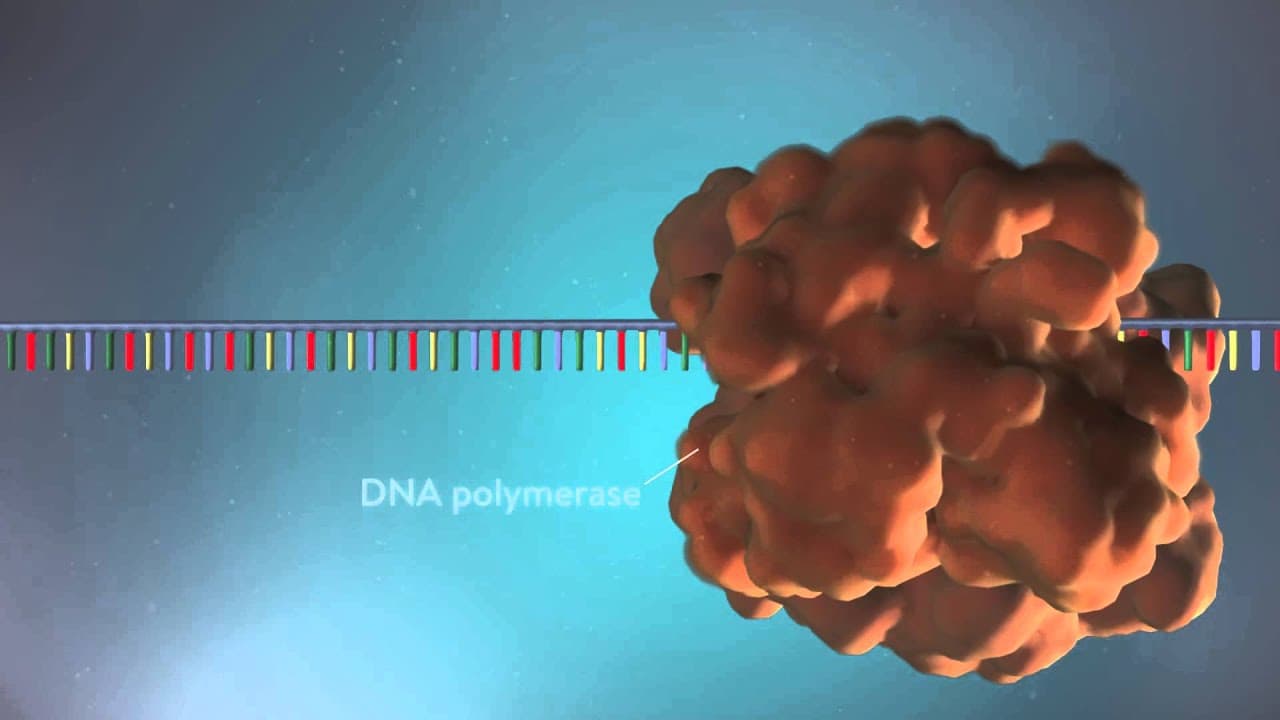
- 🧬 DNA polymerase adds DNA bases in the 5' to 3' direction using primers, resulting in the synthesis of a continuous leading strand and fragmented lagging strand.
- 🥶 Each new DNA molecule formed during replication consists of one old strand and one newly synthesized strand, making DNA replication semi-conservative.
Install to Summarize YouTube Videos and Get Transcripts
Explore YouTube Video Summarizer or Get YouTube Transcript Extractor
Questions & Answers
Q: What is the structure of DNA?
DNA is a double helix structure made up of two complementary strands twisted around each other, with the sequence of four bases (A, C, G, and T) determining the genetic code.
Q: How does DNA replication begin?
DNA replication starts with the separation of the two strands by helicase, forming a replication fork where each strand serves as a template for the synthesis of a new complementary strand.
Q: What is the role of DNA polymerase in DNA replication?
DNA polymerase is responsible for adding DNA bases to the growing strand using a primer as a starting point. It can only add bases in the 5' to 3' direction, resulting in the continuous synthesis of the leading strand and the fragmented synthesis of the lagging strand.
Q: Why are RNA primers required in DNA replication?
RNA primers, synthesized by the enzyme primase, provide the starting point for DNA polymerase to begin synthesizing the complementary strand. They are later replaced with DNA bases.
Key Insights:
- DNA is a double helix structure, with two complementary strands made up of four chemical bases (A, C, G, and T).
- DNA replication involves the separation of the two strands by helicase, leading to the formation of a replication fork.
- DNA polymerase adds DNA bases in the 5' to 3' direction using primers, resulting in the synthesis of a continuous leading strand and fragmented lagging strand.
- Each new DNA molecule formed during replication consists of one old strand and one newly synthesized strand, making DNA replication semi-conservative.
- The process of DNA replication requires the action of various enzymes, including helicase, primase, DNA polymerase, exonuclease, and DNA ligase.
Summary & Key Takeaways
-
DNA is composed of two complementary strands twisted around each other in a double helix shape, with each strand made up of four chemical bases (A, C, G, and T).
-
The process of DNA replication starts with the separation of the two strands by the enzyme helicase, resulting in the formation of a replication fork.
-
An enzyme called DNA polymerase binds to a primer on each strand and adds DNA bases in the 5' to 3' direction, resulting in the creation of a continuous leading strand and fragmented lagging strand.
Read in Other Languages (beta)
Share This Summary 📚
Summarize YouTube Videos and Get Video Transcripts with 1-Click
Try YouTube Summary with ChatGPT & Claude or YouTube Transcript Generator
Explore More Summaries from yourgenome 📚
Summarize YouTube Videos and Get Video Transcripts with 1-Click
Try YouTube Summary with ChatGPT & Claude or YouTube Transcript Generator