Mathematical Approaches to Image Processing with Carola Schönlieb
TL;DR
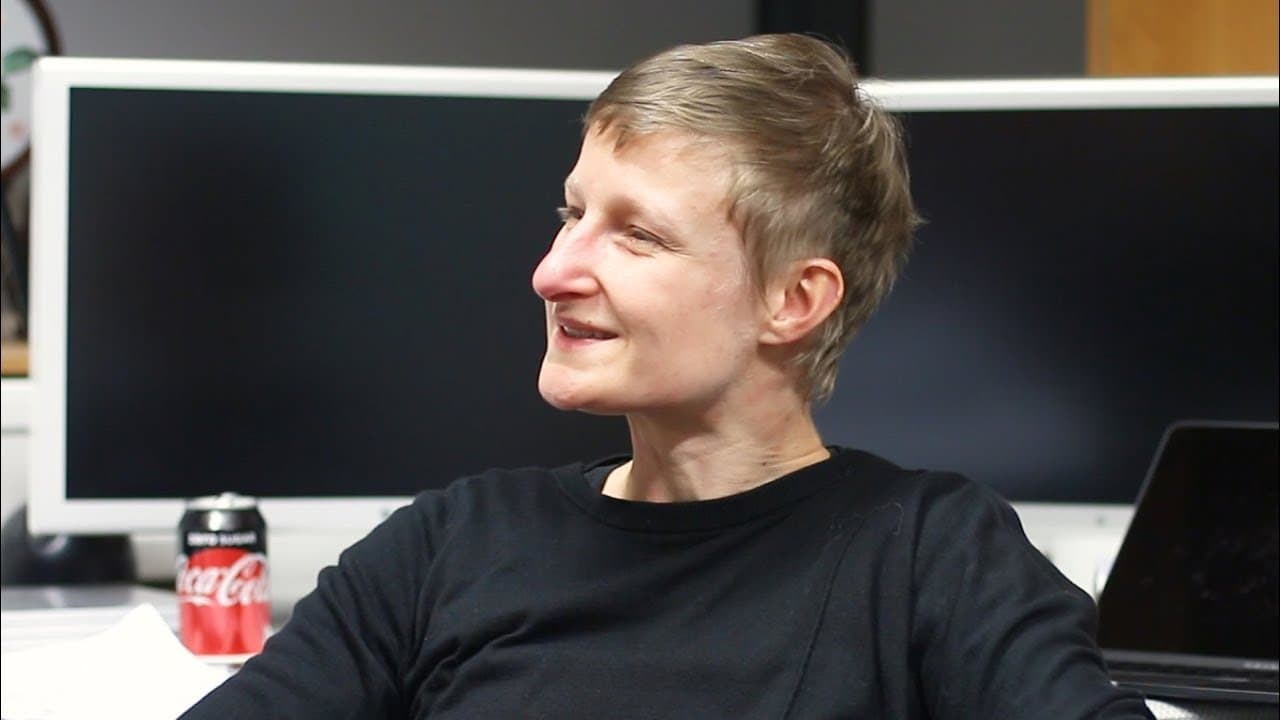
A mathematician discusses her journey from researching partial differential equations to applying deep neural networks in image restoration and denoising, highlighting the importance of understanding physical processes and incorporating structure into machine learning algorithms.
Transcript
we ought to start with a little bit of your background so what did you start researching and then what are you researching now okay so I started out my research in mathematics in Austria in Vienna where I actually didn't look at image processing or imaging at all I started out with so-called partial differential equations which are equations of a f... Read More
Key Insights
- 🔮 Mathematician started research in mathematics, particularly partial differential equations. First paper focused on stability analysis of a certain type of solution to the con Hillard equation, which models phase separation and corseting in metallic alloys.
- 📚 First paper led to collaboration with researchers at UCLA who used the same equation for image restoration, inspiring shift into image processing. PhD focused on image restoration and postdoc focused on inverse imaging problems, where observations are not direct images but transformations of them.
- 🔍 Lack of data and noise pose challenges in inverse imaging problems. Need to reconstruct high-resolution images from limited and noisy measurements. Denoising is integrated into the reconstruction algorithms to address noise and lack of data issues.
- 🧩 Image denoising methods focus on preserving edges, which are the most important information in an image. Total variation regularization and median filtering are commonly used techniques to preserve edges in image denoising.
- ⚙️ Deep neural networks are being increasingly used for image denoising, often outperforming handcrafted models. However, interpretability and generalization to new scenarios are still challenges. Combining handcrafted models and neural networks to bring structure and guarantees to neural network approaches is a promising direction.
- 💼 Collaborations with clinicians, medical physicists, and other disciplines help apply research to practical applications. Collaborations include projects in medical imaging, forest health monitoring using aerial imaging data, and virtual restoration of fragile manuscripts using imaging techniques.
- 🔬 Research involves exploring parameterization of handcrafted models and investigating the combination of handcrafted models and neural networks. Computational challenges are addressed by treating the optimization problems in a sequential and stochastic manner.
- 📚 For those interested in the field, starting with foundational books on mathematical approaches to image processing is recommended. Online lecture material from universities such as UCLA can also be a valuable resource.
Install to Summarize YouTube Videos and Get Transcripts
Explore YouTube Video Summarizer or Get YouTube Transcript Extractor
Questions & Answers
Q: How does the chameleon equation differ from standard image restoration techniques like content-aware fill in Photoshop?
The chameleon equation, used in image restoration by the researcher, is a non-local differential equation that involves copying and pasting patches of images to replace damaged or occluded regions. In contrast, content-aware fill in Photoshop utilizes different techniques but is still based on mathematical research in image processing. The chameleon equation predates the development of content-aware fill and has different underlying principles.
Q: What are the challenges faced in high-resolution reconstruction from limited data in inverse imaging problems?
High-resolution reconstruction from limited data is challenging due to the finite amount of measurements available. In techniques like computer tomography, where projections of a 3D object are measured, the number of projections may be limited to limit radiation exposure. This lack of data, combined with noise in the measurements, poses difficulties in reconstructing high-resolution images accurately. These challenges require exploring optimization methods and incorporating prior knowledge to enhance the reconstruction process.
Q: How do machine learning approaches, particularly deep neural networks, enhance image denoising and restoration?
Machine learning approaches, including deep neural networks, have shown remarkable performance in image denoising and restoration tasks. These approaches can learn from a large amount of training data and generalize well to similar images. Neural networks can be trained to preserve important visual features like edges, allowing denoising methods to retain sharp boundaries between different objects. However, neural networks require substantial computational power and may face limitations when applied to new or different types of images or scanners.
Q: How does the researcher's work with virtual restoration in illuminated manuscripts contribute to preserving historical artifacts?
The researcher's collaboration with the Fitzwilliam Museum focused on creating virtual restorations of fragile illuminated manuscripts rather than physically altering them. This approach allows the preservation of historical artifacts while providing insights into how the restoration process could transform them. By exhibiting both the original manuscript and the virtual restoration, viewers can appreciate the original condition and the potential improvements brought by virtual restoration techniques.
Summary & Key Takeaways
-
The researcher's initial focus was on studying partial differential equations, analyzing phenomena like phase separation in metallic alloys.
-
She transitioned into image processing by applying the chameleon equation to image restoration, predating the development of content-aware fill in Photoshop.
-
Her current work involves inverse imaging problems in fields like biomedical imaging, where she explores the challenges of high-resolution reconstruction from limited data and the integration of handcrafted models and deep neural networks.
Read in Other Languages (beta)
Share This Summary 📚
Summarize YouTube Videos and Get Video Transcripts with 1-Click
Try YouTube Summary with ChatGPT & Claude or YouTube Transcript Generator
Explore More Summaries from Y Combinator 📚



Summarize YouTube Videos and Get Video Transcripts with 1-Click
Try YouTube Summary with ChatGPT & Claude or YouTube Transcript Generator