What Is Emphysema and How Does It Affect Breathing?
TL;DR
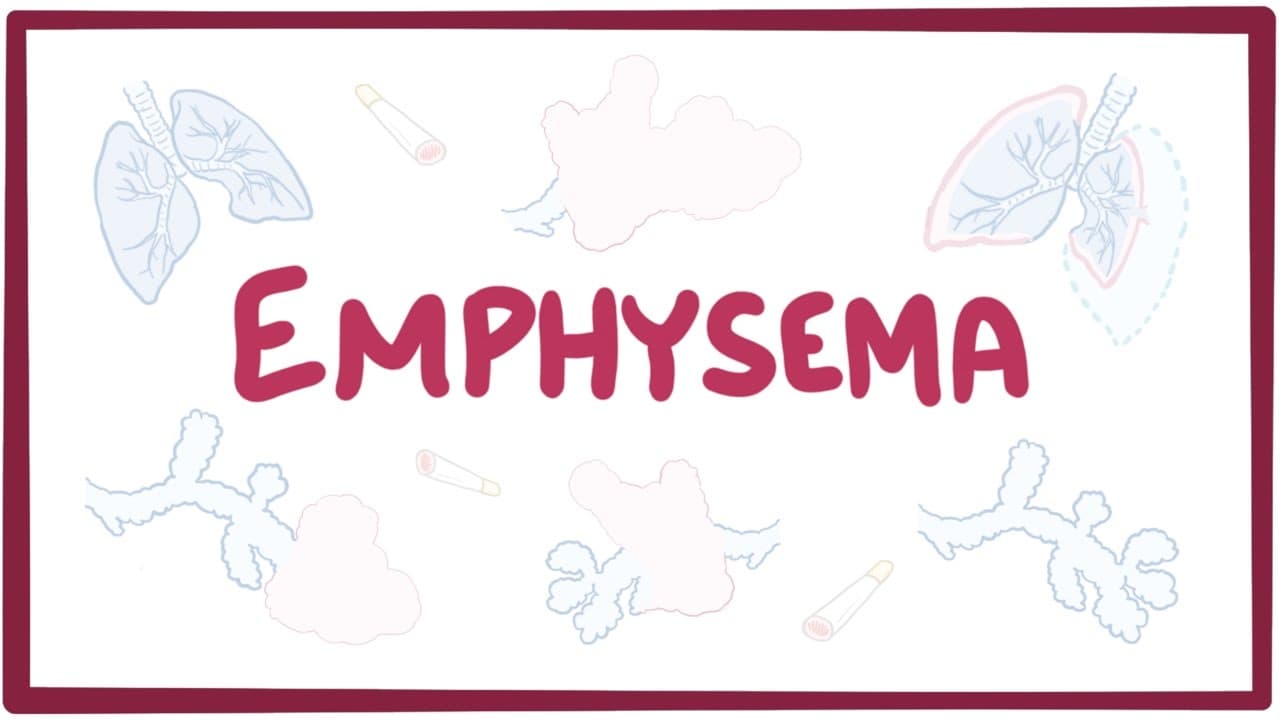
Emphysema is a type of chronic obstructive pulmonary disease (COPD) that damages the alveolar air sacs in the lungs, leading to difficulties in exhaling and reduced gas exchange. It is primarily caused by smoking and results in symptoms like shortness of breath and may progress to hypoxemia and right-sided heart failure if left untreated.
Transcript
Emphysema means “inflate or swell”, which makes sense because in the lungs of people with emphysema, the alveolar air sacs, which are the thin walled air spaces at the ends of the airways where oxygen and carbon dioxide are exchanged, become damaged or destroyed. The alveoli permanently enlarge and lose elasticity, and as a result, individuals with... Read More
Key Insights
- Emphysema is a chronic obstructive pulmonary disease characterized by the destruction of alveolar air sacs, leading to breathing difficulties.
- The disease results in the enlargement of air spaces and loss of lung elasticity, making exhalation difficult for affected individuals.
- Emphysema is often associated with smoking, which causes inflammation and damage to the delicate alveolar walls.
- Different emphysema types affect the lung acinus differently, with centriacinar and panacinar being the most common forms.
- Centriacinar emphysema primarily affects smokers and damages the central alveoli of the acinus, mostly in the upper lung lobes.
- Panacinar emphysema, often linked to alpha-1 antitrypsin deficiency, affects the entire acinus and typically impacts lower lung lobes.
- Paraseptal emphysema affects distal alveoli near the lung periphery and can lead to pneumothorax due to ruptured alveoli.
- Treatment focuses on risk reduction, such as smoking cessation, and managing symptoms with medications and supplemental oxygen.
Install to Summarize YouTube Videos and Get Transcripts
Explore YouTube Video Summarizer or Get YouTube Transcript Extractor
Questions & Answers
Q: What structural changes occur in the lungs due to emphysema?
In emphysema, the alveolar air sacs become damaged, leading to their permanent enlargement and loss of elasticity. This structural deterioration results in air trapping and poor gas exchange, as the alveoli are unable to effectively expel air, causing breathing difficulties. The disease also leads to the breakdown of the thin alveolar walls, reducing the surface area for gas exchange.
Q: How does smoking contribute to the development of emphysema?
Smoking is a major risk factor for emphysema as it introduces irritants that trigger an inflammatory reaction in the lungs. This inflammation leads to the release of proteases, which break down key structural proteins like elastin and collagen in the alveolar walls, resulting in the characteristic air trapping and structural damage seen in emphysema.
Q: What are the different types of emphysema and how do they differ?
The three main types of emphysema are centriacinar, panacinar, and paraseptal. Centriacinar affects the central alveoli of the acinus, often linked to smoking, and primarily impacts the upper lung lobes. Panacinar involves the entire acinus, associated with alpha-1 antitrypsin deficiency, affecting lower lobes. Paraseptal affects distal alveoli near lung peripheries, potentially leading to pneumothorax.
Q: What symptoms are commonly associated with emphysema?
Common symptoms of emphysema include shortness of breath (dyspnea), a cough with minimal sputum, and difficulty exhaling due to air trapping. Over time, individuals may develop a barrel-shaped chest and experience weight loss due to the energy expended on breathing. Advanced stages can lead to hypoxemia and right-sided heart failure.
Q: How is emphysema diagnosed using lung function tests?
Emphysema is diagnosed using lung function tests that measure forced vital capacity (FVC) and forced expiratory volume in one second (FEV1). In emphysema, both FVC and FEV1 are reduced, with FEV1 showing a more significant decrease. This results in a lower FEV1 to FVC ratio, which is a hallmark of COPD. Total lung capacity (TLC) may be increased due to air trapping.
Q: What is the role of protease inhibitors in emphysema?
Protease inhibitors, like alpha-1 antitrypsin, play a crucial role in protecting lung tissue from damage by proteases. In healthy individuals, these inhibitors prevent proteases from breaking down structural proteins in the alveoli. In emphysema, especially in those with alpha-1 antitrypsin deficiency, the lack of these inhibitors leads to unchecked protease activity and subsequent lung damage.
Q: What are the treatment options for managing emphysema?
Treatment for emphysema focuses on reducing risk factors, such as smoking cessation, and managing symptoms with medications like bronchodilators and inhaled steroids. Supplemental oxygen may be provided to alleviate hypoxemia. Antibiotics can be used to control secondary infections. Lifestyle modifications and pulmonary rehabilitation can also help improve quality of life.
Q: How does emphysema lead to right-sided heart failure?
Emphysema can lead to right-sided heart failure through a process called cor pulmonale. As lung tissue becomes damaged and gas exchange is impaired, hypoxic vasoconstriction occurs, increasing pulmonary artery pressure. This results in pulmonary hypertension, which overburdens the right side of the heart, causing it to enlarge and eventually fail due to the increased workload.
Summary & Key Takeaways
-
Emphysema is a form of COPD where lung tissue is damaged, primarily due to smoking, leading to breathing difficulties. It affects the alveolar air sacs, causing them to enlarge and lose elasticity, which hampers exhalation. Different types of emphysema affect the lung's acinus differently, with centriacinar and panacinar being the most common.
-
In emphysema, inflammation caused by irritants like cigarette smoke leads to the breakdown of elastin and collagen in the alveoli, resulting in air trapping and poor gas exchange. This structural damage causes symptoms such as shortness of breath, and over time, can lead to hypoxemia and right-sided heart failure.
-
Treatment of emphysema includes reducing exposure to risk factors like smoking, using medications such as bronchodilators and inhaled steroids, and providing supplemental oxygen. The disease's progression can lead to significant changes in lung structure, including hyperinflation and a barrel-shaped chest, as well as systemic effects like weight loss.
Read in Other Languages (beta)
Share This Summary 📚
Summarize YouTube Videos and Get Video Transcripts with 1-Click
Try YouTube Summary with ChatGPT & Claude or YouTube Transcript Generator
Explore More Summaries from Osmosis from Elsevier 📚

Summarize YouTube Videos and Get Video Transcripts with 1-Click
Try YouTube Summary with ChatGPT & Claude or YouTube Transcript Generator