What Are the Best Study Techniques for Learning?
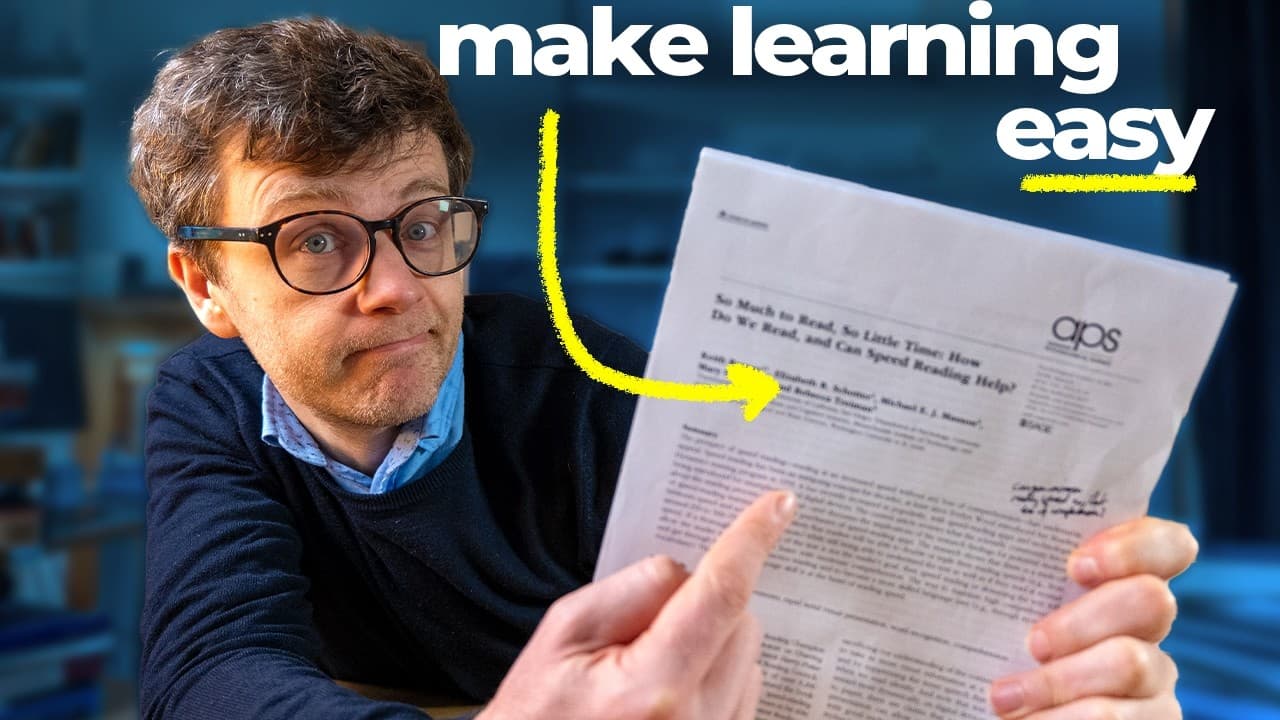
TL;DR
Master effective study techniques like retrieval practice, which enhances memory retention by testing oneself on material. Spaced practice, where learning sessions are spread out, and interleaving between topics also boost comprehension and long-term retention, transforming your study approach dramatically.
Transcript
imagine if there were a set of study techniques so powerful that they could transform anybody into a top aade student well there are they're based on scientific evidence and according to this paper from nature they're some of the most robust findings in the psychology of learning so what are these techniques well that's what I'm going to share with... Read More
Key Insights
- ❓ Retrieval practice is more effective than rereading or highlighting as a study strategy.
- 🥺 Spaced practice, where learning is spread out over time, leads to better memory retention and understanding.
- ❓ Interleaving, switching between topics, is an effective but often overlooked study strategy.
- 🍉 Testing oneself on difficult topics enhances learning and long-term memory.
- 👾 The effort required for retrieval practice and spaced practice may make them feel less effective in the moment, but they yield better results.
- 👾 The effectiveness of retrieval practice and spaced practice is supported by numerous studies and is considered robust findings in the field of learning psychology.
- 😷 Elaborative interrogation, asking oneself how and why questions, is an effective method of incorporating new knowledge into existing understanding.
Install to Summarize YouTube Videos and Get Transcripts
Explore YouTube Video Summarizer or Get YouTube Transcript Extractor
Questions & Answers
Q: Why are rereading and highlighting not effective study strategies?
Rereading and highlighting create a familiarity with the material but do not result in deep understanding and retention. They give a false sense of mastery because they only focus on the words in the text rather than the underlying concepts.
Q: How does retrieval practice improve learning?
Retrieval practice forces the brain to actively recall information, which strengthens memory and understanding. Testing oneself during the learning process is a more effective strategy than simply depositing information into the brain.
Q: How does spaced practice impact learning outcomes?
Spaced practice, where learning sessions are spaced out over time, leads to better memory retention and transfer of knowledge. Learning episodes spread over longer periods produce more lasting and robust effects compared to intensive cramming.
Q: Why is interleaving an effective study strategy?
Interleaving, despite feeling counterintuitive, improves learning by challenging the brain to switch between different topics. This helps to improve understanding and retention, as well as transfer of knowledge to new domains.
Key Insights:
- Retrieval practice is more effective than rereading or highlighting as a study strategy.
- Spaced practice, where learning is spread out over time, leads to better memory retention and understanding.
- Interleaving, switching between topics, is an effective but often overlooked study strategy.
- Testing oneself on difficult topics enhances learning and long-term memory.
- The effort required for retrieval practice and spaced practice may make them feel less effective in the moment, but they yield better results.
- The effectiveness of retrieval practice and spaced practice is supported by numerous studies and is considered robust findings in the field of learning psychology.
- Elaborative interrogation, asking oneself how and why questions, is an effective method of incorporating new knowledge into existing understanding.
- Resources like "Teaching the Science of Learning," Learning Scientists, Brilliant.org, and the book "Make It Stick" provide valuable information and techniques for implementing these study strategies.
Summary & Key Takeaways
-
Rereading and highlighting are common study strategies that are not effective as they create a false sense of mastery and superficial understanding.
-
Retrieval practice, which involves testing oneself on the material, is a highly effective learning strategy that improves memory and understanding.
-
Spaced practice, where learning sessions are spread out over time, produces better learning outcomes compared to intensive learning in a single session.
-
Interleaving, which involves switching between topics, is a counterintuitive but effective strategy for enhancing learning and retention.
Read in Other Languages (beta)
Share This Summary 📚
Summarize YouTube Videos and Get Video Transcripts with 1-Click
Try YouTube Summary with ChatGPT & Claude or YouTube Transcript Generator
Explore More Summaries from Python Programmer 📚






Summarize YouTube Videos and Get Video Transcripts with 1-Click
Try YouTube Summary with ChatGPT & Claude or YouTube Transcript Generator