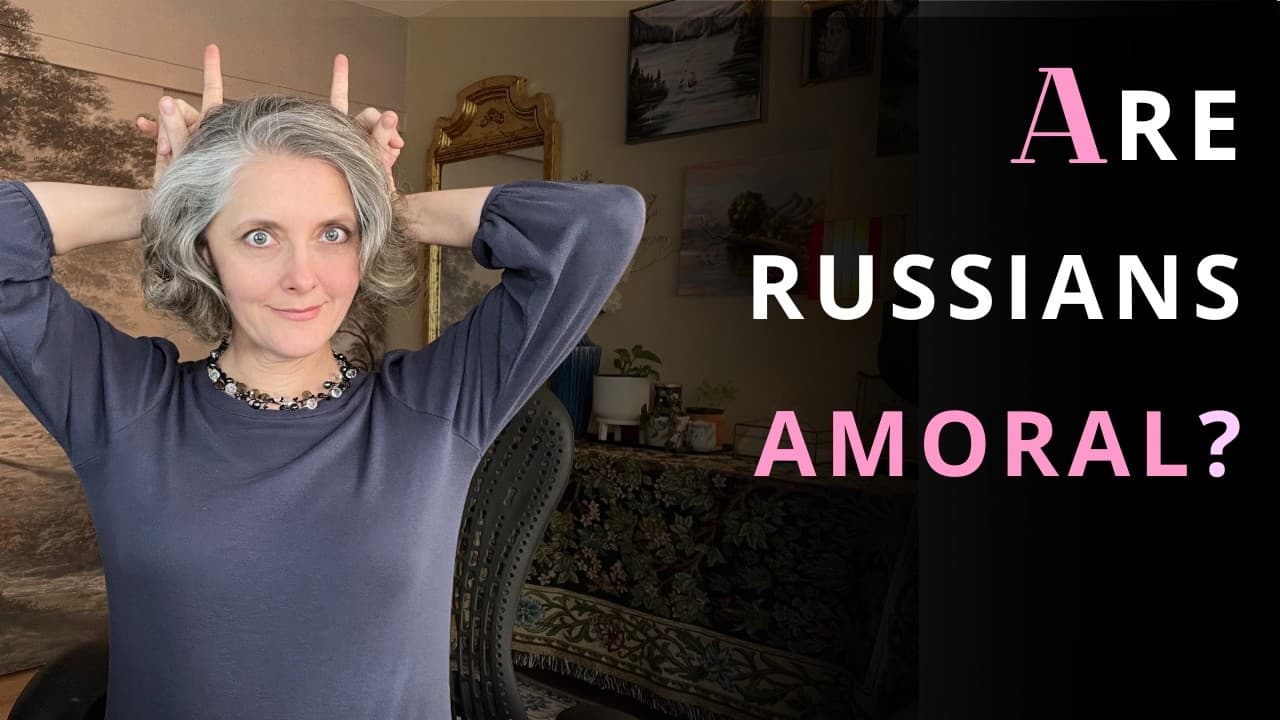
Russian Views on Morality Will Shock You
TL;DR
Russian society is structured like a feudal system influencing morality.
Transcript
Several days ago, I received an email from a highly respected lawyer based in London. He writes: "I worked for a Russian company for a while and came to know its people. I am intrigued to understand the mindset that makes, let's say, 'the average Russian' so amoral, brutal, and ruthless." To answer this,... Read More
Key Insights
- The Russian social hierarchy resembles a feudal system, with a distinct upper class controlling resources and power, while the common people live paycheck to paycheck.
- Access to the 'kormushka,' or state-controlled wealth, is crucial for success and survival in Russia, influencing the behavior and morality of those involved.
- The Russian elite, or 'samurais,' operate within a closed system where loyalty to their clan and superiors is paramount, often leading to ruthless behavior.
- Morality among the Russian elite is shaped by survival instincts and maintaining privileges, often resulting in actions that outsiders perceive as amoral.
- The Russian nobility is difficult to enter, requiring either birthright or a powerful patron to gain access to state resources and wealth.
- Russian cultural and historical context, including the influence of state power, plays a significant role in shaping societal behavior and perceptions.
- Propaganda plays a crucial role in maintaining the social hierarchy, with individuals like Margarita Simonyan rising to power by aligning with influential figures.
- Language barriers and cultural differences contribute to perceptions of Russians as rude, highlighting the importance of understanding context in communication.
Install to Summarize YouTube Videos and Get Transcripts
Explore YouTube Video Summarizer or Get YouTube Transcript Extractor
Questions & Answers
Q: What is the 'kormushka' in Russian society?
The 'kormushka' refers to the state-controlled wealth in Russia, primarily derived from natural resources and agricultural land. Access to this wealth is crucial for success and survival, as it dictates one's ability to secure funding, contracts, and other resources. This system influences the behavior and morality of those involved, as they compete for limited resources.
Q: How does the Russian social hierarchy resemble a feudal system?
The Russian social hierarchy is structured like a feudal system, with distinct levels of power and privilege. At the top are the elite, who control vast resources and networks of vassals. Below them are individuals with in-demand skills, followed by the common people living paycheck to paycheck. This hierarchy influences behavior, as individuals strive to maintain or improve their position within the system.
Q: What role does propaganda play in Russian society?
Propaganda is a powerful tool in maintaining the Russian social hierarchy. It shapes public perception and reinforces loyalty to the state and its leaders. Figures like Margarita Simonyan have risen to prominence by aligning with influential figures and promoting state narratives. This helps sustain the power structure and influences societal behavior and values.
Q: Why are Russians often perceived as rude?
Perceptions of Russians as rude can stem from language barriers and cultural differences. Russian communication may come across as direct or commanding in English, though it is neutral in Russian. Understanding these nuances is crucial for accurate interpretation and avoiding misjudgments based on cultural misunderstandings.
Q: How does loyalty influence morality in Russian society?
Loyalty to one's clan or superior is a cornerstone of morality among the Russian elite. This loyalty often requires actions perceived as amoral, such as deception or ruthlessness, to maintain privileges and survive within the system. The elite prioritize their clan's interests over broader moral considerations, shaping their worldview and behavior.
Q: What challenges do the lower classes face in Russia?
The lower classes in Russia face significant challenges, living paycheck to paycheck with little control over resources. They rely on state benefits and have limited opportunities for advancement. Their lack of integration into the higher levels of the social hierarchy means they often remain unaware of the true workings of the system until they clash with it.
Q: How does one enter the Russian elite class?
Entering the Russian elite class is challenging, requiring either birthright or a powerful patron to gain access to state resources and wealth. Individuals must align themselves with influential figures, often sacrificing personal morals for loyalty and service to their clan. This exclusivity maintains the power structure and perpetuates the feudal-like system.
Q: What are the consequences of opposing the Russian system?
Opposing the Russian system can result in severe consequences, including loss of wealth, status, and safety. Figures like Alla Pugacheva and Maxim Galkin faced backlash for speaking out against the state, losing access to resources and becoming personas non grata. The high cost of rebellion deters many from challenging the status quo, maintaining the existing power dynamics.
Summary & Key Takeaways
-
The video explores the complex social structure of Russia, likening it to a feudal system where power and resources are controlled by a select elite, influencing societal behavior and morality.
-
Access to state-controlled wealth, or 'kormushka,' is essential for success in Russia, shaping the actions and values of those within the system, often perceived as ruthless by outsiders.
-
Cultural and historical factors, including the influence of propaganda and language differences, contribute to the perception of Russians as amoral or rude, emphasizing the need for contextual understanding.
Read in Other Languages (beta)
Share This Summary 📚
Summarize YouTube Videos and Get Video Transcripts with 1-Click
Try YouTube Summary with ChatGPT & Claude or YouTube Transcript Generator
Explore More Summaries from Elvira Bary 📚

Summarize YouTube Videos and Get Video Transcripts with 1-Click
Try YouTube Summary with ChatGPT & Claude or YouTube Transcript Generator