The Pigeon Hole Principle: 7 gorgeous proofs
TL;DR
The Pigeonhole Principle, a powerful proof technique, is introduced and its applications in various mathematical problems are explored.
Transcript
Welcome to another Mathologer video. See that book over there? It's called Récréation mathématique and it's a 17th-century version of mathologer. Yep once upon a time long ago people would read books for their recreational mathematics. Published in 1626 Récréation mathématique is a collection of fun maths problems devised by some jesuit p... Read More
Key Insights
- ❓ The Pigeonhole Principle is a powerful proof technique that can be applied to various mathematical problems.
- 🧑🤝🧑 It is historically significant, dating back to the 17th-century book "Récréation mathématique."
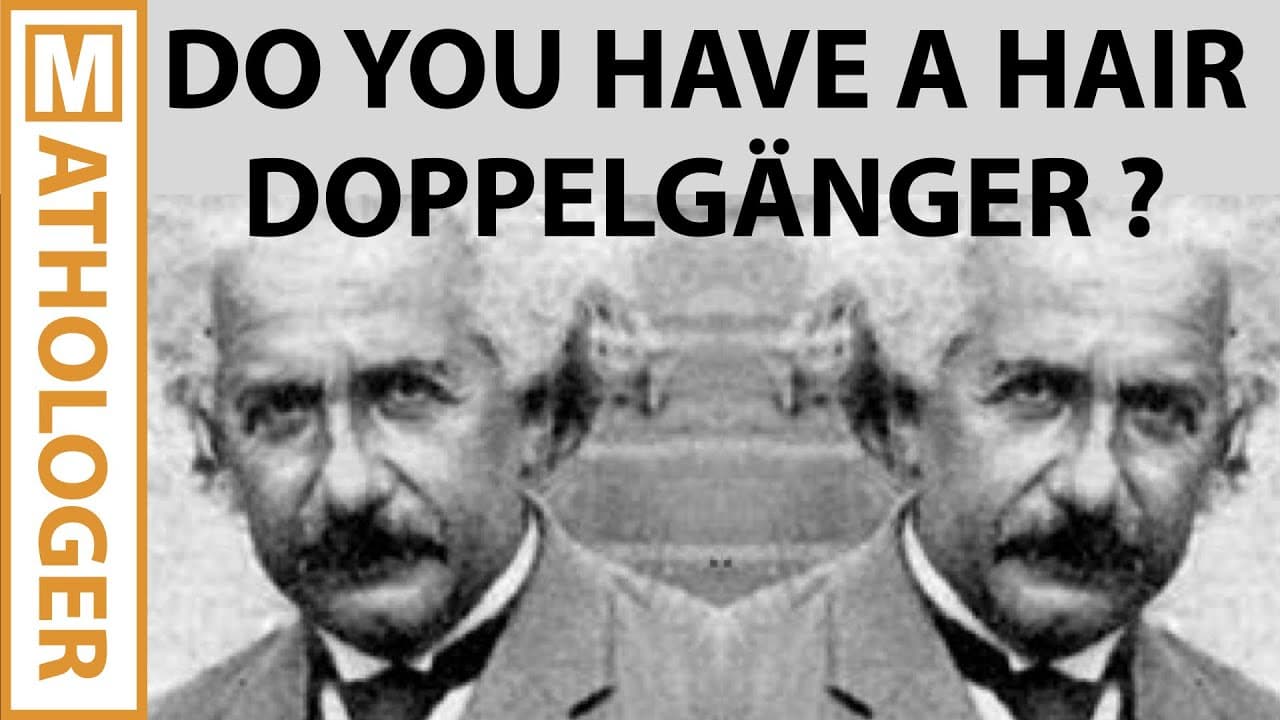
- 🥳 Applications of the Pigeonhole Principle include solving problems about body hair doppelgangers, determining pigeon distribution in hemispheres, understanding repeating decimals, analyzing handshakes at a party, proving combinatorial problems, and performing card tricks.
Install to Summarize YouTube Videos and Get Transcripts
Explore YouTube Video Summarizer or Get YouTube Transcript Extractor
Questions & Answers
Q: What is the Pigeonhole Principle?
The Pigeonhole Principle states that if there are more objects (pigeons) than available options (pigeonholes), at least one option must have more than one object.
Q: What is the significance of the book "Récréation mathématique"?
The book "Récréation mathématique" contains the first recorded instance of the Pigeonhole Principle, making it historically important in the development of mathematics.
Q: How can the Pigeonhole Principle be applied to solve problems about body hair doppelgangers?
By representing each person's body hair as a pigeon and each possible number of body hairs as a pigeonhole, it can be concluded that there will always be individuals with the exact same number of body hairs.
Q: How does the Pigeonhole Principle relate to fractions and repeating decimals?
The Pigeonhole Principle can be used to demonstrate that every fraction can be expressed as a repeating decimal, and conversely, every repeating decimal corresponds to a fraction.
Q: How can the Pigeonhole Principle be used to solve problems about handshakes at a party?
By considering different possibilities for the number of handshakes each person can make, the Pigeonhole Principle ensures that there will always be at least two people who shake hands with the same number of individuals.
Q: What is the Ramsey theory?
The Ramsey theory is a branch of mathematics that studies the emergence of orderly structures within large, messy systems. It often utilizes the Pigeonhole Principle to prove its results.
Q: How does the Pigeonhole Principle apply to a card trick?
The Pigeonhole Principle is used in a card trick to communicate the number of steps between two cards. By arranging the remaining cards in a specific order, the magician's assistant can determine the missing card.
Q: What is the Fitch Cheney five card trick?
The Fitch Cheney five card trick is a card trick that utilizes the Pigeonhole Principle to determine a missing card. The magician arranges the remaining cards in a specific order, which conveys the position of the missing card to the assistant.
Summary & Key Takeaways
-
The video introduces the 17th-century book "Récréation mathématique," which contains the first recorded instance of the Pigeonhole Principle.
-
The Pigeonhole Principle is explained as a simple concept: if there are more pigeons than pigeonholes, there must be at least one pigeonhole with more than one pigeon.
-
The video showcases seven applications of the Pigeonhole Principle, including solving a problem about body hair doppelgangers, determining the distribution of pigeons in hemispheres, understanding repeating decimals as fractions, solving a problem about handshakes at a party, proving a combinatorial problem from an olympiad, and demonstrating a pigeon-powered card trick.
Read in Other Languages (beta)
Share This Summary 📚
Summarize YouTube Videos and Get Video Transcripts with 1-Click
Try YouTube Summary with ChatGPT & Claude or YouTube Transcript Generator
Explore More Summaries from Mathologer 📚
Summarize YouTube Videos and Get Video Transcripts with 1-Click
Try YouTube Summary with ChatGPT & Claude or YouTube Transcript Generator