The Romans flooded the Colosseum for sea battles - Janelle Peters
TL;DR
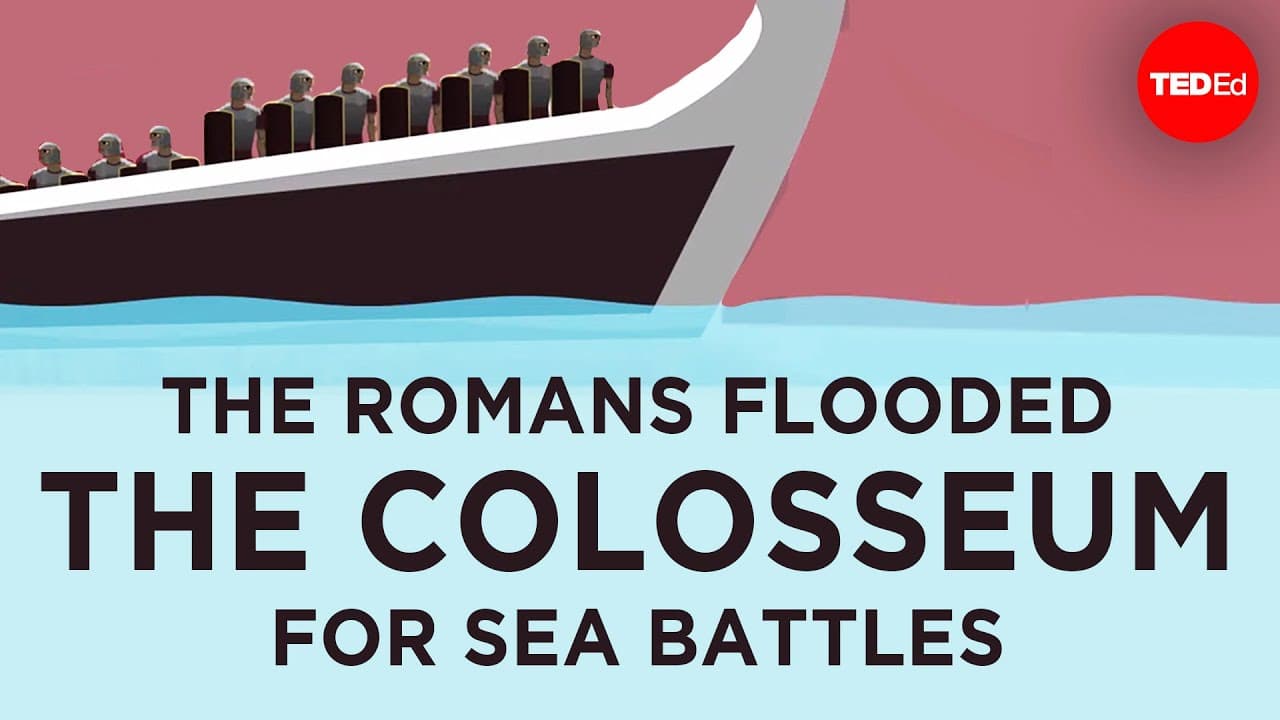
The Colosseum hosted grand aquatic shows with naval battles and chariot races alongside traditional games.
Transcript
The cry of the crowd. The roar of a lion. The clash of metal. Starting in 80 CE these sounds rang through the stands of the Colosseum. On hundreds of days a year, over 50,000 residents of Rome and visitors from across the Roman Empire would fill the stadiums’ four stories to see gladiators duel, animals fight, and chariots race around the arena... Read More
Key Insights
- 👻 The Colosseum hosted grand aquatic displays, including staged naval battles and chariot races, alongside traditional gladiatorial combat.
- 🤬 These aquatic spectacles were financed by the Emperor and served as a symbol of Imperial power and divinity.
- ❓ The intricate engineering required to flood the arena for these performances remains a mystery, with multiple theories proposed by historians.
- 🧑🏭 The actors involved in these performances, including gladiators on ships and chariot drivers, added a dramatic flair to the aquatic shows.
Install to Summarize YouTube Videos and Get Transcripts
Explore YouTube Video Summarizer or Get YouTube Transcript Extractor
Questions & Answers
Q: What were naumachiae, and how did they contribute to the Colosseum's spectacle?
Naumachiae were staged naval battles held at the Colosseum, involving gladiators on ships reenacting historical encounters. They added a unique aquatic element to the entertainment offered at the venue.
Q: How did the aquatic shows at the Colosseum reflect the power of the Roman Emperors?
The elaborate water-based performances financed by the Emperors were designed to showcase their authority and divinity, reinforcing their status as god-like figures in the eyes of the Roman people.
Q: How were the engineers able to flood the arena for these aquatic displays?
Historians have proposed various theories, including diverting a giant aqueduct into the arena or using a system of chambers and sluice gates to fill and drain the arena as needed for the performances.
Q: Why did the Colosseum eventually stop hosting aquatic spectacles?
The Colosseum's aquatic age came to an end when Emperor Domitian provided a separate lake for naval battles, and the venue's infrastructure was altered to accommodate other types of entertainment, such as underground animal cages.
Summary & Key Takeaways
-
The Colosseum was home to epic naval battles and aquatic spectacles, showcasing gladiators, animals, chariots, and more.
-
These grand displays of Imperial power were financed by the Emperor and aimed to bolster faith in the ruler.
-
Engineers flooded the arena using complex systems, creating elaborate water-based performances with ships and battles.
Read in Other Languages (beta)
Share This Summary 📚
Summarize YouTube Videos and Get Video Transcripts with 1-Click
Try YouTube Summary with ChatGPT & Claude or YouTube Transcript Generator
Explore More Summaries from TED-Ed 📚






Summarize YouTube Videos and Get Video Transcripts with 1-Click
Try YouTube Summary with ChatGPT & Claude or YouTube Transcript Generator