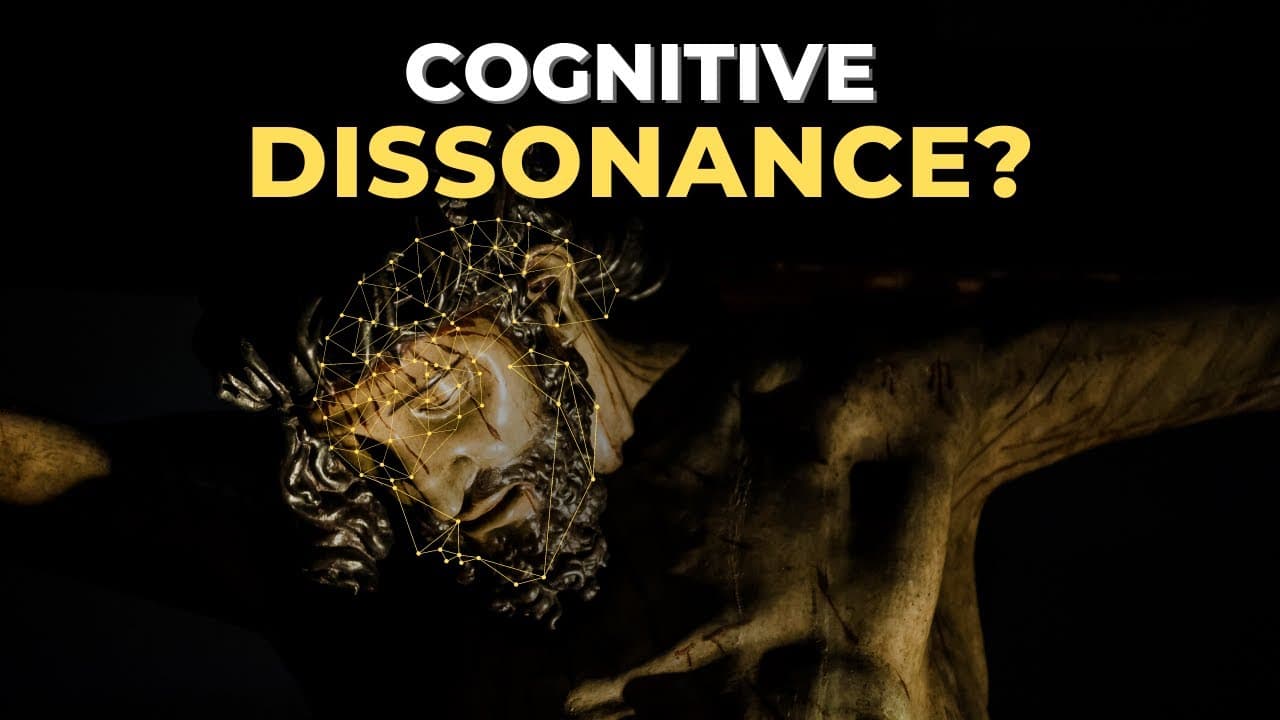
Cognitive Dissonance DOESN'T Explain Christianity
TL;DR
Cognitive dissonance doesn't fully explain Christianity's origins.
Transcript
how did Christianity begin it's a simple question right the Christian answer is obviously that Jesus miraculously rose from the dead you're a skeptic you're obviously going to have to look for some sort of non-miraculous explanation one explanation that has become increasingly popular is that Christianity began out of the di... Read More
Key Insights
- Cognitive dissonance theory explains how individuals hold conflicting beliefs and how they adjust to reduce discomfort. It has been applied to religious movements like the Millerites.
- The theory suggests early Christians reinterpreted Jesus's death to fit Jewish beliefs, but this is challenged by the complexity of Jewish law and messianic prophecies.
- JB Sumner argued that early Christians did not invent their beliefs based on Judaism, as the Jewish law was seen as complete and flawless.
- The spread of Christianity, despite persecution, challenges the cognitive dissonance theory, as it does not account for the religion's global expansion.
- Christianity's survival and growth are seen as improbable by cognitive dissonance theorists, given the intense persecution faced by early Christians.
- The gospels indicate that the disciples believed in Jesus as the Messiah due to his miracles, not merely due to cognitive dissonance.
- Cognitive dissonance theory fails to address the specific empirical claims made by the disciples, who faced persecution for their beliefs.
- The theory relies on literary interpretations of the gospels that are open to challenge, and more responses from Christian apologetics are needed.
Install to Summarize YouTube Videos and Get Transcripts
Explore YouTube Video Summarizer or Get YouTube Transcript Extractor
Questions & Answers
Q: What is cognitive dissonance theory?
Cognitive dissonance theory is a psychological concept that explains the discomfort people feel when they hold two conflicting beliefs or values simultaneously. To reduce this discomfort, individuals may modify their beliefs or find ways to justify their current beliefs. This theory was developed by Leon Festinger in the 1950s.
Q: How does cognitive dissonance theory relate to Christianity?
Cognitive dissonance theory has been applied to explain the origins of Christianity, suggesting that early Christians reinterpreted Jesus's death to align with Jewish beliefs. The theory posits that the disciples experienced cognitive dissonance after Jesus's crucifixion and adjusted their beliefs to maintain their faith in him as the Messiah.
Q: What argument did JB Sumner make against cognitive dissonance theory?
JB Sumner argued that early Christians did not invent their beliefs based on Judaism. He emphasized the Jewish view of the law as complete and flawless, making it unlikely that Jews would conclude Jesus improved the law. Sumner also highlighted the improbability of Christianity's spread despite persecution, challenging the cognitive dissonance explanation.
Q: Why does cognitive dissonance theory fail to explain Christianity's spread?
Cognitive dissonance theory fails to explain Christianity's spread because it does not account for the religion's global expansion despite intense persecution. The theory overlooks the specific empirical claims made by the disciples and the improbability of Christianity's survival and growth, given the challenges faced by early Christians.
Q: What role did miracles play in the disciples' belief in Jesus?
The gospels suggest that the disciples believed in Jesus as the Messiah largely due to his miracles, rather than cognitive dissonance. The disciples witnessed Jesus's miraculous acts, which reinforced their faith and belief in his divine nature, providing a basis for their continued devotion even after his crucifixion.
Q: How do Jewish messianic prophecies challenge cognitive dissonance theory?
Jewish messianic prophecies challenge cognitive dissonance theory by highlighting the complexity and diversity of messianic expectations in Judaism. These prophecies pointed to both earthly and divine aspects of the Messiah, making it unlikely that early Christians could have simply reinterpreted Jesus's death to fit these prophecies without genuine belief.
Q: What are the limitations of cognitive dissonance theory in explaining Christianity?
Cognitive dissonance theory is limited in explaining Christianity because it relies on literary interpretations of the gospels and does not fully account for the historical and empirical claims made by the disciples. The theory also overlooks the role of miracles and the improbability of Christianity's spread despite persecution.
Q: Why is more response from Christian apologetics needed regarding cognitive dissonance theory?
More response from Christian apologetics is needed regarding cognitive dissonance theory because it has gained popularity as an explanation for Christianity's origins. Christian apologists need to address the theory's assumptions and provide counterarguments that highlight the historical, empirical, and theological aspects of Christianity that the theory overlooks.
Summary & Key Takeaways
-
Cognitive dissonance is a psychological theory explaining how individuals reconcile conflicting beliefs. It has been used to explain the origins of Christianity, suggesting that early Christians reinterpreted Jesus's death to fit their beliefs. However, this theory is challenged by the complexities of Jewish law and messianic prophecies.
-
JB Sumner argued against the idea that early Christians invented their beliefs based on Judaism. He highlighted the Jewish view of the law as complete and the improbability of Christianity's spread despite persecution. The theory of cognitive dissonance does not fully account for Christianity's global expansion.
-
The gospels suggest that the disciples believed in Jesus due to his miracles, not cognitive dissonance. The theory fails to address the disciples' specific empirical claims and relies on literary interpretations of the gospels. More responses from Christian apologetics are needed to challenge this theory.
Read in Other Languages (beta)
Share This Summary 📚
Summarize YouTube Videos and Get Video Transcripts with 1-Click
Try YouTube Summary with ChatGPT & Claude or YouTube Transcript Generator
Explore More Summaries from Testify 📚


Summarize YouTube Videos and Get Video Transcripts with 1-Click
Try YouTube Summary with ChatGPT & Claude or YouTube Transcript Generator