Iodine Satellites - Periodic Table of Videos
TL;DR
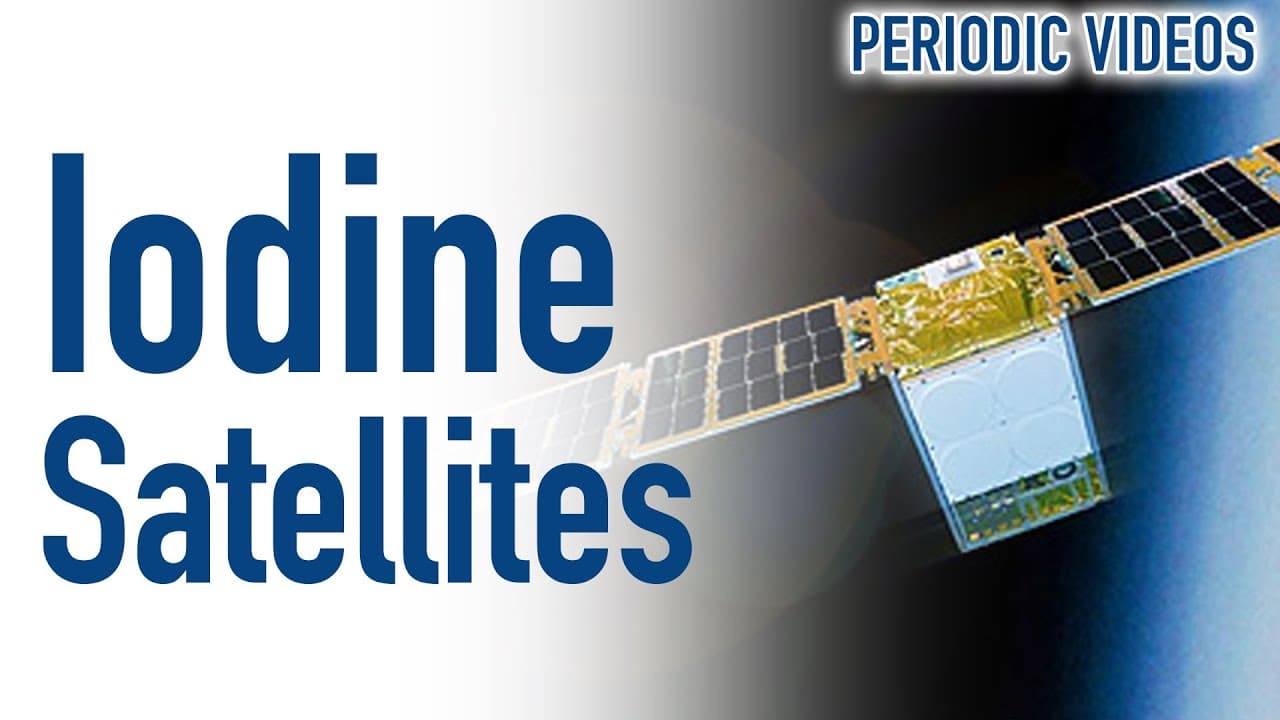
Iodine replaces xenon for satellite propulsion, offering efficient and reliable power in space exploration.
Transcript
it is getting really popular to send small satellites into space for internet provision across the world particularly where you can't use cables and so on to remote communities now the problems with these satellites are they they need to maneuver in space to avoid flying objects or because they're not in quite the right orbit the problem is they're... Read More
Key Insights
- 🚒 Solid iodine engines offer a more efficient and reliable propulsion system for small satellites.
- 🫢 Iodine sublimates, eliminating the need for high-pressure storage with xenon gas.
- 🫢 Xenon gas propulsion has limitations in space due to mechanical failures and efficiency issues.
- 😒 Iodine engines use minimal power and have no moving parts, enhancing their reliability for long-term missions.
- 🛰️ The discovery of iodine-powered satellite engines opens up new possibilities for space exploration and internet provision in remote areas.
- 🚒 Iodine engines provide a cost-effective and sustainable solution for satellite propulsion in the absence of traditional rocket engines.
- 🛰️ The utilization of iodine for satellite engines showcases the versatility and adaptability of elements in space technologies.
Install to Summarize YouTube Videos and Get Transcripts
Explore YouTube Video Summarizer or Get YouTube Transcript Extractor
Questions & Answers
Q: How does xenon gas propulsion for satellites work?
Xenon gas is ionized in a high-voltage chamber, creating a plasma that is expelled at high speeds to propel the satellite forward in space.
Q: What are the limitations of using xenon gas for satellite propulsion?
Xenon gas needs high-pressure storage, mechanical valves that can fail, and is not as efficient as solid iodine engines for long-term space missions.
Q: How does the solid iodine engine work?
Solid iodine is heated and sublimates into a gas, which is ionized and accelerated to provide thrust for satellite propulsion without moving parts.
Q: What are the advantages of using iodine over xenon for satellite engines?
Iodine engines are more efficient, reliable, and require less power, making them a valuable alternative for small satellite maneuvering in space.
Summary & Key Takeaways
-
Sending small satellites into space for internet provision in remote areas.
-
Xenon gas used traditionally for satellite propulsion, but new solid iodine engines offer advantages.
-
Iodine sublimates easily, requires little power, and eliminates the need for mechanical valves.
Read in Other Languages (beta)
Share This Summary 📚
Summarize YouTube Videos and Get Video Transcripts with 1-Click
Try YouTube Summary with ChatGPT & Claude or YouTube Transcript Generator
Explore More Summaries from Periodic Videos 📚



Summarize YouTube Videos and Get Video Transcripts with 1-Click
Try YouTube Summary with ChatGPT & Claude or YouTube Transcript Generator