How Do Telomeres Affect Aging and Cancer Risk?
TL;DR
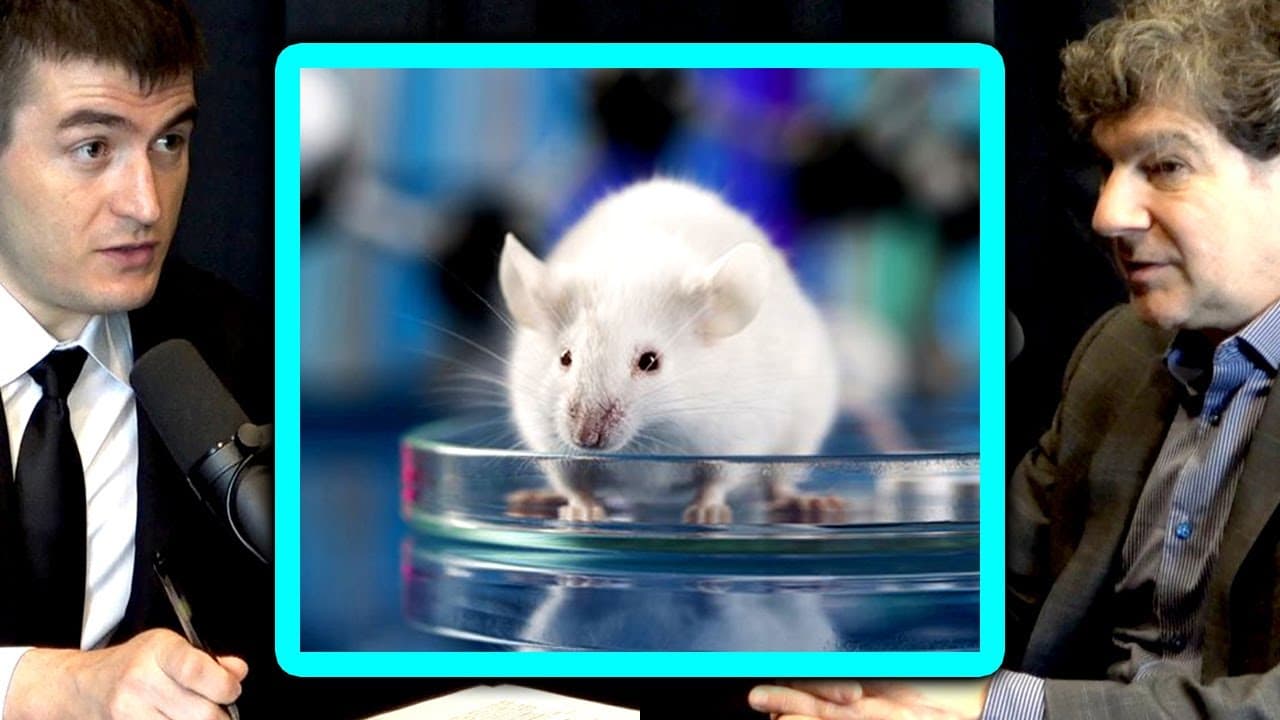
Telomeres, essential DNA sequences at chromosome ends, limit cell division and contribute to aging, known as senescence, as they shorten over time. The Reserved Capacity Hypothesis suggests this limitation also serves as a cancer prevention mechanism, creating a trade-off between youth and longevity. Lab mouse breeding protocols have altered telomere length, potentially skewing research outcomes related to aging and cancer risk.
Transcript
you've spoken with eric weinstein your brother on his podcast the portal about the ideas that eventually led to the paper you published titled the reserved capacity hypothesis i think first can you explain this paper and the ideas that led up to it sure easier to explain the conclusion of the paper there's a question about why a creature that can r... Read More
Key Insights
- ➗ Senescence, or aging, is hypothesized to be caused by the limitation of cell division due to telomere shortening.
- ➗ Telomeres serve as a counter for the number of cell divisions, and when critically short, cells stop dividing and undergo transcriptional changes.
- 🥺 Telomere studies for aging and cancer prevention have focused on opposite approaches, leading to a discrepancy in research findings.
- 🐭 Lab mice with long telomeres generated by breeding protocols are not suitable models for studying aging and tumors, potentially distorting conclusions about cancer risks and tissue damage.
- 🦺 Telomere length is an important variable to consider for drug development and safety testing, as it may affect cancer risks and tissue repair capacity.
- ✊ Flaws in the current peer review system and power dynamics within the scientific community may hinder the recognition of important research findings and result in the manipulation of ideas and credit.
- 🎙️ More videos with Bret Weinstein:
Install to Summarize YouTube Videos and Get Transcripts
Explore YouTube Video Summarizer or Get YouTube Transcript Extractor
Questions & Answers
Q: What is the Reserved Capacity Hypothesis and how does it explain aging?
The Reserved Capacity Hypothesis posits that aging occurs due to the limited division capacity of cells caused by telomere shortening. This restriction reduces the body's ability to replace tissues, leading to aging and frailty.
Q: What is the role of telomeres in cell division and aging?
Telomeres are repetitive DNA sequences situated at the ends of chromosomes. With each cell division, a little bit of telomere is lost. When the telomere becomes critically short, cell division stops, leading to aging-related changes in gene transcription.
Q: Why did the study of telomeres in mice create an inconsistency?
Mice have been found to have very long telomeres but do not live significantly longer lives, which created a contradiction in telomere studies. This inconsistency was a key focus of the Reserved Capacity Hypothesis.
Q: How have breeding protocols for lab rodents affected telomere research?
Breeding protocols designed to increase reproductive output have unintentionally elongated telomeres in lab mice, leading to unreliable models for studying aging and tumors. These mice could overestimate cancer risks and underestimate tissue damage and accelerated senescence.
Summary & Key Takeaways
-
The Reserved Capacity Hypothesis explains that aging is a result of the limitation of cell division due to telomere shortening, which reduces tissue replacement ability, eventually leading to decrepitude.
-
The paper highlights the discrepancy between telomere studies for aging and cancer prevention, suggesting a plyotropic effect where genes that limit cell replacement also provide benefits in youth.
-
Breeding protocols for lab rodents with long telomeres have distorted research findings, leading to unreliable models for studying aging and tumor formation, and potentially underestimating cancer risks.
Read in Other Languages (beta)
Share This Summary 📚
Summarize YouTube Videos and Get Video Transcripts with 1-Click
Try YouTube Summary with ChatGPT & Claude or YouTube Transcript Generator
Explore More Summaries from Lex Clips 📚

Summarize YouTube Videos and Get Video Transcripts with 1-Click
Try YouTube Summary with ChatGPT & Claude or YouTube Transcript Generator