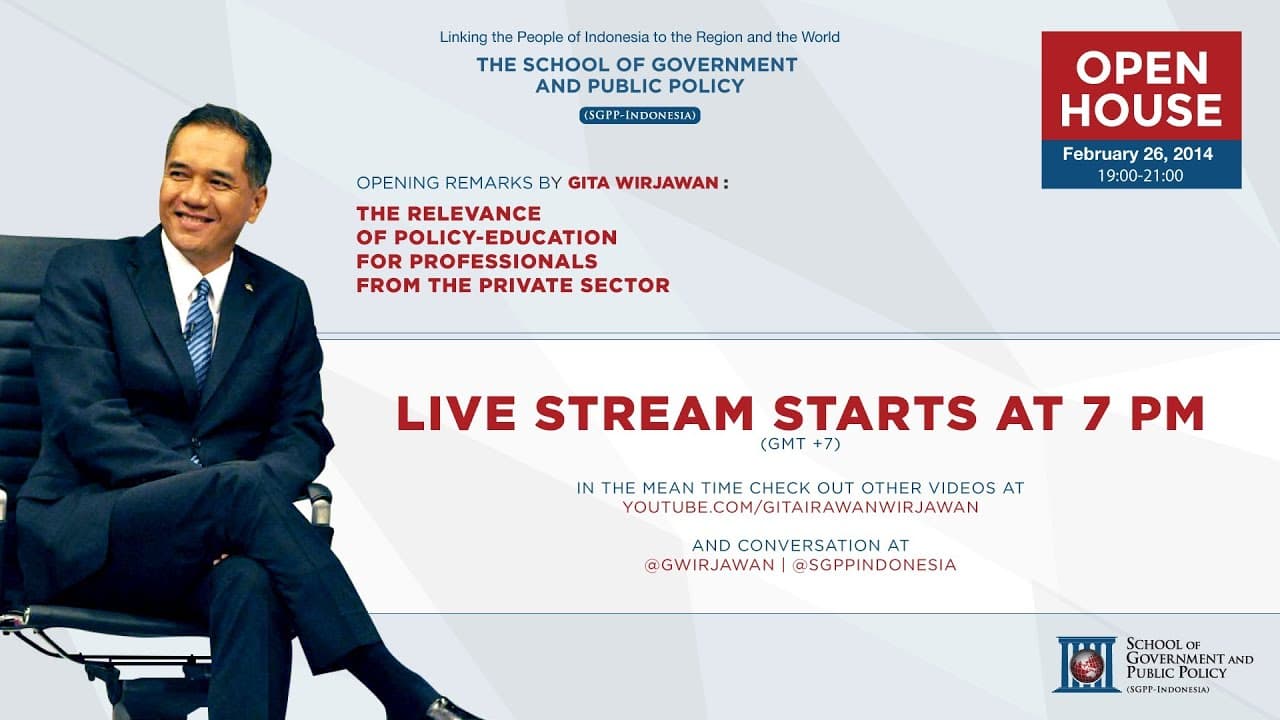
SGPP Indonesia Open House with Gita Wirjawan
TL;DR
Policy education opens diverse career paths beyond traditional roles.
Transcript
e e e e e e e e e e e e e e e e e e e e e e e e e e e e e e e e e e e e e e e e e e e e e e e e e e e e e e e e e e e e e e e e e e e e e e e e e e e e e you're what will like Val that's e e e e e e e e e e e e e e e e e e e e e e e e e e e e e e e e e e e ended up everybody yeah in 1992 because uh my dad at that time had a second heart attack alre... Read More
Key Insights
- Gita Wirjawan's career trajectory illustrates how policy education can lead to diverse roles, including entrepreneurship, banking, and government positions, challenging traditional career expectations.
- Indonesia's representation in global policy education is low compared to countries like China and Singapore, highlighting a need for increased participation to leverage the nation's potential.
- There is a significant opportunity for Indonesia to manufacture products like handphones locally, which could create millions of jobs and boost the economy.
- The current ratio of investigators to public officials in Indonesia is insufficient to effectively combat corruption; increasing this ratio is crucial for governance improvement.
- Expanding the taxpayer base and potentially lowering tax rates could significantly increase Indonesia's fiscal capacity, allowing for greater infrastructure and educational investment.
- Encouraging private sector investment in research and development through fiscal incentives could enhance Indonesia's innovation and competitiveness.
- Nationalism should focus on who benefits rather than who owns resources, emphasizing the importance of increasing the overall economic pie.
- Indonesia's unique strengths, such as its maritime nature and counterterrorism efforts, position it to offer distinctive policy education relevant to its context.
Install to Summarize YouTube Videos and Get Transcripts
Explore YouTube Video Summarizer or Get YouTube Transcript Extractor
Questions & Answers
Q: How did Gita Wirjawan's policy education influence his career?
Gita Wirjawan's policy education provided him with a versatile skill set that enabled him to excel in various fields, including banking, entrepreneurship, and government roles. He highlights that policy education is not limited to traditional roles like working in government or NGOs but can also lead to diverse career paths in the private sector, emphasizing the importance of a broad skill set in today's dynamic job market.
Q: What is the issue with Indonesia's representation in global policy education?
Indonesia's representation in global policy education is significantly lower than countries like China and Singapore. For instance, while China sends numerous students to prestigious policy schools annually, Indonesia's participation is sporadic and minimal. This lack of representation limits Indonesia's ability to leverage its global position and underscores the need for increased participation to enhance national policy-making capabilities and global influence.
Q: What economic opportunity does local handphone manufacturing present for Indonesia?
Local handphone manufacturing presents a substantial economic opportunity for Indonesia by potentially creating millions of jobs. Gita Wirjawan highlights that manufacturing handphones locally could significantly boost the economy, as Indonesia currently imports millions of handphones annually. By producing these devices domestically, Indonesia could not only reduce import dependence but also stimulate job creation and economic growth, making it a strategic area for policy focus.
Q: Why is the current investigator-to-public official ratio in Indonesia problematic?
The current ratio of investigators to public officials in Indonesia is problematic because it is insufficient to effectively combat corruption. With only 100 investigators for 4.5 million public officials, the ratio is 1 to 45,000, far below the ratio seen in countries like Hong Kong, which successfully reduced corruption with a much higher investigator-to-official ratio. Increasing this ratio is crucial for improving governance and reducing corruption in Indonesia.
Q: How could expanding the taxpayer base impact Indonesia's fiscal capacity?
Expanding the taxpayer base could significantly enhance Indonesia's fiscal capacity by increasing government revenues. Gita Wirjawan suggests that increasing the number of taxpayers from 20 million to 30 or 40 million could double the government budget, enabling greater investment in infrastructure, education, and public services. Additionally, lowering tax rates could further boost tax revenues, following the empirical evidence that suggests lower rates can lead to higher collections.
Q: What role does private sector investment in R&D play in Indonesia's development?
Private sector investment in research and development (R&D) plays a critical role in Indonesia's development by driving innovation and enhancing competitiveness. Gita Wirjawan emphasizes the need for fiscal incentives to encourage private sector R&D investment, as seen in countries like Singapore. Such investment is crucial for technological advancement and economic growth, allowing Indonesia to develop new products and industries that can compete globally.
Q: How should nationalism be defined according to Gita Wirjawan?
According to Gita Wirjawan, nationalism should be defined by who benefits from economic activities rather than who owns resources. He argues that the focus should be on increasing the overall economic pie and ensuring that the benefits are distributed equitably. This approach emphasizes the importance of growth with equity and the need for policies that promote inclusive economic development, rather than merely focusing on ownership of resources.
Q: What unique strengths does Indonesia offer in policy education?
Indonesia offers unique strengths in policy education due to its maritime nature, counterterrorism efforts, and pluralistic values. Gita Wirjawan highlights that these attributes position Indonesia to provide distinctive policy education that is relevant to its context. By focusing on these strengths, Indonesian policy schools can offer specialized knowledge and insights that are not easily replicated by institutions in other countries, making them valuable for both domestic and international students.
Summary & Key Takeaways
-
Gita Wirjawan discusses how policy education has enabled him to pursue a variety of careers, including banking, entrepreneurship, and government roles, demonstrating the versatility of such an education.
-
Indonesia's participation in global policy education is low, with few Indonesians attending prestigious schools compared to other countries, which limits the nation's potential to leverage its global position.
-
There is a significant opportunity for Indonesia to manufacture products like handphones locally, which could create millions of jobs and boost the economy, emphasizing the need for policy changes to support local production.
Read in Other Languages (beta)
Share This Summary 📚
Summarize YouTube Videos and Get Video Transcripts with 1-Click
Try YouTube Summary with ChatGPT & Claude or YouTube Transcript Generator
Explore More Summaries from Gita Wirjawan 📚




Summarize YouTube Videos and Get Video Transcripts with 1-Click
Try YouTube Summary with ChatGPT & Claude or YouTube Transcript Generator