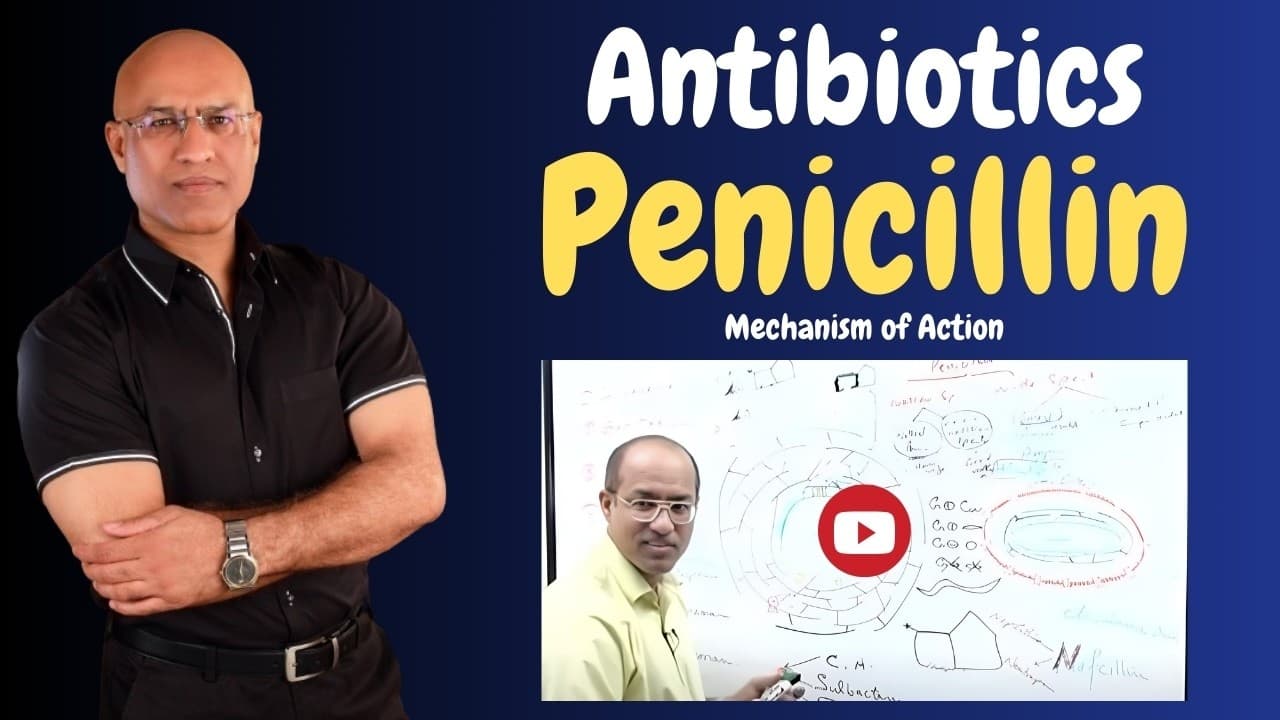
Penicillin | Antibiotics | Mechanism of Action | Pharmacology💊
TL;DR
This content discusses antibiotics, their mechanisms, effectiveness, types, and side effects.
Transcript
so today we are going to talk about antibiotics right especially antibacterial drugs right and when we talk about antibacterial drugs you know there are many different types of antibacterial drugs which work in different ways on the bacteria the first group of drugs which we will discuss is those antibiotics which inhibit the synthesis of bacterial... Read More
Key Insights
- 👥 Antibiotics are classified into various groups based on their mechanisms and effectiveness against different bacterial structures.
- 🎯 Penicillins are the most commonly used antibiotics, targeting bacterial cell wall synthesis.
- ❎ Gram-positive bacteria are generally more susceptible to penicillins than gram-negative bacteria due to differences in cell wall structure.
- 😣 Hypersensitivity reactions to penicillins can range from mild to severe, necessitating careful patient monitoring.
- 😒 Extended-spectrum penicillins have a broader range of activity, but their use can disrupt normal gut flora, leading to complications like antibiotic-associated diarrhea.
- 🙈 Nephritis is a serious side effect primarily seen with certain penicillins like methicillin, which requires avoidance in renal impairment.
- ❓ The understanding of bacterial resistance mechanisms, including the production of beta-lactamases, is crucial for effective antibiotic treatment.
- ❓ Combination therapy with beta-lactam antibiotics and aminoglycosides can enhance the efficacy of treatment for serious infections.
Install to Summarize YouTube Videos and Get Transcripts
Explore YouTube Video Summarizer or Get YouTube Transcript Extractor
Questions & Answers
Q: What are the main groups of antibiotics discussed in the content?
The content primarily addresses penicillins, which are divided into natural, narrow-spectrum, and extended-spectrum groups. Natural penicillins include penicillin G and V. Narrow-spectrum antibiotics are often anti-staphylococcal, while extended-spectrum penicillins, such as amoxicillin and ampicillin, can target a broader range of gram-negative bacteria.
Q: How do penicillins act against bacterial infections?
Penicillins inhibit the synthesis of bacterial cell walls by binding to penicillin-binding proteins (PBPs) and disrupting the transpeptidation process, leading to bacterial cell lysis. This action is particularly effective against gram-positive bacteria, due to their thicker peptidoglycan layers, but can also target some gram-negative bacteria depending on antibiotic penetration capabilities.
Q: What is the significance of the bacterial cell wall's structure in antibiotic effectiveness?
The structure of the bacterial cell wall, specifically the thickness and composition, determines its susceptibility to antibiotics. Gram-positive bacteria have thick peptidoglycan layers, making them more responsive to penicillins, while gram-negative bacteria possess an outer membrane that can hinder antibiotic entry, providing an additional barrier.
Q: What are some common side effects associated with penicillin use?
Common side effects of penicillins include hypersensitivity reactions such as anaphylaxis, type 1 hypersensitivity, autoimmune hemolytic anemia (type 2), and vasculitis (type 3). Other side effects may involve gastrointestinal disturbances, nephritis, hematological issues, and cation toxicity due to sodium or potassium salts.
Summary & Key Takeaways
-
The material explains various types of antibiotics, focusing on their mechanisms of action, particularly those that inhibit bacterial cell wall synthesis, like penicillin.
-
It describes the differences in effectiveness between gram-positive and gram-negative bacteria and how certain antibiotics can affect them differently based on their structural characteristics.
-
Side effects associated with antibiotic use, such as hypersensitivity reactions, nephritis, and hematological issues, are elaborated upon, emphasizing the safety profile of penicillins.
Read in Other Languages (beta)
Share This Summary 📚
Summarize YouTube Videos and Get Video Transcripts with 1-Click
Try YouTube Summary with ChatGPT & Claude or YouTube Transcript Generator
Explore More Summaries from Dr. Najeeb Lectures 📚

Summarize YouTube Videos and Get Video Transcripts with 1-Click
Try YouTube Summary with ChatGPT & Claude or YouTube Transcript Generator