Talk the Streets - Live Portuguese Lesson with Liz!
TL;DR
Liz teaches European Portuguese pronunciation and polite expressions.
Transcript
hello everybody it is Thursday again weeks are going pretty quickly now so it's time for another quick free Portuguese lesson with me so I want to here in the chat box who we have listening where you're tuning in from you can tell me in English if you're a beginner or you can tell me in Portuguese if you want to challenge yourself if you are an int... Read More
Key Insights
- Liz emphasizes the importance of pronunciation in mastering European Portuguese, focusing on subtle differences in vowel sounds to enhance understanding and communication.
- The lesson highlights the distinction between open and closed vowel sounds, particularly with the letter 'A', to sound more authentically Portuguese.
- Liz explains the significance of pronunciation in differentiating words that may sound similar but have different meanings, using examples like 'da' and 'dá'.
- Common idiomatic expressions in Portuguese are introduced to practice pronunciation and understand cultural nuances, such as 'A galinha da vizinha é sempre melhor que a minha'.
- Liz discusses the formal and informal ways to be polite in Portuguese, emphasizing the use of the third person and the subjunctive tense for formal requests.
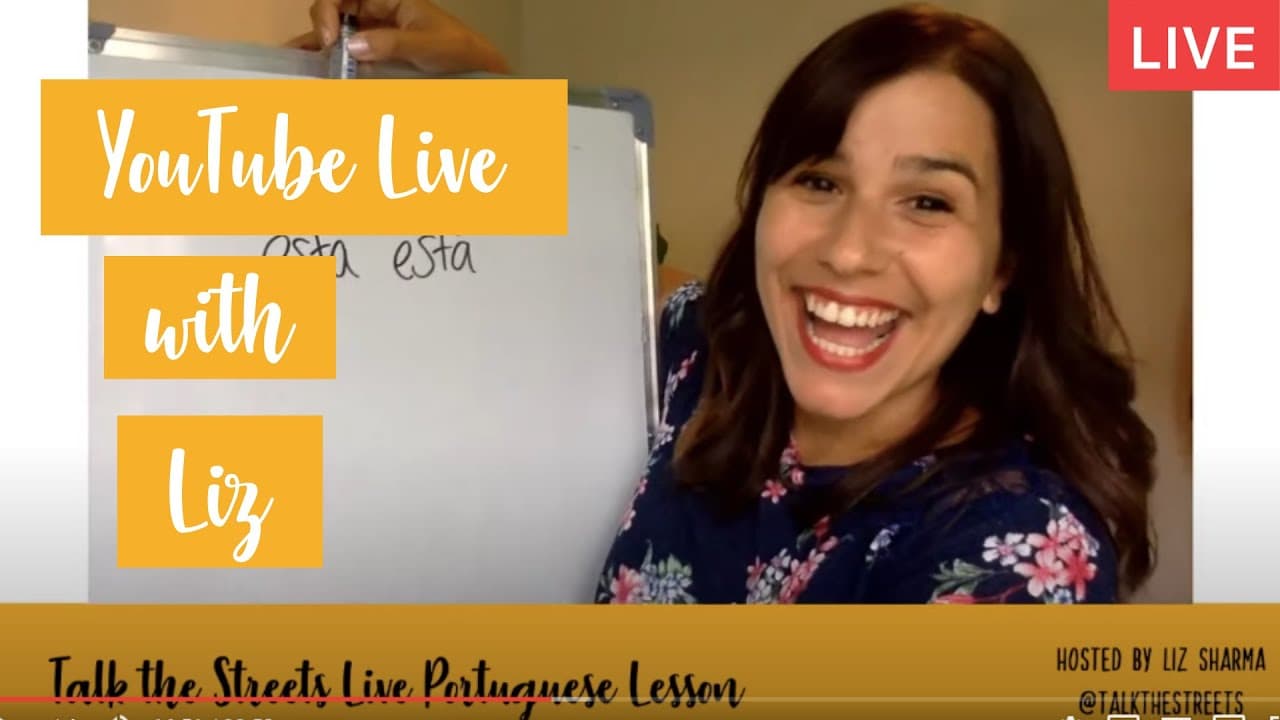
- Technical difficulties during the live lesson are addressed creatively by using a whiteboard, demonstrating adaptability in teaching methods.
- The lesson explores differences between European and Brazilian Portuguese, particularly in pronunciation and use of polite forms.
- Liz encourages interaction by asking viewers to participate in pronunciation exercises and providing tips for further learning through online resources.
Install to Summarize YouTube Videos and Get Transcripts
Explore YouTube Video Summarizer or Get YouTube Transcript Extractor
Questions & Answers
Q: What is the main focus of Liz's Portuguese lesson?
The main focus of Liz's Portuguese lesson is on pronunciation, particularly the differences between open and closed vowel sounds in European Portuguese. She emphasizes the importance of mastering these sounds to improve understanding and communication.
Q: How does Liz address technical difficulties during the lesson?
Liz addresses technical difficulties during the lesson by creatively using a whiteboard to continue teaching. Despite facing issues with her screen flickering, she adapts her method to ensure the lesson continues smoothly, demonstrating her flexibility and commitment to teaching.
Q: What are some key differences between European and Brazilian Portuguese discussed in the lesson?
Key differences between European and Brazilian Portuguese discussed in the lesson include pronunciation variations, particularly in vowel sounds, and the use of polite forms. Liz highlights how European Portuguese often uses a closed 'e' and 'a', while Brazilian Portuguese may use an open sound.
Q: Why is pronunciation emphasized as crucial in learning Portuguese?
Pronunciation is emphasized as crucial in learning Portuguese because it affects both the speaker's ability to be understood and their understanding of others. Incorrect pronunciation can lead to confusion, as similar-sounding words may have different meanings, making accurate pronunciation essential for effective communication.
Q: What idiomatic expressions does Liz introduce, and what do they mean?
Liz introduces idiomatic expressions such as 'A galinha da vizinha é sempre melhor que a minha', which means 'The neighbor's hen is always better than mine', akin to 'the grass is greener on the other side'. These expressions help learners practice pronunciation and understand cultural nuances.
Q: How does Liz suggest being polite in Portuguese?
Liz suggests being polite in Portuguese by using the third person and the subjunctive tense. She explains that in European Portuguese, omitting the word 'você' and using the subjunctive form of verbs can convey politeness, as in 'Fique em casa' for 'stay at home'.
Q: What resources does Liz recommend for further learning?
Liz recommends using Instagram to find bite-sized Portuguese learning content, particularly from Brazilian teachers. She also mentions the hashtag #learnportuguese and suggests following accounts like 'Portuguese Dictionary' for daily idiomatic expressions and pronunciation practice.
Q: What interactive elements does Liz incorporate into her lesson?
Liz incorporates interactive elements into her lesson by asking viewers to participate in pronunciation exercises and inviting them to answer questions in the chat box. This engagement helps reinforce learning and allows viewers to practice pronunciation in real-time.
Summary & Key Takeaways
-
Liz conducts a live Portuguese lesson focusing on pronunciation, particularly the differences between open and closed vowel sounds. She explains how mastering these sounds can significantly improve communication in Portuguese.
-
The lesson covers the importance of pronunciation in distinguishing words with similar sounds but different meanings. Liz uses examples and encourages viewers to practice along with her.
-
Liz introduces common Portuguese idiomatic expressions to help learners practice pronunciation and understand cultural nuances. She also discusses formal and informal ways to be polite in Portuguese, using the subjunctive tense.
Read in Other Languages (beta)
Share This Summary 📚
Summarize YouTube Videos and Get Video Transcripts with 1-Click
Try YouTube Summary with ChatGPT & Claude or YouTube Transcript Generator
Explore More Summaries from Talk the Streets 📚

![Learn European Portuguese Outside of Portugal! [NEW apps & TOP tips!] thumbnail](/_next/image?url=https%3A%2F%2Fi.ytimg.com%2Fvi%2F0K81C-5Z1I0%2Fhqdefault.jpg&w=750&q=75)
Summarize YouTube Videos and Get Video Transcripts with 1-Click
Try YouTube Summary with ChatGPT & Claude or YouTube Transcript Generator