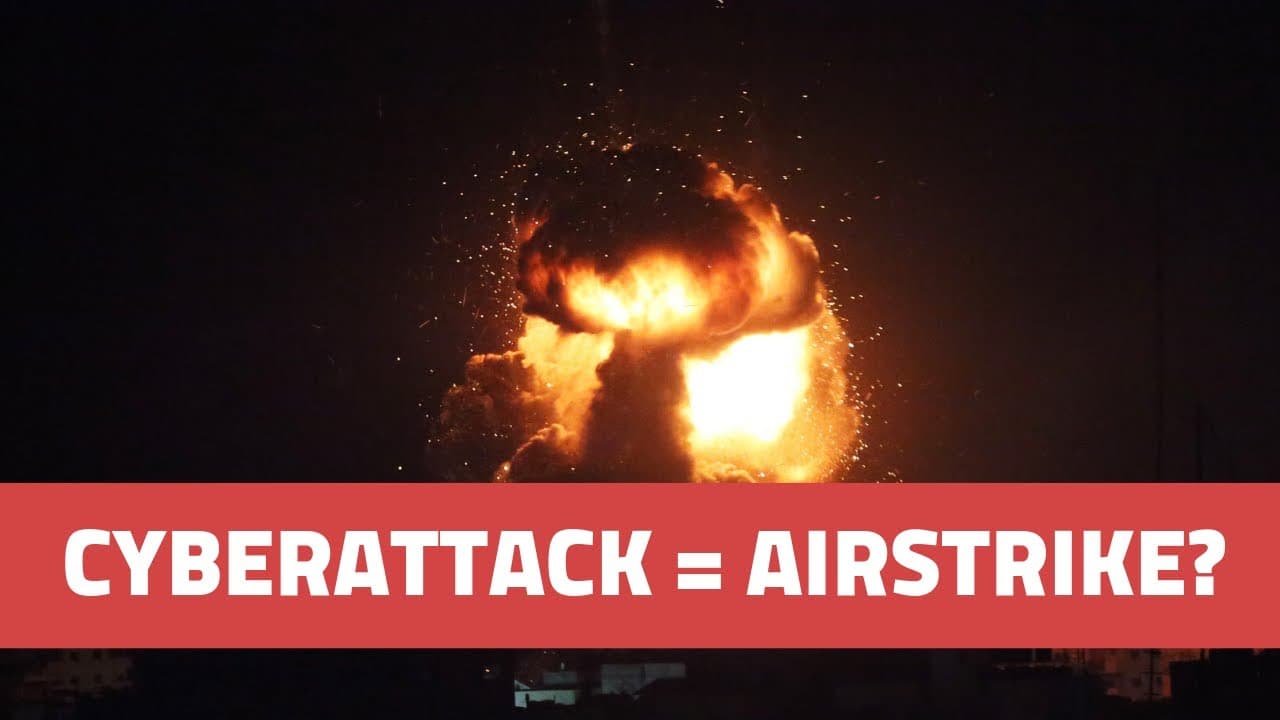
Israel responds to cyberattack with airstrike | Online identity vs Real identity
TL;DR
The video discusses the increasing fusion of online and personal identity, raising questions about accountability for cyber attacks and the challenges faced by authorities in responding to them.
Transcript
hello and welcome to the PC security channel as you can tell today we'll be talking about something slightly different not so much the technicalities of cybersecurity but more about the broader implications of it I'm of course talking about the Israel airstrike against Hamas based on the cyberattacks that they were conducting which is potentially t... Read More
Key Insights
- 👊 People's online identity is increasingly considered an extension of their personal identity, posing challenges for accountability in cyber attacks.
- 💄 Determining online identity is complex, especially when accounts are hacked or impersonated, making it difficult to attribute actions to specific individuals.
- 👊 Cyber attacks can be initiated by nation-state actors who can easily evade detection by using various computers and servers.
- ❓ Authorities require a better understanding of technology and more competent responses to cyber threats, focusing on enhancing cyber defense measures rather than solely tracing individuals.
- 🤕 Banning or limiting encryption is a naive solution to cyber threats and highlights the need for more effective responses from politicians.
Install to Summarize YouTube Videos and Get Transcripts
Explore YouTube Video Summarizer or Get YouTube Transcript Extractor
Questions & Answers
Q: What are the implications of considering someone's online identity as part of their personal identity?
Linking online identity to personal identity raises questions about responsibility. If someone uses another person's name in an account or if accounts get hacked, it becomes unclear who should be held responsible for any actions taken.
Q: Can cyber attacks be traced back to specific individuals or entities?
Attribution in cyber attacks is challenging, especially for nation-state actors. They can easily use random computers or servers in different locations to avoid being detected, making it difficult to determine who is responsible for the attack.
Q: How can authorities respond effectively to cyber attacks?
Rather than focusing on tracing individuals, a more efficient approach is to enhance cyber defense measures. Implementing consequences such as limiting internet access for illegal online activities can be a more effective way to exert authority.
Q: What challenges arise from the disconnect between politicians and technology?
Politicians often lack an understanding of technology, leading to naive or ineffective responses such as banning encryption. Bridging the gap between technology and governance is crucial for developing competent authorities for addressing cyber threats.
Summary & Key Takeaways
-
The video explores how people's online identity is being considered an extension of their personal identity, giving rise to questions about responsibility for cyber attacks.
-
It delves into the difficulty of determining someone's online identity and the potential implications of holding individuals accountable for cyber attacks conducted from their location or using their accounts.
-
The video highlights the challenges faced by authorities in addressing cyber attacks and the need for a better understanding of technology.
Read in Other Languages (beta)
Share This Summary 📚
Summarize YouTube Videos and Get Video Transcripts with 1-Click
Try YouTube Summary with ChatGPT & Claude or YouTube Transcript Generator
Explore More Summaries from The PC Security Channel 📚

Summarize YouTube Videos and Get Video Transcripts with 1-Click
Try YouTube Summary with ChatGPT & Claude or YouTube Transcript Generator