A Plan to Feed the World | Future of Food
TL;DR
Addressing global food challenges with sustainable solutions for a better future.
Transcript
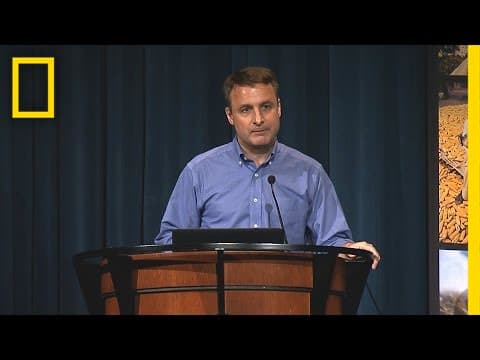
so I was asked to help write an article at the beginning that really is trained as maybe start that conversation that Dennis is talking about because I think we all agree that you know the future of food is so instrumental to the future of our civilization to the future of our planet and I'm an environmental scientist so I'll show you later why I c... Read More
Key Insights
- 😋 Global food insecurity is a result of poverty and institutional challenges.
- 😋 Population growth and increased meat consumption strain food resources.
- 🍉 Agricultural practices significantly impact the environment, especially in terms of land use and water consumption.
- 😋 Solutions to food sustainability involve addressing deforestation, increasing agricultural productivity, and reducing waste.
- 😋 Collaborative efforts and new strategies are essential for addressing food challenges sustainably.
- 😋 Efficient production methods and reduced food waste can contribute to a more sustainable future.
- 😋 Conversations and actions are needed to achieve food security while sustaining the environment.
Install to Summarize YouTube Videos and Get Transcripts
Explore YouTube Video Summarizer or Get YouTube Transcript Extractor
Questions & Answers
Q: What are the main issues contributing to global food insecurity?
Global food insecurity stems from poverty, institutional problems, and inadequate governance affecting nearly a billion people worldwide. These issues are not solely related to agriculture but are political and institutional in nature.
Q: How does population growth and dietary patterns impact food sustainability?
Population growth and the rise in meat consumption lead to increased food demand. This poses challenges for food sustainability as it strains resources, requires more land, and contributes to environmental degradation.
Q: What are the environmental impacts of agriculture?
Agriculture covers 38% of the world's land and is the largest consumer of water. Furthermore, agricultural practices contribute significantly to climate change through deforestation, methane emissions, and over-fertilization.
Q: What solutions can address food security and environmental sustainability?
Solutions involve stopping deforestation, increasing agricultural productivity through yield gap closure, and adopting more efficient production methods with reduced water and chemical use. Additionally, addressing food waste is crucial for sustainability.
Summary & Key Takeaways
-
Global food insecurity due to poverty and institutional issues affects nearly a billion people.
-
Population growth and increased meat consumption pose challenges for food sustainability.
-
Agricultural impact on the environment includes land use, water consumption, and contributions to climate change.
Read in Other Languages (beta)
Share This Summary 📚
Summarize YouTube Videos and Get Video Transcripts with 1-Click
Try YouTube Summary with ChatGPT & Claude or YouTube Transcript Generator
Explore More Summaries from National Geographic 📚



Summarize YouTube Videos and Get Video Transcripts with 1-Click
Try YouTube Summary with ChatGPT & Claude or YouTube Transcript Generator