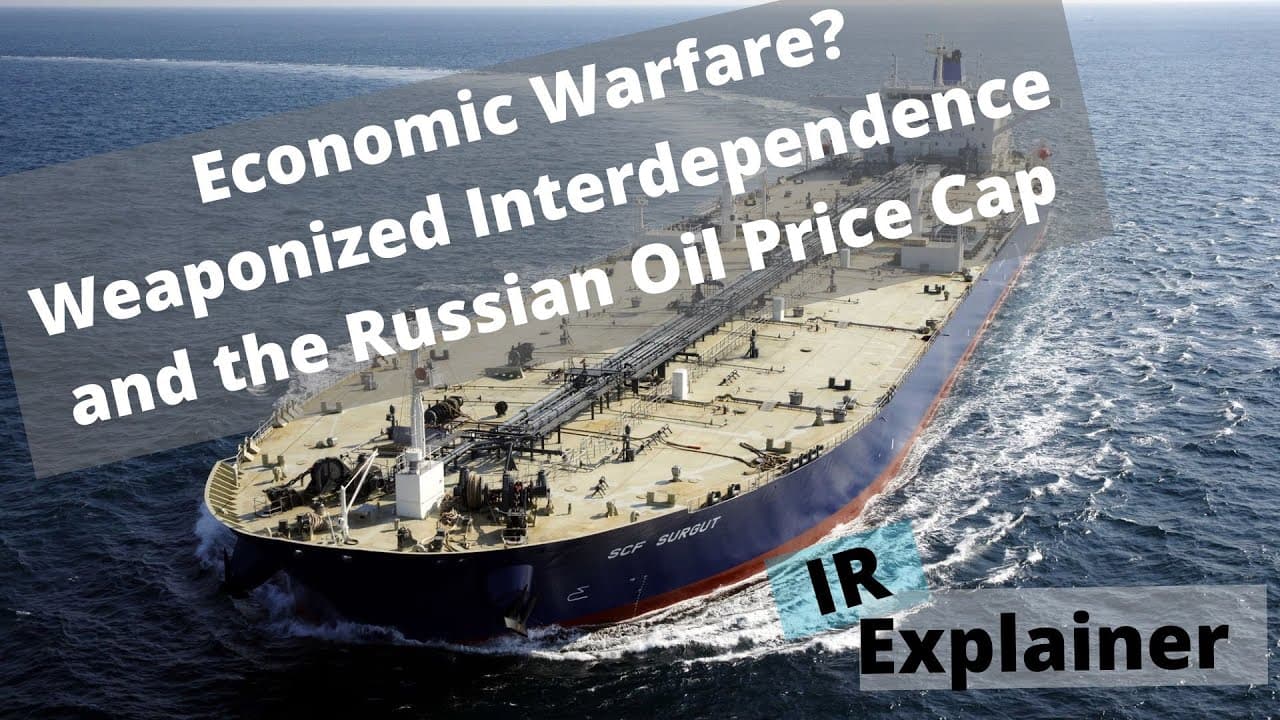
Weaponized Interdependence: Unraveling the Russian Oil Price Cap
TL;DR
The G7 imposed a price cap on Russian oil exports to undermine Moscow's ability to finance the war in Ukraine, using the concept of weaponized interdependence to influence global energy markets.
Transcript
in response to Russia's invasion of Ukraine many countries have imposed economic sanctions including restrictions on Russian oil exports this has led to a significant impact on global energy markets and raised questions about the concept of weaponized interdependence but what exactly is going on with Russian oil and the price ceiling and how does t... Read More
Key Insights
- ✊ The G7's price cap on Russian oil exports is a form of weaponized interdependence, using economic power to influence global politics.
- 🇺🇸 Weaponized interdependence also includes instances like the United States cutting off Iranian banks from global networks and the EU imposing shipping insurance limitations on Iran.
- 🛢️ The Russian oil price cap has led to shifts in global energy markets, as countries seek alternative sources and diversify their oil dependence.
- 🫷 This situation has revealed vulnerabilities in the global supply chain, pushing countries to build more resilient supply structures and diversify their oil sources.
- 🇺🇸 Russia and China may seek to develop their own shipping insurance markets and alternative networks to reduce reliance on Europe and the United States.
- ✊ The concept of weaponized interdependence helps understand how economic power is utilized in international relations.
Install to Summarize YouTube Videos and Get Transcripts
Explore YouTube Video Summarizer or Get YouTube Transcript Extractor
Questions & Answers
Q: What is the purpose of the price cap on Russian oil exports?
The price cap aims to undermine Moscow's ability to finance the war in Ukraine by reducing Russia's profit from global oil sales and maintaining global production stability.
Q: How can the G7 force non-member countries to abide by the price cap?
The G7 leveraged their control over the global shipping insurance market, which requires ships to have insurance coverage. By ensuring that all ships worldwide follow the price ceiling, they effectively forced countries to comply.
Q: What is weaponized interdependence?
Weaponized interdependence refers to strategically using a state's economic position to exert power and influence over other states. It leverages dependencies in global networks, like trade and finance, to achieve political objectives.
Q: Are there other examples of weaponized interdependence?
Yes, the United States cut off Iranian banks from global networks in 2012 using its control over global financial markets. The European Union also used its dominance in shipping insurance to impose sanctions on Iran's oil and shipping sectors.
Summary & Key Takeaways
-
Many countries have imposed economic sanctions on Russia, including a price cap on Russian oil, to destabilize the country's ability to profit from global oil sales.
-
The price cap has forced Russia to cut its oil production, leading to shifts in global energy markets and raising questions about the concept of weaponized interdependence.
-
The G7 leveraged their control over the global shipping insurance market to force countries worldwide to abide by the price ceiling for Russian oil.
Read in Other Languages (beta)
Share This Summary 📚
Summarize YouTube Videos and Get Video Transcripts with 1-Click
Try YouTube Summary with ChatGPT & Claude or YouTube Transcript Generator
Explore More Summaries from Noah Zerbe 📚


Summarize YouTube Videos and Get Video Transcripts with 1-Click
Try YouTube Summary with ChatGPT & Claude or YouTube Transcript Generator