What Are Common Collector, Base, and Emitter Amplifiers?
TL;DR
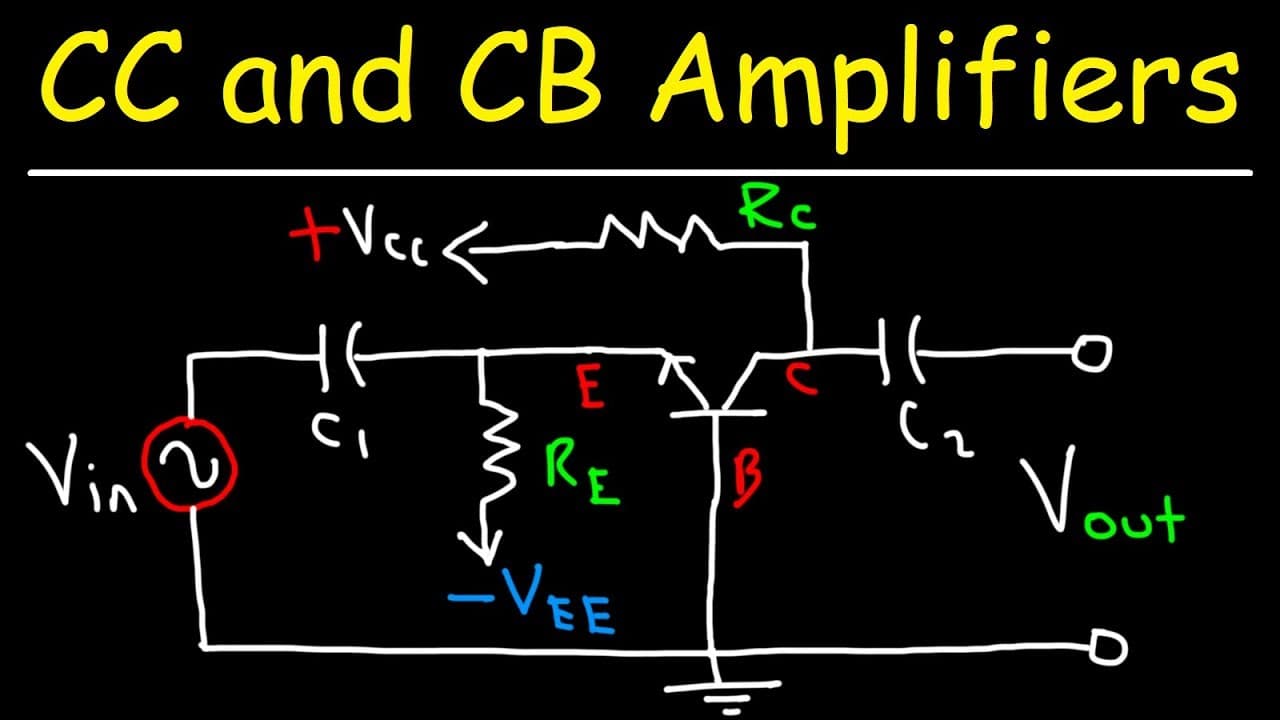
Common collector amplifiers take output from the emitter and have high input impedance; common base amplifiers take input from the emitter and have low input impedance; common emitter amplifiers have a high power gain and output from the collector. Understanding these differences helps in selecting the right amplifier for specific applications.
Transcript
in this video i'm briefly going to review the characteristics of the common emitter amplifier the common base amplifier and the common collector amplifier so the amplifier that we have here is the common emitter amplifier why is it called that well the input is applied to the base of the transistor the output is taken from the collector of the tran... Read More
Key Insights
- ✊ The common emitter amplifier has a high power gain and is useful as a power amplifier.
- 🧡 The common base amplifier has a mid-range power gain.
- 🧡 The common collector amplifier has a mid-range power gain.
- 🔡 The common base amplifier has a low input impedance and high output impedance.
- 🔡 The common collector amplifier has a high input impedance and low output impedance.
- ❓ The maximum theoretical efficiency of the common emitter amplifier is 25%.
- 🏛️ Class A amplifiers, like the common emitter amplifier, have a maximum theoretical efficiency of 25%.
Install to Summarize YouTube Videos and Get Transcripts
Explore YouTube Video Summarizer or Get YouTube Transcript Extractor
Questions & Answers
Q: What is the common emitter amplifier and why is it called that?
The common emitter amplifier has the input applied to the base, the output taken from the collector, and the emitter common to both circuits. It is called the common emitter amplifier because of the common connection of the emitter.
Q: What are the characteristics of the common emitter amplifier?
The common emitter amplifier has a mid-range voltage gain, mid-range current gain, high power gain, mid-range input impedance, and mid-range output impedance. It also inverts the signal at the input.
Q: What are the characteristics of the common base amplifier?
The common base amplifier has a mid-range voltage gain, low current gain slightly less than one, low input impedance, and high output impedance. It does not invert the signal at the input.
Q: What are the characteristics of the common collector amplifier?
The common collector amplifier has a mid-range current gain, low voltage gain slightly less than one, high input impedance, and low output impedance. It does not invert the signal at the input.
Summary & Key Takeaways
-
The common emitter amplifier has the input applied to the base of the transistor and the output taken from the collector, with the emitter common to both circuits.
-
The common base amplifier has the input applied to the emitter and the base common to both circuits.
-
The common collector amplifier has the output taken from the emitter, with the collector common to both circuits.
Read in Other Languages (beta)
Share This Summary 📚
Summarize YouTube Videos and Get Video Transcripts with 1-Click
Try YouTube Summary with ChatGPT & Claude or YouTube Transcript Generator
Explore More Summaries from The Organic Chemistry Tutor 📚



Summarize YouTube Videos and Get Video Transcripts with 1-Click
Try YouTube Summary with ChatGPT & Claude or YouTube Transcript Generator