11.2 Types of Interpreting demonstrated
TL;DR
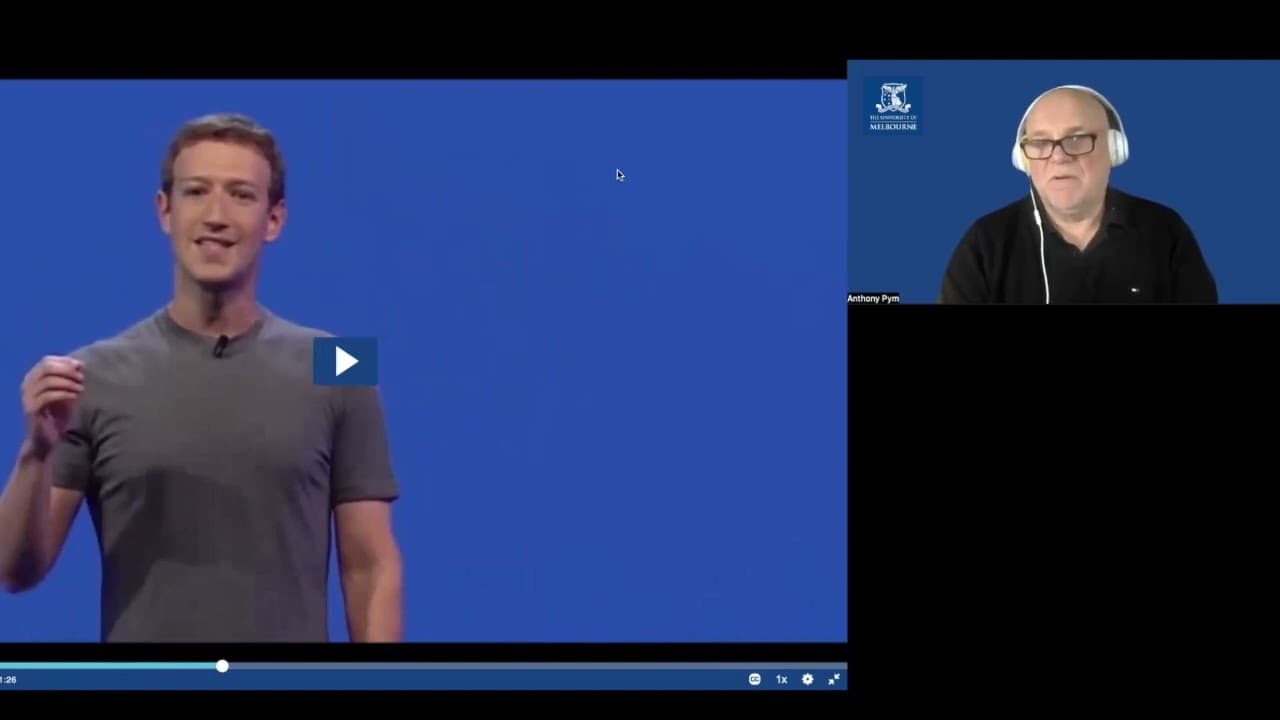
In this video, the speaker demonstrates re-speaking, consecutive interpreting, and note-taking techniques for effective communication.
Transcript
The first activity we're going to do here is re-speaking. Re-speaking is when the voice is coming in in a language and the interpreter just repeats what is said in the same language. It's a training exercise to get your brain to speak while there is message coming in. Let's see how we go. I think I've showed that, well, it can be done with headphon... Read More
Key Insights
- 🙊 Re-speaking is a training exercise that helps interpreters develop simultaneous interpreting skills.
- 🙊 It is possible to speak while listening, as demonstrated through re-speaking with headphones.
- 😯 Consecutive interpreting allows interpreters to focus on capturing the main ideas and structure of the speech, making meetings and conferences more efficient.
- 😥 Note-taking plays a crucial role in consecutive interpreting by helping interpreters remember and convey the essential points effectively.
- 😒 Interpreters often use compression when providing consecutive interpretations to avoid lengthy meetings and ensure better functionality.
- 🗣️ Re-speaking and consecutive interpreting techniques can be used in various languages, depending on the interpreter's proficiency.
- 🌐 Language barriers are a global challenge, but effective interpreting techniques can bridge the gap and foster better understanding.
Install to Summarize YouTube Videos and Get Transcripts
Explore YouTube Video Summarizer or Get YouTube Transcript Extractor
Questions & Answers
Q: What is re-speaking, and how does it help in developing simultaneous interpreting skills?
Re-speaking is the practice of repeating a message in the same language, helping the interpreter to speak while listening. It trains the brain to process and produce speech simultaneously, which is essential for simultaneous interpreting.
Q: Can re-speaking be done with different languages, apart from the original language?
Yes, re-speaking can be done with a change of language. However, when re-speaking in a different language, there might be a delay as the interpreter needs to think about what to say in the target language.
Q: What is the purpose of consecutive interpreting?
The purpose of consecutive interpreting is to capture the main ideas and structure of the discourse. It is not about providing a word-for-word translation but rather conveying the essential points effectively.
Q: Why do interpreters use note-taking during consecutive interpreting?
Note-taking helps interpreters remember and organize the main points of the speech. It serves as a visual aid and ensures accuracy in conveying the information to the audience.
Summary & Key Takeaways
-
Re-speaking is a training exercise where the interpreter repeats the message in the same language, helping to develop simultaneous interpreting skills.
-
Re-speaking can be done while listening, and with practice, it serves as a stepping stone towards simultaneous interpreting.
-
Consecutive interpreting involves taking notes to capture the main ideas and structure of the discourse, rather than focusing on word-for-word translation.
Read in Other Languages (beta)
Share This Summary 📚
Summarize YouTube Videos and Get Video Transcripts with 1-Click
Try YouTube Summary with ChatGPT & Claude or YouTube Transcript Generator
Explore More Summaries from Anthony Pym 📚





Summarize YouTube Videos and Get Video Transcripts with 1-Click
Try YouTube Summary with ChatGPT & Claude or YouTube Transcript Generator