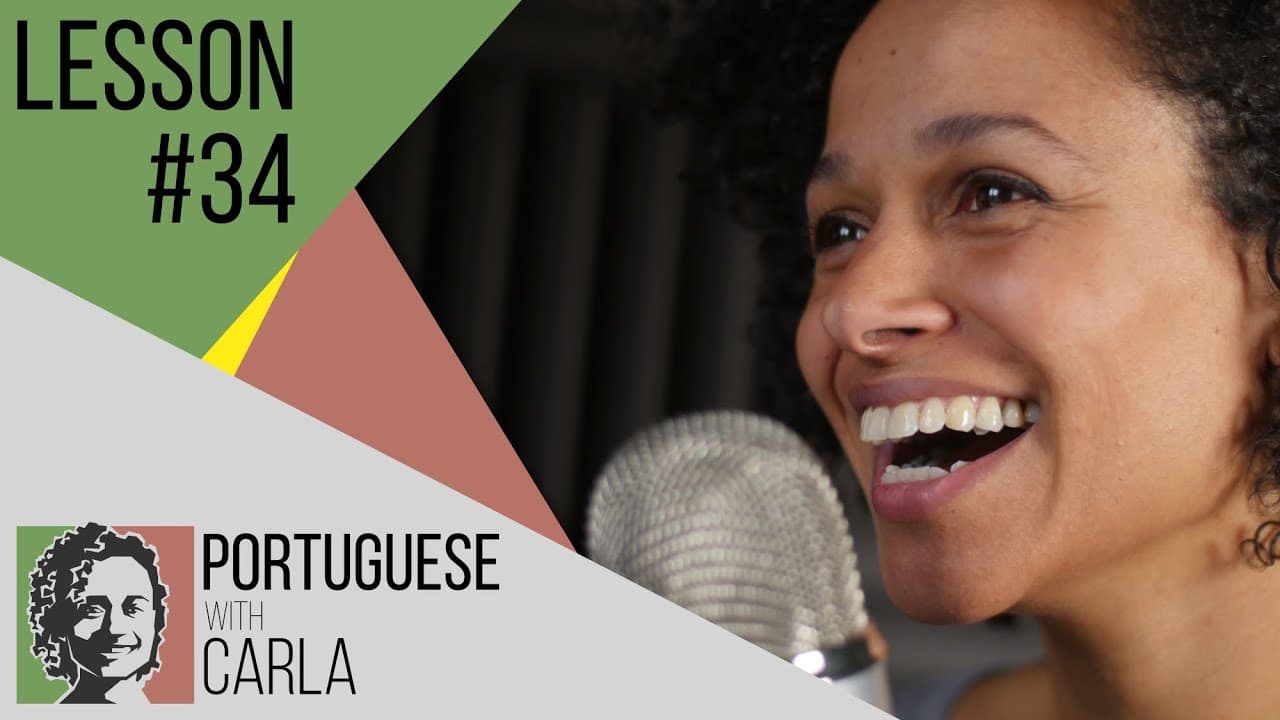
Lesson 34 - How to say "hairdresser" in European Portuguese.
TL;DR
Podcast teaches European Portuguese with practical home vocabulary.
Transcript
e welcome to another podcast of Portuguese with kala podcast 34 I am kala sabala and I am the husband Maron saying people think you're marking your territory what I'm marking what marking oh I see territory well not really now no because uh I don't know if I should be saying this really if it's irrelevant but you're not really the jealous type by I... Read More
Key Insights
- The podcast continues from a previous episode, focusing on European Portuguese pronunciation and vocabulary.
- Hosts discuss using music as a tool to enhance language learning and improve pronunciation.
- The lesson includes practical vocabulary related to home activities, such as preparing a meal and cleaning.
- Cultural insights are provided, like the Portuguese tradition of eating snails in the summer.
- Listeners are guided through pronunciation drills, emphasizing the importance of practicing with native speakers.
- The hosts highlight the differences in pronunciation and vocabulary between European and Brazilian Portuguese.
- The podcast offers a mix of language instruction and cultural context, making it a comprehensive learning tool.
- Listeners are encouraged to engage with the podcast through comments and suggestions for future episodes.
Install to Summarize YouTube Videos and Get Transcripts
Explore YouTube Video Summarizer or Get YouTube Transcript Extractor
Questions & Answers
Q: What is the main focus of this podcast episode?
The main focus of this podcast episode is to teach European Portuguese vocabulary and pronunciation through practical home-related dialogues. The hosts guide listeners through various phrases and expressions, emphasizing the importance of correct pronunciation and cultural context.
Q: How do the hosts suggest using music in language learning?
The hosts suggest using music as a tool to enhance language learning by improving pronunciation. They believe that singing along to Portuguese songs can help learners practice the sounds and rhythms of the language, making it a fun and effective method to reinforce vocabulary and pronunciation.
Q: What cultural insights are provided in this episode?
This episode provides cultural insights such as the Portuguese tradition of eating snails during the summer. The hosts discuss how this activity is common in Portugal and use it as a context to teach relevant vocabulary and expressions related to preparing and enjoying meals at home.
Q: What pronunciation techniques are emphasized in the podcast?
The podcast emphasizes the importance of practicing pronunciation with native speakers and using techniques like shadowing. The hosts guide listeners through drills, focusing on the natural flow of sentences and the correct articulation of sounds, which are crucial for mastering European Portuguese pronunciation.
Q: How does the podcast address differences between European and Brazilian Portuguese?
The podcast addresses differences between European and Brazilian Portuguese by highlighting variations in pronunciation and vocabulary. The hosts focus on teaching the European variant, providing listeners with specific phrases and sounds that may differ from Brazilian Portuguese, thus helping learners understand regional distinctions.
Q: What interactive elements does the podcast offer to listeners?
The podcast offers interactive elements such as encouraging listeners to leave comments and suggestions for future episodes. This engagement helps create a community of learners who can share their experiences and feedback, allowing the hosts to tailor content to the audience's needs and preferences.
Q: What are some key vocabulary terms taught in this episode?
Some key vocabulary terms taught in this episode include phrases related to home activities, such as 'kitchen towel,' 'slice of bread,' and 'toothpicks.' The hosts also teach expressions like 'make the most of,' 'good idea,' and 'lovely man,' providing practical language skills for everyday conversations.
Q: What is the significance of the dialogue about eating snails?
The dialogue about eating snails serves as a cultural context to teach specific vocabulary and expressions. It highlights a common Portuguese tradition, allowing learners to understand the cultural significance while practicing relevant language skills. This approach makes the learning experience more engaging and relatable.
Summary & Key Takeaways
-
The podcast episode focuses on teaching European Portuguese vocabulary and pronunciation through a dialogue about home activities. Listeners are guided through practical phrases and cultural insights, such as the tradition of eating snails in Portugal. The hosts emphasize the importance of practicing pronunciation with native speakers and provide tips for language learning.
-
Hosts Carla and Marlon discuss the use of music as a learning tool, encouraging listeners to improve their Portuguese pronunciation through songs. The episode continues from a previous lesson, providing a cohesive learning experience. Listeners are encouraged to engage with the podcast by leaving comments and suggestions.
-
Listeners are introduced to vocabulary related to home activities, such as preparing a meal and cleaning. The podcast offers a mix of language instruction and cultural context, making it a comprehensive tool for learning European Portuguese. The hosts highlight differences between European and Brazilian Portuguese pronunciation and vocabulary.
Read in Other Languages (beta)
Share This Summary 📚
Summarize YouTube Videos and Get Video Transcripts with 1-Click
Try YouTube Summary with ChatGPT & Claude or YouTube Transcript Generator
Explore More Summaries from Portuguese With Carla 📚

Summarize YouTube Videos and Get Video Transcripts with 1-Click
Try YouTube Summary with ChatGPT & Claude or YouTube Transcript Generator