How Are Engineers Creating Robots Inspired by Nature?
TL;DR
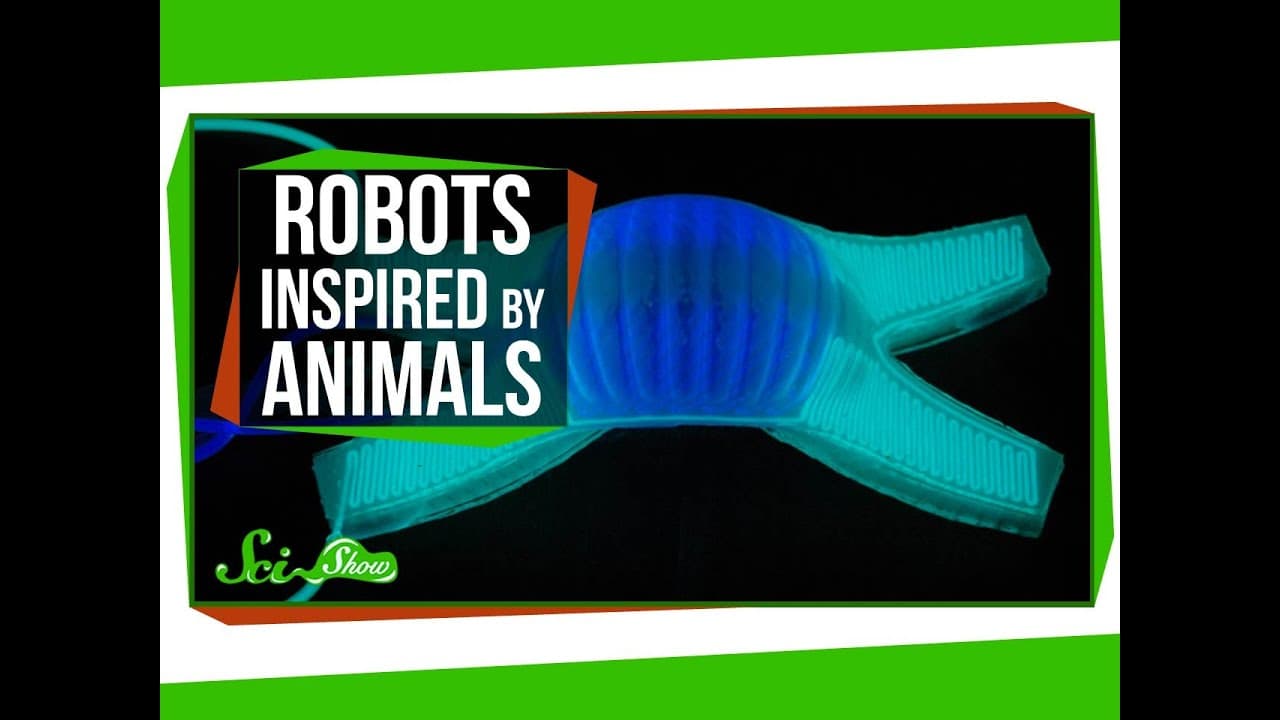
Engineers are leveraging biomimicry to design robots that mimic nature's efficient strategies for movement and survival. Innovations include flying robots modeled after insects, jumping robots inspired by water striders, and soft robots that combine soft and hard materials for durability. These developments enhance capabilities for tasks like search and rescue and studying human swimming mechanics.
Transcript
when engineers are designing new technology they often look to nature for help because evolution has had a lot of time to make some really great designs 100 years ago we barely knew how to make an airplane fly but insects have been doing it for hundreds of millions of years Suri searchers figure we can probably learn a thing or two from all that ex... Read More
Key Insights
- 🤖 Engineers are turning to nature's designs to enhance the efficiency and capabilities of robots.
- ⚾ Biomimicry is a field that focuses on creating technology based on biology.
- 🤖 Insects' navigation abilities have inspired robots that can explore unknown areas without sophisticated mapping systems.
- 🤖 Surface tension and leg movements of water striders have informed the design of jumping robots.
- 🍦 Soft robotics combines soft and hard components to create durable and resilient robots.
- 🏊 Swimming humanoid robots can assist in understanding human swimming mechanics and potentially improving techniques.
- 🤖 Camouflage robots inspired by octopuses can change color to blend in or stand out in different environments.
Install to Summarize YouTube Videos and Get Transcripts
Explore YouTube Video Summarizer or Get YouTube Transcript Extractor
Questions & Answers
Q: How are engineers using biomimicry to improve robot navigation?
Engineers have designed the AirBIR robot, which mimics insects' abilities to navigate without crashing into objects by using a flexible frame that allows it to bump into walls and recover from falls.
Q: How do water striders inspire the design of jumping robots?
Water striders take advantage of surface tension and use a specific leg movement to make tiny indentations that propel them into the air. Engineers have replicated this movement in Water Strider robots to achieve similar jumping capabilities.
Q: What is the advantage of using soft robotics?
Soft robotics allows for more durable robots that can withstand repeated impacts, such as jumping, without breaking easily. By combining soft and hard components, robots can be both powerful and safe.
Q: How can studying swimming humanoid robots help improve human swimming techniques?
Swim Anoid, a swimming humanoid robot, mimics human swimming movements and can swim at a speed close to the world record. By studying its motion, researchers hope to gain insights into swimming mechanics and potentially improve human swimming techniques.
Summary & Key Takeaways
-
Engineers are using biomimicry to design robots that imitate nature's efficient designs.
-
The AirBIR robot is inspired by insects' ability to navigate without crashing into objects, using a flexible frame that allows it to bump into walls and survive falls.
-
Water Strider robots imitate the physics of water striders, using surface tension to stay afloat and jumping with the help of a stretchable rubber sheet.
-
Soft robotics combines soft and hard components in robots, making them more durable and resistant to damage while performing tasks like jumping.
Read in Other Languages (beta)
Share This Summary 📚
Summarize YouTube Videos and Get Video Transcripts with 1-Click
Try YouTube Summary with ChatGPT & Claude or YouTube Transcript Generator
Explore More Summaries from SciShow 📚


Summarize YouTube Videos and Get Video Transcripts with 1-Click
Try YouTube Summary with ChatGPT & Claude or YouTube Transcript Generator