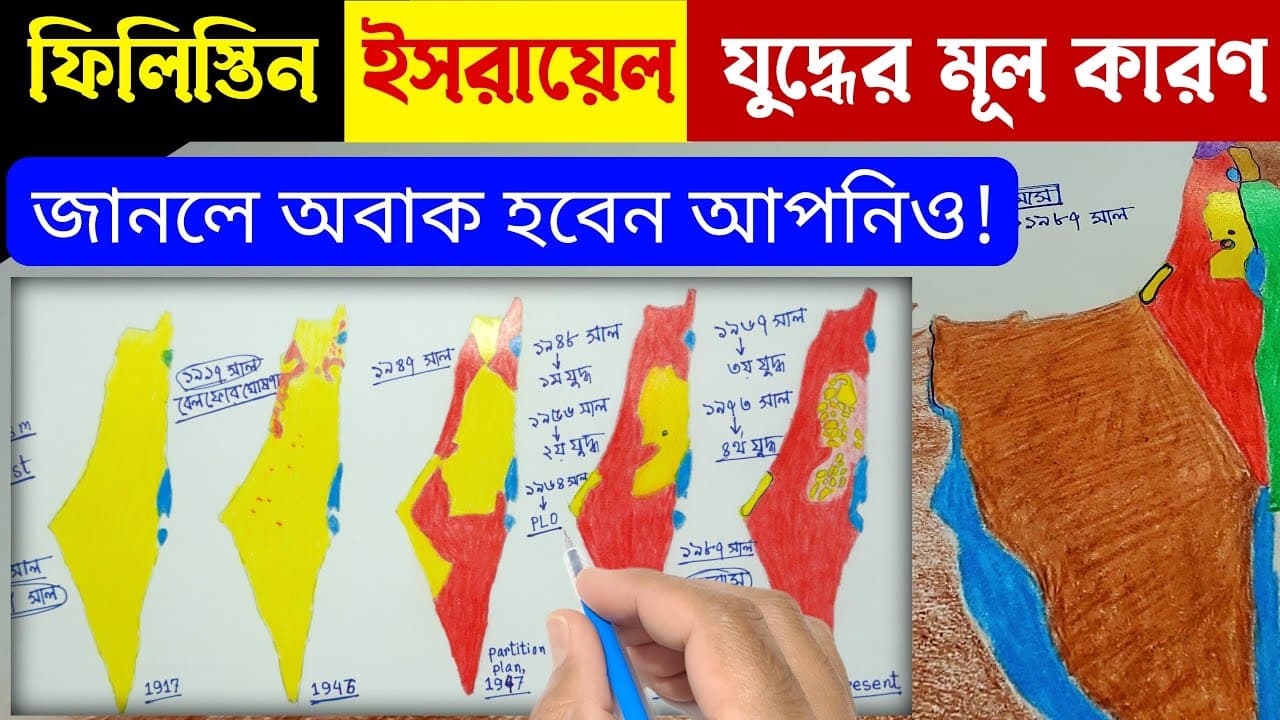
ফিলিস্তিন ও ইসরাইল যুদ্ধের মূল কারণ | israel palestine conflict history | bcs online tutor
TL;DR
Exploring the historical causes of the Israel-Palestine conflict.
Transcript
BS online Middle East for iseran sea is of fore Hamas Ahmed isan Yin ABD a Alan fore musliman for Muslim Christian for for organization world forist B British Arthur James British for foreign speech for for forq leanon Jordan syri for AB p p o p Palestine Liberation Organization p for for for Brier Hamer Al operation iron shorts A Read More
Key Insights
- The Israel-Palestine conflict is deeply rooted in historical territorial disputes and religious differences, primarily between Muslims, Christians, and Jews.
- The British Mandate era played a significant role in shaping the geopolitical landscape of the Middle East, influencing current tensions.
- The formation of the Palestine Liberation Organization (PLO) marked a pivotal moment in the Palestinian struggle for statehood and self-determination.
- Hamas has been a key player in the conflict, often engaging in armed resistance against Israeli policies and actions.
- International interventions and peace efforts have been numerous but often unsuccessful, highlighting the complexity of the conflict.
- The conflict has significant regional implications, affecting neighboring countries like Lebanon, Jordan, and Syria.
- Operation Iron Dome is a notable Israeli defense strategy aimed at intercepting and neutralizing rocket attacks from Palestinian territories.
- The conflict continues to evoke strong international opinions and actions, with various countries supporting either Israel or Palestine based on political and historical alliances.
Install to Summarize YouTube Videos and Get Transcripts
Explore YouTube Video Summarizer or Get YouTube Transcript Extractor
Questions & Answers
Q: What are the historical roots of the Israel-Palestine conflict?
The historical roots of the Israel-Palestine conflict lie in territorial disputes and religious differences among Muslims, Christians, and Jews. These tensions were exacerbated during the British Mandate era, which significantly influenced the geopolitical landscape of the Middle East and contributed to the ongoing conflict.
Q: What role did the British Mandate play in the conflict?
The British Mandate era played a crucial role in shaping the geopolitical landscape of the Middle East. It influenced the territorial boundaries and governance structures, leading to increased tensions and conflicts over land and sovereignty between Jewish and Arab populations, which persist to this day.
Q: How did the Palestine Liberation Organization (PLO) impact the conflict?
The formation of the Palestine Liberation Organization (PLO) marked a pivotal moment in the Palestinian struggle for statehood. It unified various Palestinian factions under a single banner, advocating for self-determination and resistance against Israeli occupation, thereby intensifying the conflict.
Q: What is the significance of Hamas in the conflict?
Hamas is a key player in the Israel-Palestine conflict, known for its armed resistance against Israeli policies and actions. It controls the Gaza Strip and has engaged in numerous conflicts with Israel, often resulting in significant violence and casualties on both sides.
Q: Have international efforts been successful in resolving the conflict?
International efforts to resolve the Israel-Palestine conflict have been numerous but largely unsuccessful. Various peace processes and negotiations have been attempted, but the complexity of the issues, coupled with deep-rooted historical grievances, have hindered lasting solutions.
Q: What are the regional implications of the conflict?
The Israel-Palestine conflict has significant regional implications, affecting neighboring countries like Lebanon, Jordan, and Syria. These countries have experienced refugee influxes, political instability, and security challenges, further complicating the regional geopolitical dynamics.
Q: What is Operation Iron Dome?
Operation Iron Dome is an Israeli defense strategy designed to intercept and neutralize rocket attacks from Palestinian territories. It has been a critical component of Israel's military defense, providing protection against missile threats and minimizing casualties and damage within Israeli borders.
Q: How does the international community view the conflict?
The international community is divided in its views of the Israel-Palestine conflict. Various countries support either Israel or Palestine based on historical, political, and strategic alliances. This division often influences international policies and interventions, further complicating the path to peace.
Summary & Key Takeaways
-
The Israel-Palestine conflict has its origins in historical territorial disputes and religious differences among Muslims, Christians, and Jews. The British Mandate era significantly influenced the geopolitical dynamics of the region, contributing to the ongoing tensions.
-
The establishment of the Palestine Liberation Organization (PLO) was a critical development in the Palestinian quest for statehood. Hamas has emerged as a major player, often engaging in armed resistance against Israeli policies.
-
Despite numerous international interventions and peace efforts, the conflict remains unresolved. It has regional implications, affecting neighboring countries and evoking strong international opinions and actions, with countries supporting either side based on political alliances.
Read in Other Languages (beta)
Share This Summary 📚
Summarize YouTube Videos and Get Video Transcripts with 1-Click
Try YouTube Summary with ChatGPT & Claude or YouTube Transcript Generator