Motor Proteins: Tiny Pirates in Your Cells
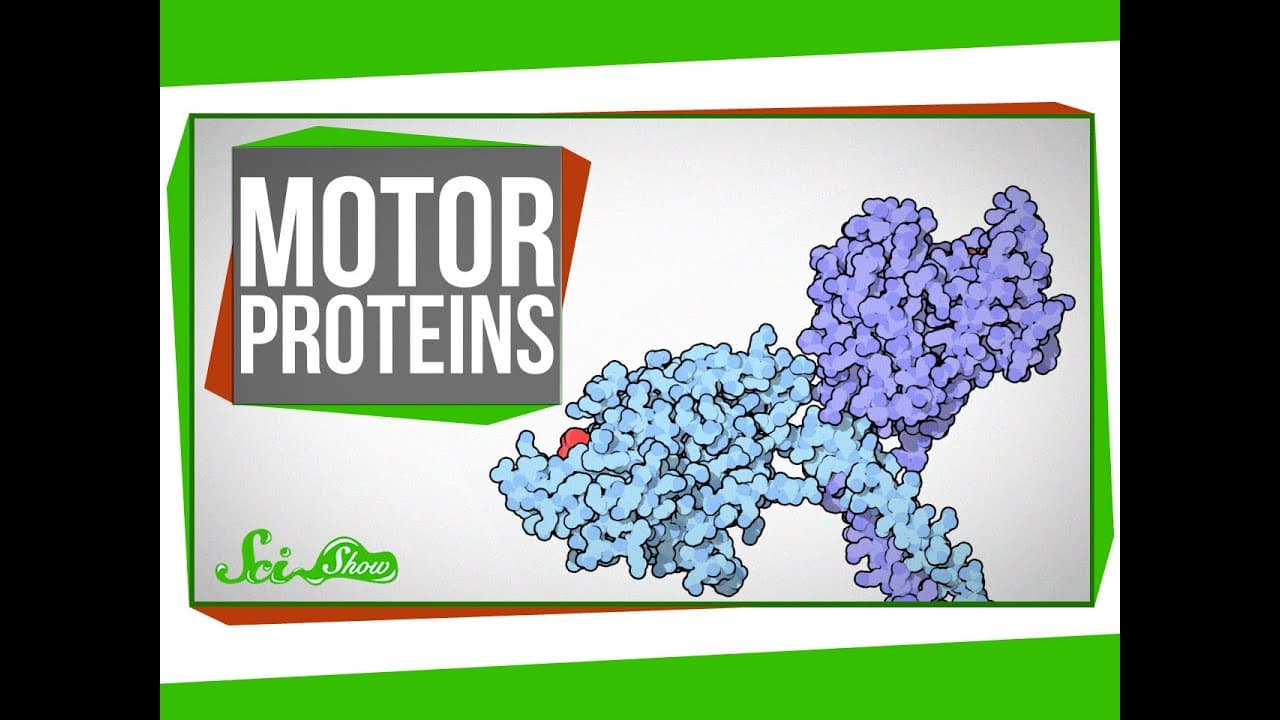
TL;DR
Motor proteins known as kinesins play a crucial role in cellular functions such as transporting cargo within cells and assisting in cell division.
Transcript
[Intro] If you've ever taken an Intro to Biology class, you might have noticed that there are some pretty big but pretty basic things about your own cells that never really get explained. Or at least not explained well. Like, what makes your cells divide when they copy themselves, and how does stuff get carried from one part of cell to another, and... Read More
Key Insights
- 🧑🦼 Motor proteins, particularly kinesins, are essential for various cellular functions, including cargo transport, cell division, and communication between cells.
- 🧑🦼 The microtubule cytoskeleton serves as a highway system that enables motor proteins to move efficiently within cells.
- 🧑🦼 ATP molecules provide the necessary energy for motor proteins to change shape, swing, and move along the microtubules.
Install to Summarize YouTube Videos and Get Transcripts
Explore YouTube Video Summarizer or Get YouTube Transcript Extractor
Questions & Answers
Q: What are motor proteins and what is their role in cells?
Motor proteins, such as kinesins, are molecules responsible for transporting cellular materials within cells. They play a vital role in delivering cargo like food, signaling molecules, and genetic information to the required parts of the cell.
Q: How do motor proteins move within cells?
Motor proteins move along the microtubule cytoskeleton, which serves as a highway system within cells. They utilize chemical energy from ATP molecules to change shape, swing around, and propel themselves forward, carrying cargo to their destination.
Q: What is the significance of motor proteins in cell division?
Motor proteins, through a jogging-like motion on microtubules, assist in cell division by causing the microtubule to roll along beneath them. This action helps separate the dividing cells and ensures that the chromosomes are correctly distributed to the new cells.
Q: How do motor proteins enable long-range transport within cells?
In cells with long structures like nerve cells, kinesins are responsible for delivering neurotransmitters from the cell's nucleus to the ends of the cell. These motor proteins can cover distances of up to a meter in just a few days, ensuring continuous communication between the nerve cell and muscles.
Summary & Key Takeaways
-
Motor proteins, specifically kinesins, are responsible for transporting cellular materials, including food, signaling molecules, and genetic information, within cells.
-
Kinesins utilize the microtubule cytoskeleton, a network of tiny tubes made up of tubulin protein, as a highway system to move around cells.
-
These motor proteins move by grabbing ATP molecules to change shape and propel themselves forward, carrying cargo to their intended destination within the cell.
Read in Other Languages (beta)
Share This Summary 📚
Summarize YouTube Videos and Get Video Transcripts with 1-Click
Try YouTube Summary with ChatGPT & Claude or YouTube Transcript Generator
Explore More Summaries from SciShow 📚


Summarize YouTube Videos and Get Video Transcripts with 1-Click
Try YouTube Summary with ChatGPT & Claude or YouTube Transcript Generator