The Insect That Thrives in Antarctica
TL;DR
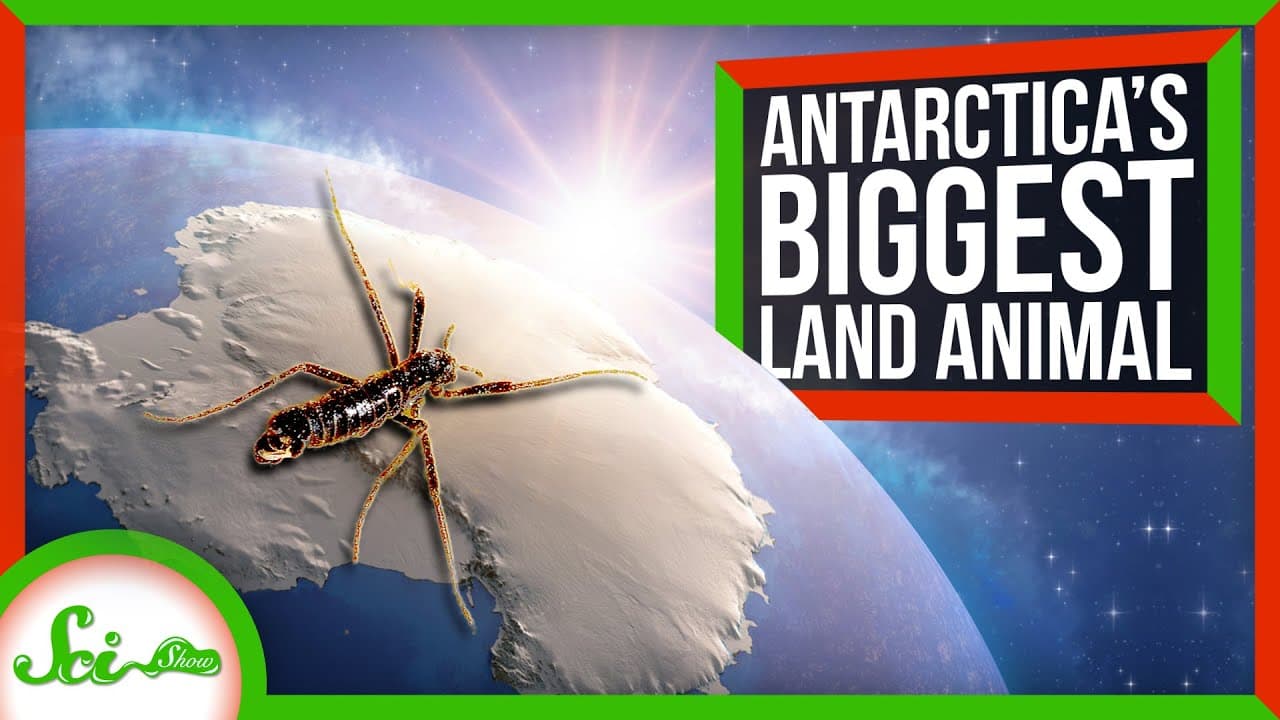
The Antarctic midge, a wingless fly, has evolved various adaptations to survive in Antarctica's extreme cold and harsh conditions.
Transcript
[ ♪INTRO ] Literally speaking, the coolest bug on Earth is a wingless fly called the Antarctic midge. And that’s not up for debate—because it’s the only insect that lives exclusively in the coldest place on the planet: Antarctica. And even though it’s not easy to carve out a habitat there, the midge has some special tricks that make this frigid c... Read More
Key Insights
- 🇦🇶 The Antarctic midge is a wingless fly that has evolved to survive in Antarctica, the coldest place on Earth.
- 🫢 The midge's adaptations include being wingless, huddling together for warmth, and using special chemicals and heat shock proteins to survive freezing temperatures.
- 👻 Its unique life cycle allows the midge to take advantage of two summer feeding seasons and reproduce in a short period.
- 🧑🔬 The midge's adaptations are not entirely unique, and scientists are still studying what makes it particularly well-suited to survive in Antarctica.
- 🇦🇶 Understanding the Antarctic midge helps scientists gain insights into the Antarctic ecosystem as a whole.
- 🛩️ Despite its small size and simple genome, the midge manages to thrive in extreme conditions.
- 🐧 Penguins, although iconic in Antarctica, are technically marine animals and do not count as land animals.
Install to Summarize YouTube Videos and Get Transcripts
Explore YouTube Video Summarizer or Get YouTube Transcript Extractor
Questions & Answers
Q: How does the Antarctic midge survive in Antarctica's freezing temperatures?
The midge has evolved by being wingless, which helps it retain warmth. It also huddles with other midges to conserve water and uses cold hardening and heat shock proteins to survive freezing temperatures.
Q: How does the midge protect itself from UV radiation in Antarctica?
The midge has evolved mechanisms to deal with UV radiation, such as producing heat shock proteins that fix proteins damaged by UV rays. Additionally, the thin ozone layer in Antarctica makes UV radiation more dangerous for insects, including the midge.
Q: What is the life cycle of the Antarctic midge?
Adult midges only live for 10 days, but they spend two years in their larval form. This allows them to take advantage of two summer feeding seasons to fatten up before reproducing.
Q: How does the Antarctic midge contribute to the Antarctic ecosystem?
The Antarctic midge plays a crucial role in the ecosystem as it is the biggest land animal on the continent. Studying the midge helps scientists understand the ecosystem's dynamics and the adaptations necessary for survival in extreme conditions.
Summary & Key Takeaways
-
The Antarctic midge is the only insect that lives exclusively in Antarctica, a challenging environment with freezing temperatures and high UV radiation.
-
This fly has adapted to the cold by being wingless, huddling together, and using special chemicals and heat shock proteins to protect its cells.
-
The midge has a unique life cycle, spending two years as larvae to take advantage of two summer feeding seasons.
Read in Other Languages (beta)
Share This Summary 📚
Summarize YouTube Videos and Get Video Transcripts with 1-Click
Try YouTube Summary with ChatGPT & Claude or YouTube Transcript Generator
Explore More Summaries from SciShow 📚
Summarize YouTube Videos and Get Video Transcripts with 1-Click
Try YouTube Summary with ChatGPT & Claude or YouTube Transcript Generator