On The Melian Dialogue

TL;DR
The Million Dialogue in ancient Greece exemplifies the principle that the strong do what they can and the weak suffer what they must, but building systems to protect the weak is essential for a safer and more just world.
Transcript
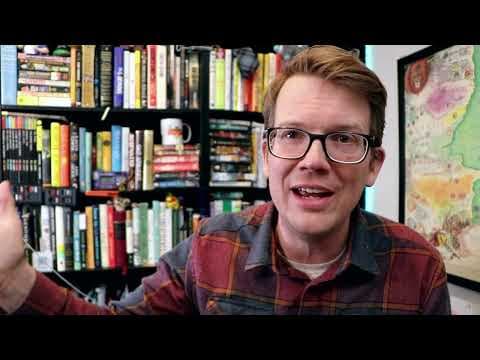
good morning think it's tuesday i've been thinking a lot about this famous moment in history called the million dialogue it happened around 2 400 years ago in ancient greece the story stars the city-state of athens which is widely credited for giving us so many of our ideas about democracy and freedom and athens in the 5th century bce really was a ... Read More
Key Insights
- 🥇 Athens in ancient Greece was a remarkable place with a democracy and influential philosophers and writers like Plato, Socrates, and Sophocles.
- 🙏 The Million Dialogue exemplified the belief that the strong have the authority to do as they wish, while the weak suffer the consequences.
- ✊ Despite power dynamics being a prevalent feature of history, building systems and norms can protect vulnerable populations.
- 🥺 More people living healthy lives and having access to education benefits the strong as well, as it leads to innovation and a more interconnected society.
- ✊ Power-seeking alone is not an effective strategy in personal and geopolitical contexts.
- 👾 The suffering of the weak does not guarantee the flourishing of the strong; human life is not a zero-sum game.
- 👶 The Geneva Conventions and child labor laws are examples of systems that protect the weak and contribute to a safer and more just world.
Install to Summarize YouTube Videos and Get Transcripts
Explore YouTube Video Summarizer or Get YouTube Transcript Extractor
Questions & Answers
Q: What was the Million Dialogue?
The Million Dialogue refers to the confrontation between Athens and the neutral island of Milos during the Peloponnesian War. It highlighted the belief that the strong have the right to do as they please, while the weak must bear the consequences.
Q: How did the Athenians justify their attack on Milos?
The Athenians believed that as the strong, it was their prerogative to act as they wished. They saw their actions as a demonstration of power and dominance.
Q: How has the concept of the strong doing what they can and the weak suffering what they must influenced history?
This belief has shaped power dynamics throughout history, resulting in the oppression and mistreatment of the weak. It reinforces the idea that the powerful can act without moral restraint.
Q: Can the whole human story be understood through the lens of power-seeking?
While power dynamics are a significant aspect, they do not define the entirety of the human story. Humans also possess empathy, compassion, and a desire for justice, which have led to the development of systems that protect the weak.
Key Insights:
- Athens in ancient Greece was a remarkable place with a democracy and influential philosophers and writers like Plato, Socrates, and Sophocles.
- The Million Dialogue exemplified the belief that the strong have the authority to do as they wish, while the weak suffer the consequences.
- Despite power dynamics being a prevalent feature of history, building systems and norms can protect vulnerable populations.
- More people living healthy lives and having access to education benefits the strong as well, as it leads to innovation and a more interconnected society.
- Power-seeking alone is not an effective strategy in personal and geopolitical contexts.
- The suffering of the weak does not guarantee the flourishing of the strong; human life is not a zero-sum game.
- The Geneva Conventions and child labor laws are examples of systems that protect the weak and contribute to a safer and more just world.
- While progress has been made, there is still work to be done to further protect the weak and promote equality and justice for all.
Summary & Key Takeaways
-
The Million Dialogue took place around 2,400 years ago in Athens, during the Peloponnesian War. Athens, known for its democracy, engaged in a controversial attack on the neutral island of Milos.
-
The Athenians justified their actions with the belief that the strong do what they can and the weak suffer what they must, resulting in the brutal treatment of the people of Milos.
-
While power dynamics often lead to the suffering of the weak, it is crucial to build norms and systems, such as the Geneva Conventions and child labor laws, to protect vulnerable populations and create a more just world.
Read in Other Languages (beta)
Share This Summary 📚
Summarize YouTube Videos and Get Video Transcripts with 1-Click
Try YouTube Summary with ChatGPT & Claude or YouTube Transcript Generator
Explore More Summaries from vlogbrothers 📚




Summarize YouTube Videos and Get Video Transcripts with 1-Click
Try YouTube Summary with ChatGPT & Claude or YouTube Transcript Generator