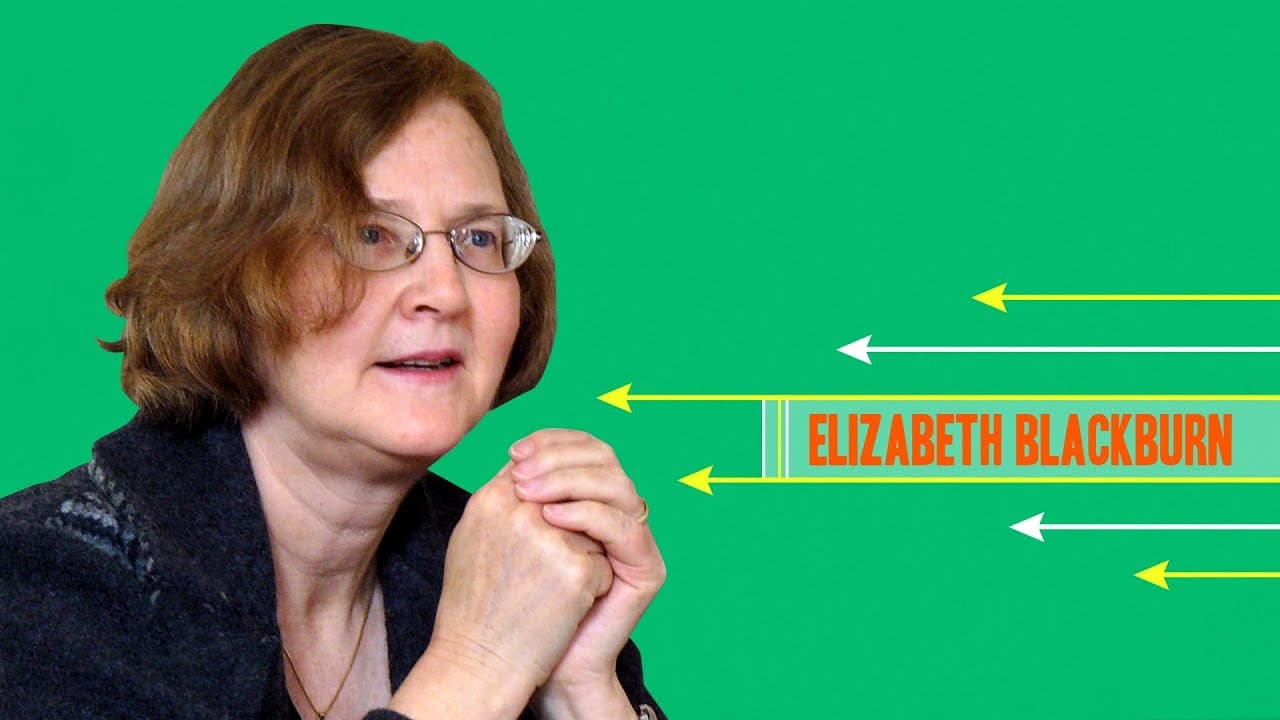
Elizabeth Blackburn: Great Minds
TL;DR
Elizabeth Blackburn's research on telomeres revealed how they play a key role in aging and cancer, leading to a Nobel Prize.
Transcript
Intro plays Out of the five hundred and forty nine Nobel prizes that have been awarded since 1901, only sixteen have gone to women in science, and of those sixteen prizes, three went to women in the Curie family Which is great if you're a Curie, but still those thirteen non-Curie women are representing 50% of humanity. Fortunately, it was the lif... Read More
Key Insights
- 🙅♀️ Only 16 out of 549 Nobel prizes in science have been awarded to women, with three going to the Curie family.
- 🛟 Elizabeth Blackburn's childhood experiences and Marie Curie's life story inspired her to pursue a career in science.
- 👨🔬 Blackburn's research on telomeres provided insights into the mechanisms of cell division, aging, and cancer.
- ❤️🩹 Telomeres, non-coding DNA sequences at the ends of chromosomes, protect genetic information during cell division.
- 🥳 The discovery of telomerase by Blackburn and Greider on Christmas day in 1984 revolutionized understanding of cellular aging and immortality.
- 🥺 Telomeres gradually shorten with each cell division, leading to cellular senescence and ultimately cell death.
- 🤩 Telomeres also act as a key component in the development and progression of cancer by preventing chromosome damage.
Install to Summarize YouTube Videos and Get Transcripts
Explore YouTube Video Summarizer or Get YouTube Transcript Extractor
Questions & Answers
Q: How did Elizabeth Blackburn's childhood influence her interest in science?
Growing up in a family of physicians and having a curiosity for nature, Elizabeth Blackburn developed a strong interest in science from a young age.
Q: What did Blackburn's research discover about telomeres?
Blackburn and her colleague Joseph Gall found that telomeres, repeating sequences of non-coding DNA at the ends of chromosomes, help protect them during cell division and slow down the damage to genetic information.
Q: What is the role of telomerase in cells?
Telomerase is an enzyme discovered by Blackburn and her student Carol Greider that prevents cells from dying. It repairs and maintains telomeres, keeping the cells healthy and potentially extending their lifespan.
Q: How do telomeres relate to cancer?
Telomeres also play a crucial role in cancer cells, as they can produce an increased amount of telomerase, making them virtually immortal and allowing for endless multiplication.
Summary & Key Takeaways
-
Elizabeth Blackburn, inspired by Marie Curie, pursued a career in science and became a prominent authority on the biology of life and death.
-
Blackburn's research focused on telomeres, unique DNA sequences that protect the ends of chromosomes during cell division.
-
Telomeres shorten with each cell division, contributing to aging, and their role in cancer cells' immortality was also discovered.
Read in Other Languages (beta)
Share This Summary 📚
Summarize YouTube Videos and Get Video Transcripts with 1-Click
Try YouTube Summary with ChatGPT & Claude or YouTube Transcript Generator
Explore More Summaries from SciShow 📚


Summarize YouTube Videos and Get Video Transcripts with 1-Click
Try YouTube Summary with ChatGPT & Claude or YouTube Transcript Generator