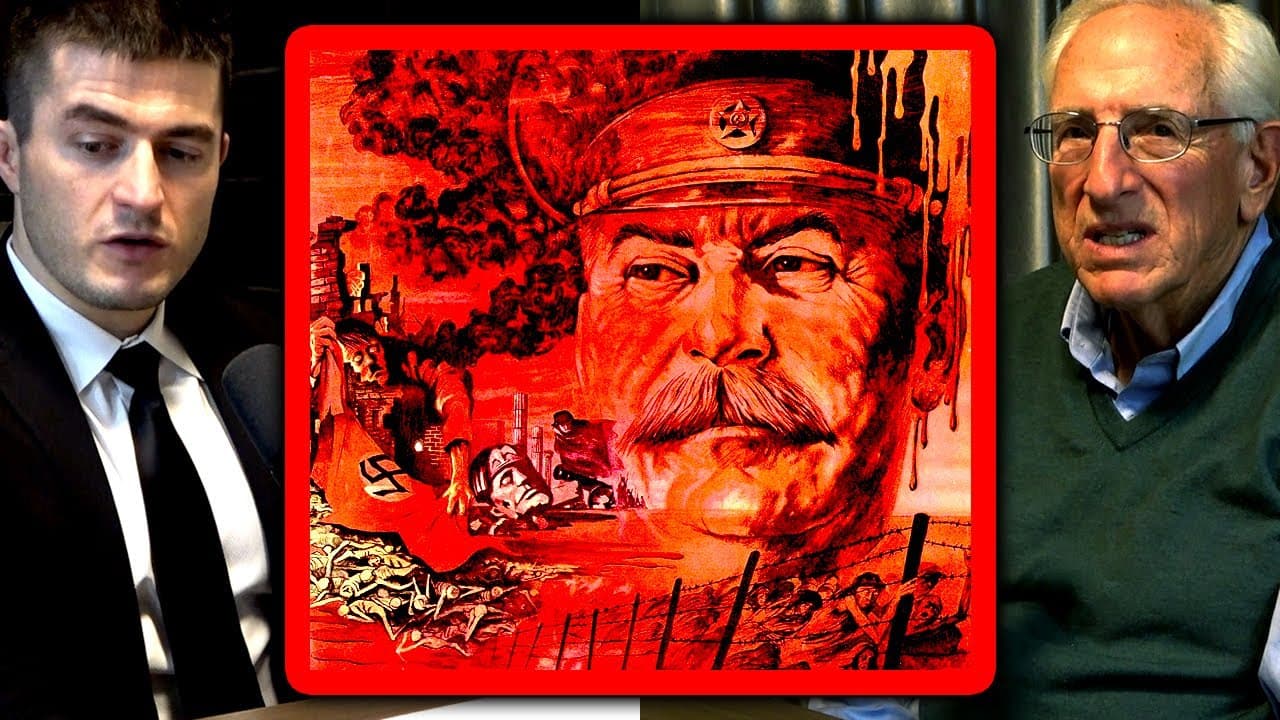
Holodomor: Stalin's Terror-Famine | Norman Naimark and Lex Fridman
TL;DR
The Holodomor was a devastating famine in Ukraine in the 1930s caused by collectivization efforts and Stalin's harsh policies.
Transcript
can you talk about the 1930s can you describe what happened in holdem or the soviet terror famine in ukraine and then 32 and 33 yes that killed millions of ukrainians right it's a long story you know but let me try to be as succinct as i can be i mean the hello de moore the the terror famine of uh 3233 comes out of in part and all union famine that... Read More
Key Insights
- 🇺🇦 The Holodomor in Ukraine was a result of Soviet collectivization efforts and Stalin's harsh policies.
- 🥺 Ukrainian peasants resisted collectivization more than Russian peasants, leading to severe consequences.
- 💪 Stalin had a strong antipathy towards Ukrainians and intensified his control over them during the famine.
- ❓ The Holodomor resulted in widespread hunger, death, and cannibalism.
- 🥺 Ukrainian peasants were not allowed to leave their villages, leading to further suffering.
- 👻 Relief efforts were blocked, and no foreign aid was allowed, exacerbating the famine.
- 🙈 Stalin showed no remorse or pity during the Holodomor, seeing it as a necessary punishment.
Install to Summarize YouTube Videos and Get Transcripts
Explore YouTube Video Summarizer or Get YouTube Transcript Extractor
Questions & Answers
Q: What was the Holodomor in Ukraine?
The Holodomor was a famine in Ukraine during the 1930s. It was caused by collectivization efforts and harsh policies implemented by Stalin, resulting in widespread hunger, death, and cannibalism.
Q: Why did Ukrainian peasants resist collectivization?
Ukrainian peasants resisted collectivization because it threatened their traditional way of life and ownership of land. They saw it as an attack on their independence and culture.
Q: How did Stalin intensify his control over Ukrainian peasants during the famine?
Stalin intensified control over Ukrainian peasants by sending teams of people to seize grain and animals from them. He introduced laws punishing people, including children, with death for stealing grain. He also blockaded relief efforts and prevented peasants from leaving Ukraine to seek food elsewhere.
Q: Did Stalin show any remorse or pity during the Holodomor?
No, there was no sign of remorse or pity from Stalin. He referred to the famine as the fault of the Ukrainians themselves and saw it as a necessary punishment to assert control and break their resistance.
Summary & Key Takeaways
-
The Holodomor was a result of collectivization in the Soviet Union, specifically targeting Ukrainian peasants who resisted the program.
-
Ukrainian peasants burned their own houses, killed their animals, and faced thousands of deaths and exiles due to resistance against collectivization.
-
Stalin's stronger antipathy towards Ukrainians in 1932-1933 led to even harsher measures including forced grain expropriation, punishment for stealing grain, and a complete blockade of relief efforts, resulting in widespread famine and cannibalism.
Read in Other Languages (beta)
Share This Summary 📚
Summarize YouTube Videos and Get Video Transcripts with 1-Click
Try YouTube Summary with ChatGPT & Claude or YouTube Transcript Generator
Explore More Summaries from Lex Clips 📚


Summarize YouTube Videos and Get Video Transcripts with 1-Click
Try YouTube Summary with ChatGPT & Claude or YouTube Transcript Generator